All about olives
What exactly is an olive?
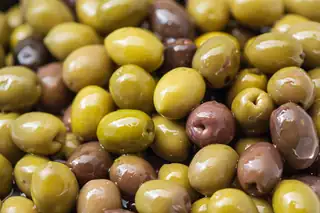
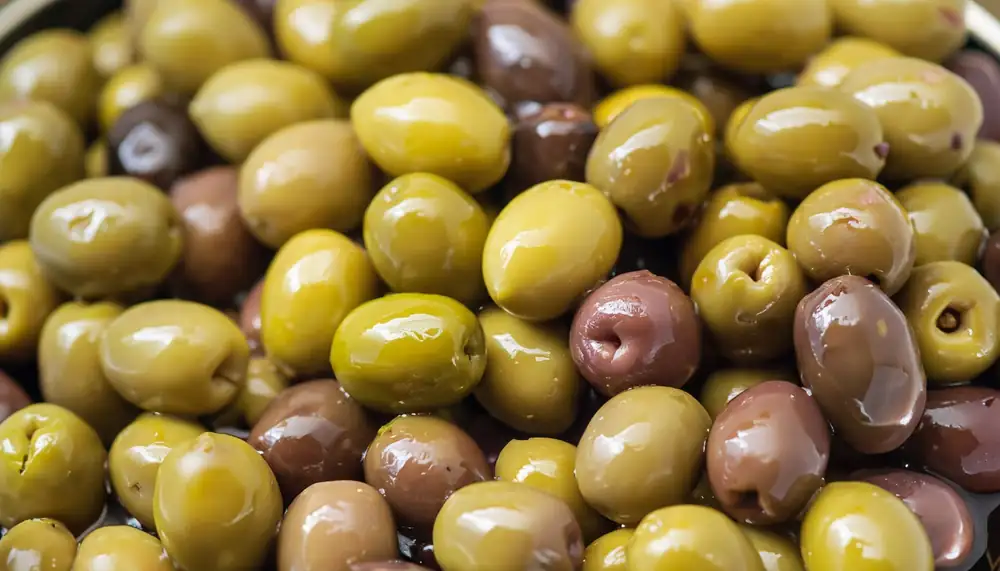
For starters, it's worth clarifying that olives are a fruit in the drupe family, similar to mangoes, peaches, and pistachios. There are many varieties of olives: some types are butterier and softer (like Castelvetrano), while others have a more pronounced, smoky, and fruity flavor.
The color of an olive indicates the ripeness of the fruit; green olives are usually picked early in the season, while purple-black olives ripen on the tree. Olive ripening offers a second way to change color: the olives darken when exposed to oxygen and a stabilizer called ferrogluconate.
Maturation processes
Freshly picked olives are bitter and hard to the touch. The ripening process of olives helps soften the skin and reduce the strong bitter taste caused by a compound called oleuropein. The olives are ripened in brine or alkaline water, sun-dried, and stored in olive oil, but sometimes simply covered with salt. They are then placed in jars or cans – with olive oil or additional brine – for a few months.
Most of the world's olive trees, known as Olea europaea, grow in the Mediterranean region, where the growing and developing seasons are warm and the winters are moderately cold. Looking back at at least 6,000 years, olive trees have stood the test of time (including natural disasters and forest fires).
How long does olive oil retain its shelf life?
Unopened, jarred olives will keep for up to two years and do not require refrigeration. Even after opening, if properly sealed and refrigerated, they will remain edible for 12-18 months. If you buy olives by the pound, make sure they have brine on them, but they will still last about three weeks at most. If the olives run out of brine, make a solution of one part salt to ten parts water and pour it over them.
Some olive packaging may indicate a shorter shelf life due to different processing methods. These instructions should never be ignored. If you find even a small amount of mold on an olive, throw away the entire jar, not just that one piece!
What can we make from soaking water?
Once you've finished eating the olives, it's a good idea to use the slightly salty, flavorful juice they've been soaked in. Similar to pickle juice, it can be used to make various cocktails, such as a dirty vodka martini. The juice can also be used in soups, sauces, and vinaigrettes.