The unlikely first victim of Super El Niño
It has long been no secret that El Niño is active at a very high intensity and will likely be the strongest in history. While it is still too early to establish a direct causal relationship with the phenomenon, it seems that the two main oceans of the planet are already in uncharted territory, with many exceptional climatic occurrences since the confirmation of the phenomenon.
To cite just one example from Brazil, we had gales and tornadoes in Paraná, the rainiest September on record in São Paulo, and temperatures significantly below average for the period in Minas Gerais.
And the question that will dominate the market in the coming months is the size of the impact of this unique climate event on the lives of producers and how it will affect the cost of living for consumers.
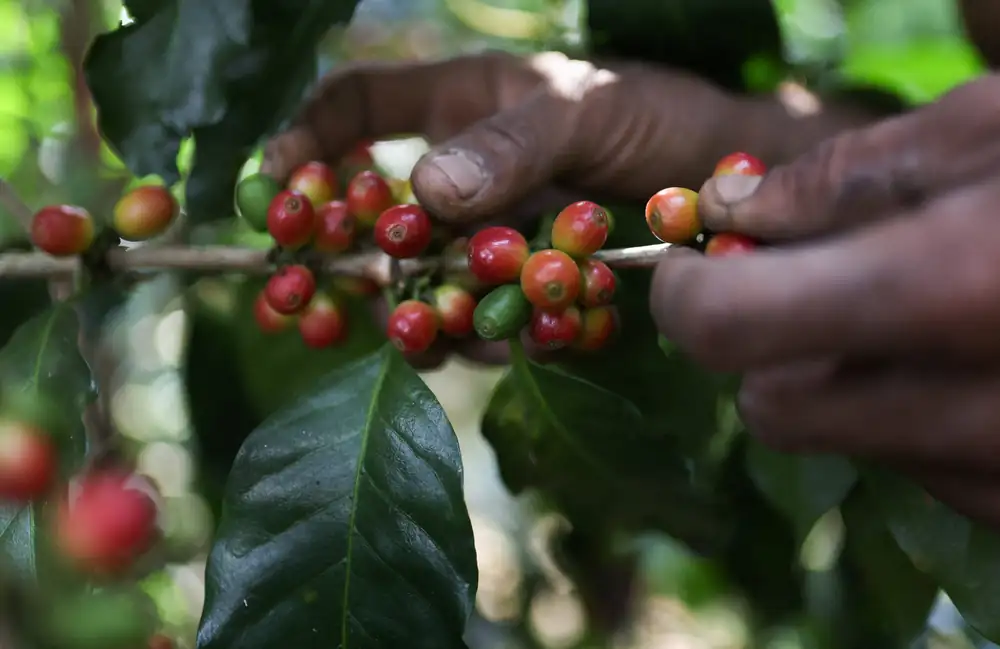
At least among all coffee-producing territories, we already have a clear and unexpected victim: Hawaii. While the archipelago is absolutely irrelevant in terms of consumption, this is not the case when we analyze the location of the American state.
Isolated in the middle of the Central Pacific, Hawaii has served as an example of the immense climatic instability that the Pacific is currently facing. By the end of September, three hurricanes and one tropical storm had already struck the small territory. Furthermore, considering the entire Pacific, 21 storm systems, 20 tropical storms, and 10 hurricanes were identified, seven of which were of great intensity.
If the region's modest coffee production is compromised, this serves as a warning to some large producers who will soon begin their harvests and are directly influenced by the weather patterns of the Pacific Ocean: Vietnam, Colombia, Mexico, Peru, Indonesia, among others.
Meanwhile, on the other side of the American continent, the Atlantic Ocean has also been exhibiting an eccentric weather pattern, but in the opposite direction to what is happening in the Pacific. For the first time in history, since reliable scientific equipment was installed along the ocean, no hurricane has formed until the beginning of October. And, according to forecasts for the coming weeks, no hurricane is expected to form.
Each week, the possibility grows that we will have an unprecedented hurricane season with absolutely no hurricanes. Considering that, so far, there have only been eight tropical storms, systems of lower intensity than a Category 1 hurricane.
While the unique calm of the North Atlantic brings good news to its inhabitants, in the South Atlantic, anomalies can already represent losses in the countryside and in the cities. Some of these are mentioned in Brazil, but they also affect other countries in the South Atlantic, such as Uruguay, which had the second rainiest winter in its history.
Focusing specifically on Brazilian coffee production, it's already safe to say that the fruit set is uncertain. Following flowering, there was heavy rainfall in coffee-growing areas, and temperatures below ideal levels were recorded in several states. But what lies ahead is a great mystery, as high temperatures were already recorded in producing regions shortly after the rains ended.
In a context of falling prices, estimates place the latest Brazilian harvest among the highest in recent times, and several reliable sources point to a historical record. Therefore, a new record harvest could further depress the prices paid to producers and put pressure on the coffee-growing middle class both in Brazil and abroad.
On the other hand, a profound impact, caused by this unprecedented and exceptionally intense phenomenon, should drive prices to a new level. Such impacts would affect one or more harvests in the future, in a market that believes in large Brazilian productions but has not yet replenished its own stock. Furthermore, El Niño tends to affect the whole of society, impacting the environment that facilitates various agricultural crops.
But the real answer will still take a few months to appear. Probably, part of it will be given at the end of this spring, and the rest at the end of the summer, to the great benefit of the speculators, who plant nothing, produce nothing, and harvest almost everything.
Gustavo Magalhães Paiva holds a degree in international relations from the University of Geneva, a master's degree in agri-food economics, and was a consultant for the United Nations on coffee.