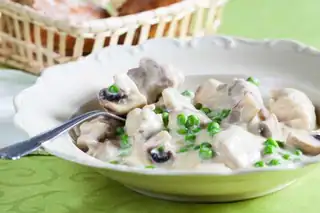
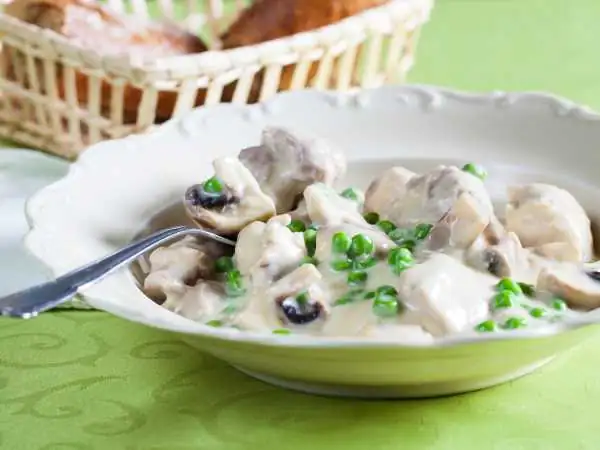
Rabbit stew
This rabbit fricassee recipe is perfect for a festive table, ready for guests. Why? Firstly, because the rabbit is cut into small pieces, the meat is completely separated from the bones, meaning no one at the table has to gnaw on the bones—a task that, as you can imagine, is unsightly, and some guests might be embarrassed or awkward. Secondly, the recipe requires a long prep time, and a relatively
By the way, rabbit meat makes a delicious, lean, and flavorful broth. You'll need a liter of water, but you'll still have some left over; not all of it will be used in the fricassee. If you don't want to use that, use 250-400 ml of prepared light broth (chicken, turkey, veal, or even vegetable broth—as long as it's not dark). Additional ingredients: 50-150 grams of mushrooms and/or the same amount of fresh green peas.
We cut the rabbit into pieces that can be pierced with a fork individually.
If you decide to make your own broth, cover the bones with water, bring to a boil, reduce heat, and simmer the unsalted broth for about an hour. Don't overdo it with seasonings, either.
The fricassee itself begins with frying the rabbit pieces in butter over medium heat. You can melt the butter first, but don't heat the pan. The meat should only be allowed to set over the entire surface, turning from pink to white, but not fully browned.
After this, the meat is sprinkled with flour, rolled in it, and fried for another couple of minutes. What are we doing here? Essentially, we're thickening the roux by infusing the flour with butter and meat juices.
Once the roux has come together (but before it dries out and starts to brown), slowly add the broth, stirring thoroughly each time to avoid lumps. Heat to medium. Bring the sauce to your desired consistency, season with lemon juice, salt, and pepper, and taste.
If you're using mushrooms and peas, you can now add them and the cream. Simmer the fricassee over medium or low heat until the rabbit and mushrooms are cooked through (10-15 minutes).
The very last step is to turn off the heat, wait until the sauce stops bubbling, and quickly stir the yolk into the whole thing, giving the dish its final gloss.
Anyone who's ever thickened a fricassee with yolk knows it's a tricky process—if the temperature is too high or the stirring is too slow, the yolk tends to curdle and ruin the whole thing. So for those who are afraid to mess with this procedure, I'll let you in on a secret: with this fricassee preparation method, you can skip it. We've already thickened the roux and added a little cream. Without the yolk, the flavor will be a bit simpler, the appearance less brilliant, the color paler, and the consistency less creamy, but unless your guests are hardcore gourmets, no one will notice.
Serve the rabbit fricassee hot.