
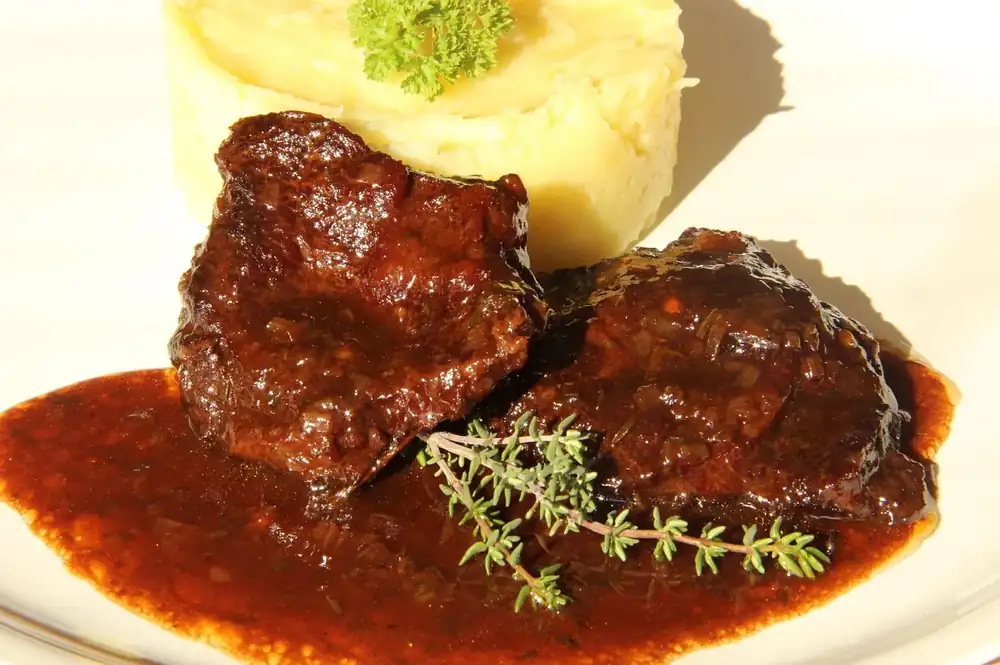
Learn how to prepare beef cheeks with rosehips like a pro. The wine and thyme add a touch of spice.
Beef cheeks are a delicacy. When rosehips are in season, it would be a shame to miss out on a delicious sauce made with preserved rosehips and red wine. Prepare a festive lunch bursting with flavor and opt for beef cheeks with rosehips.
Beef cheeks are a delicacy. When rosehips are in season, it would be a shame to miss out on a delicious sauce made with preserved rosehips and red wine. Prepare a festive lunch bursting with flavor and opt for beef cheeks with rosehips.
Rosehip sauce is an essential element in venison banquets, where it pairs perfectly with wild boar and venison. However, you don't have to look far to find venison; it can also be enjoyed with beef cheeks and rosehip sauce. If you'd like to try this delicacy with, for example, venison, you can prepare the rosehip sauce following Petr Hajný's recipe in our workshop video tutorial.
How to prepare beef cheeks with rosehip sauce
- To prepare beef cheeks with rosehips, you will need
- 2 beef cheeks (about
- 700g)
- 4 shallots
- 3 tablespoons of rosehip jam
- 2 tablespoons of balsamic vinegar
- 200ml of red wine
- 1 can of concentrated stock, fresh thyme, oil, salt and pepper
Clean the cheeks well and season with salt and pepper.
Heat the oil in a deep oven-safe frying pan and fry the beef cheeks on both sides until golden brown; sealing them will retain the juices.
Remove the cheeks and add the finely chopped shallot to the baking dish. Sauté, pour in the balsamic vinegar, add the rosehip jam and let it melt.
Add the red wine, let it reduce a little, then add the meat and thyme.
Pour the broth dissolved in hot water or use homemade broth.
Pour only half of the liquid over the meat, cover it and place it in a preheated oven at 180°C.
Bake covered for 2.5 hours, basting with the juice from time to time.
Beef cheeks with rosehips are best served with mashed potatoes.
Tip: Pork cheeks aren't always available, so you can substitute them. Try making a klizka this way; just adjust the baking time for a soft texture.
You can also dry rosehips to make tea, but rosehip jam has more uses in the kitchen. How about trying an irresistible rosehip cake for dessert after a good meal?