White Spots on Aged Cheeses: Here's What They Really Are
You've probably noticed small white specks dotting the surface of a piece of aged or semi-aged cheese and been hesitant to eat it, fearing mold.
What are white spots and why do they form?
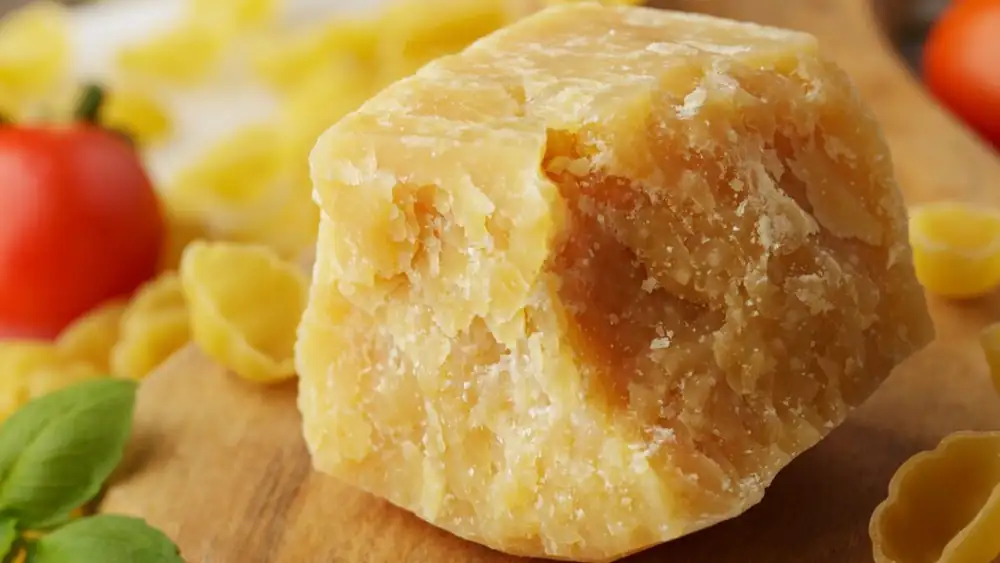
The tiny white grains that crunch under your teeth when you taste an aged cheese are crystals of L-tyrosine, a non-essential amino acid released naturally during the cheese's maturation. The process underlying their formation is proteolysis: over the months or years of maturation, milk enzymes and lactic acid bacteria break down the complex chains of casein (the main protein in cheese) into increasingly smaller fragments, until individual amino acids are released. While most of these molecules dissolve in the residual water in the cheese, tyrosine has an aromatic chemical structure that makes it very soluble in liquids (just 0.45 grams per liter at room temperature). Over time, as the cheese loses moisture through evaporation, the tyrosine concentration exceeds the saturation limit: the amino acid thus begins to precipitate and aggregate around microscopic crystallization nuclei, giving rise to actual solid grains immersed in the cheese.
The presence of tyrosine is therefore visual and tactile evidence of advanced proteolysis and perfect maturation. Furthermore, from a nutritional and sensorial perspective, this phenomenon is accompanied by the release of glutamic acid, responsible for the typical umami flavor and rich aroma of great aged cheeses. Furthermore, from a metabolic perspective, tyrosine is a valuable precursor of essential neurotransmitters (such as dopamine and norepinephrine) and thyroid hormones.
Unlike the internal tyrosine crystals, the thin white coating or film that sometimes appears on the crust or under vacuum-sealed packaging is actually calcium lactate, a harmless salt formed by the reaction between lactic acid and calcium as moisture migrates outward.
No health risks: why crystals are an ally
Finding these microcrystals in the cheese has no negative consequences: tyrosine is a completely harmless and 100% edible natural amino acid. Indeed, its presence is an excellent indicator of quality and digestibility. The formation of these granules indicates that the milk proteins have been "predigested" by enzymes during the long aging process, making the cheese much more easily assimilated by the body and simultaneously releasing glutamic acid, responsible for the cheese's typical savory, umami flavor. The only real "consequence" of their presence is sensorial: that pleasant and unmistakable crunchy texture under the teeth that enthusiasts seek in the flakes of aged cheeses, but which those unfamiliar with them risk unfairly mistaking for contamination or a product defect.
In which cheeses do they appear most frequently?
As mentioned previously, white dots are a distinctive feature of long- and medium-aged cheeses: tyrosine, in particular, is found in Grana Padano, Parmigiano Reggiano, and pecorino cheeses, and can be considered evidence of maturation, which generally spans several months. We know, for example, that Parmigiano can be aged for over 80 months. This amino acid is the result of a fundamental process called proteolysis, through which proteins are broken down into smaller molecules, first into peptides and then into free amino acids, including tyrosine, thus giving the finished product its unique texture, aroma, and flavor, as well as ensuring greater digestibility. From a nutritional standpoint, this substance is beneficial for the body, as it promotes the synthesis of certain neurotransmitters (such as dopamine and adrenaline), thyroid hormones, and melanin. This doesn't mean, of course, that the more tyrosine there is, the healthier the cheese is, but it's helpful in understanding that these crystals are completely edible.
How to distinguish white crystals from mold
Cheese, like many other foods, is susceptible to attack by molds, which are fungal microorganisms that thrive in specific conditions (especially humid environments) and can produce toxins that are dangerous to human health if ingested. Therefore, it's important to consider whether or not to eat a food whose appearance presents unidentifiable abnormalities to avoid, quite simply, poisoning, with varying degrees of serious consequences. Unlike tyrosine or calcium lactate crystals, molds have a fascicular structure that initially contaminates the surface of the cheese and then penetrates deeper: the texture is similar to a slightly hairy, soft patina that varies in color from whitish to grayish, greenish, or blue, depending on the fungus that causes it. A cheese spoiled by mold may have soft, slimy spots and (although this is not a universal sign) a more pungent, unpleasant odor, while the spots are firm and grainy, quite small in size and bright white in color, odorless and tasteless.