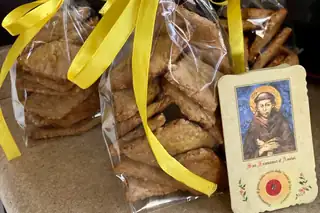
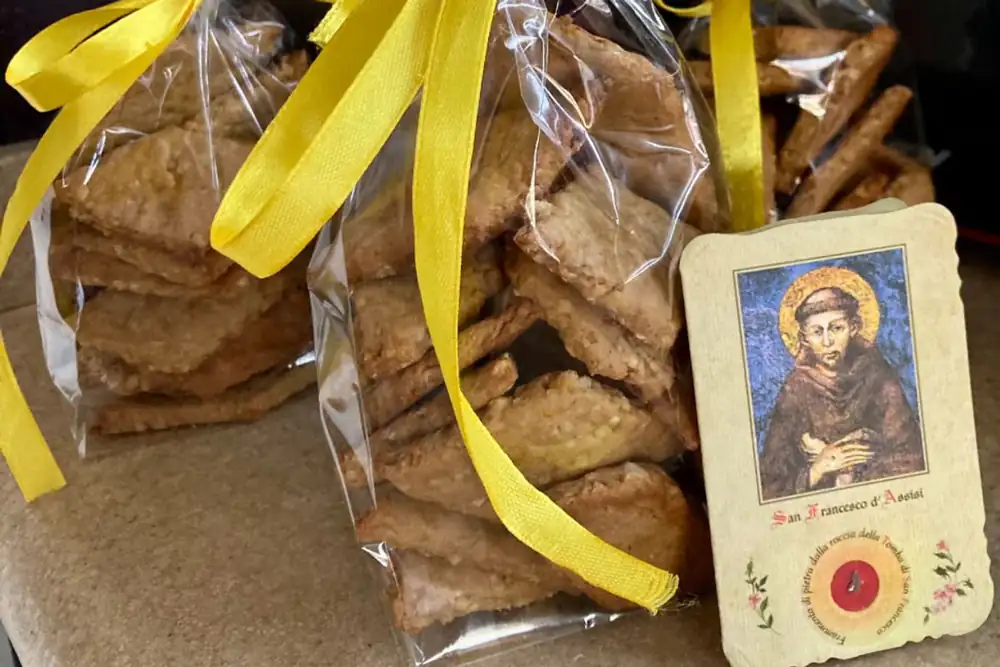
Mostaccioli, the sweet that Saint Francis asked for before he died
October 4th marks the celebration of Saint Francis of Assisi, the patron saint of Italy. This year, the anniversary is even more significant because it falls on a Sunday, exactly 800 years after his death on the 3rd.
Saint Francis and the mostaccioli: the sweet linked to Friar Jacopa
Among the flavors dear to Francis, mostaccioli hold a special place. These sweets are linked to the Saint by the story of Jacopa de' Settesoli, a Roman noblewoman devoted to him, who hosted him during his stays in the city. A relationship of trust and spiritual closeness developed between them, also reflected in the affectionate nickname Francis used for her: "Brother Jacopa." Her specialties included those sweets prepared with almonds, sugar or honey, and other ingredients.
The mostaccioli arrive at the bedside of Saint Francis
The memory of the mostaccioli also haunts Francis's last days. In 1226, now gravely ill at the Porziuncola, he asked that Jacopa be notified of his condition and join him, bringing a burial robe, candles, and the sweets she offered him when he was in Rome. According to the story, the woman arrived before the letter was even sent, bearing precisely what he had requested. She was admitted to his bedside despite the ban on women entering.
Francis barely managed to taste the mostaccioli, so weakened was he. Yet, even then, his thoughts turned to a companion: he remembered that Brother Bernardo would have liked them, and he called him. The sweet comfort he received from Jacopa thus became a gesture worth sharing. It is a detail that gives the episode its strength: the pleasure of a familiar flavor intertwined with affection for the person who had prepared it and concern for others.
Mostaccioli, a story that begins in ancient Rome
The gastronomic history of mostaccioli extends well beyond this encounter. An ancient precedent for must-based preparations can be found in Cato's De Agri Cultura, which describes mustacei: flatbreads made with flour and must (hence the name), enriched with lard, cheese, and herbs, and baked on bay leaves. This preparation is different from today's biscuits, and the recipe for the sweets offered to Francis cannot be derived from them.
Even under the name mostaccioli, different traditions coexist. Cooked must, present in some variations, evokes the grape harvest and the flavors of autumn; elsewhere, honey, almonds, and spices define the dessert's character. Ingredients, consistencies, and toppings vary according to the region, including versions enriched with cocoa or covered in chocolate. To commemorate Saint Francis, the reference remains the almond dessert described in sources, without attributing a more precise recipe than the one handed down. Its connection to the holiday lives on above all in the story of Jacopa: a spiritual and religious friendship that also finds expression in the kitchen, through the care taken to prepare and convey a beloved flavor.