The Reason Milk Is So Important When Making French Toast
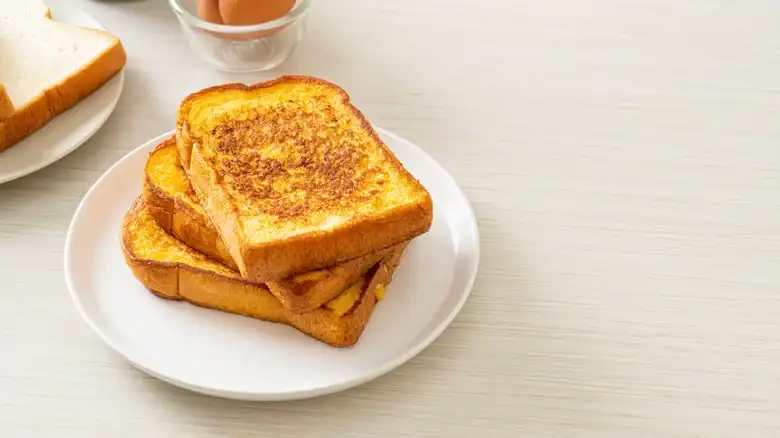
The hallmark of delicious French toast is the texture of the bread. Ideally, it should be lightly crisp on the outside, and soft and moist on the inside. But even when you drench it in maple syrup or top it with whipped cream, French toast should never be mushy.
Milk is a key ingredient in French toast, but the amount you use makes a big difference, Baking Kneads shares. The more milk you soak the bread in, the less egg is able to be absorbed by the bread. Instead, the egg will only adhere to the surface, causing the outside of the French toast to burn before the inside has a chance to cook through, leaving it wet and undercooked. The egg is also what allows French toast to firm up, Food Crumbles points out, which means that diluting it with milk will result in soggy bread. Using too much milk is clearly a bad idea for French toast, however, leaving it out entirely doesn't bode well either.
Milk's properties allow French toast to cook properly
Being that it's a liquid, it goes unsaid that milk contributes moisture to French toast, but according to Food Crumbles, that's not the only purpose it serves. Milk is also fat, plus sugar in the form of lactose, and protein. When these three components are heated, they interact and cause a chemical reaction called the Maillard reaction that's largely responsible for the distinct flavor of French toast.
In addition to making French toast taste the way it does through the Maillard reaction, milk also prevents it from turning out rubbery. Per Food & Wine, the texture of French toast relies on a loosened egg structure best achieved by the addition of milk. If you otherwise were to soak the bread in pure egg, your French toast would be too tough. Just remember that less is more when it comes to milk, and too much will prevent the eggs from solidifying at all. You only need one cup of milk per three eggs, Serious Eats says, and while that may not seem like a lot, it ultimately yields French toast with the best flavor and texture.