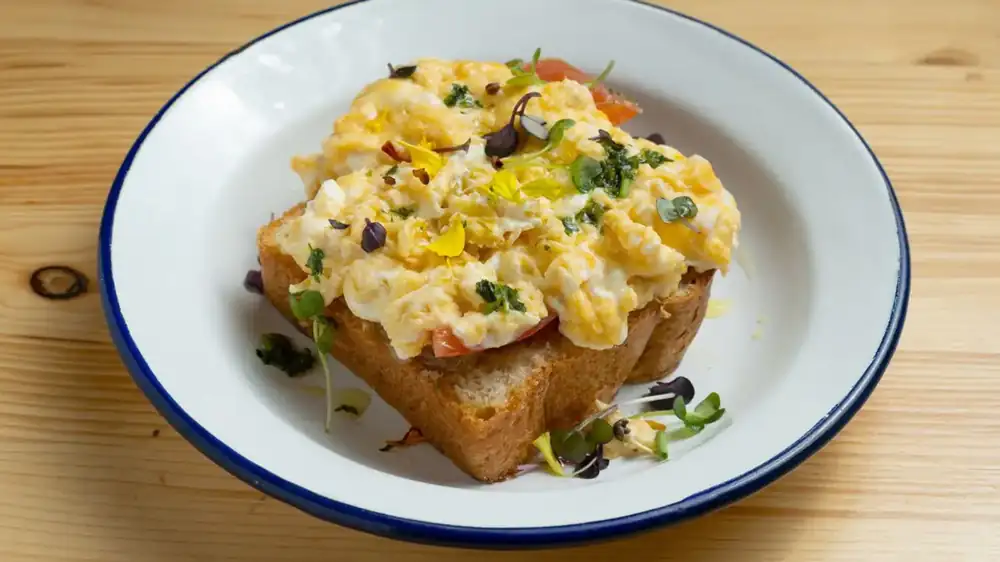
The ingredient that replaces milk in scrambled eggs and changes everything, according to a culinary expert
What if the key to perfect scrambled eggs lay not in the cooking technique, but in an unexpected ingredient? A food photographer suggests swapping traditional milk for a well-known cheese to radically transform this everyday recipe.
We've all experienced that slightly cruel moment: standing in front of the pan, spatula in hand, full of hope… and then disappointment. We think we've mastered scrambled eggs, but they often throw us curveballs. Too dry, too runny, not flavorful enough. What if the problem wasn't your wrist action, but simply that splash of milk you absentmindedly add to the bowl? Luckily, a culinary expert has a solution that's as simple as it is surprising.
Why scrambled eggs fail (more often than you think)
Making scrambled eggs is a bit of a technique. You might think it's the most basic recipe in the world, but actually, it all comes down to the cooking. You probably know the classic method: beat the eggs with milk, butter, salt, and pepper, then pour the mixture into a hot pan. Next, reduce the heat to medium-low and stir constantly until you reach the perfect texture.
Except that this elusive perfect texture remains a rather fickle holy grail. After a few minutes, two possibilities emerge: either you get perfect scrambled eggs, worthy of an English breakfast, or you end up with an overcooked mush floating in a sea of unidentified liquid. Admit it, you know exactly what we're talking about. So, how can you tip the scales in the right direction almost infallibly?
Feta, the surprise ingredient that changes everything
In an interview with our British colleagues at the Mirror, food photographer Tania Sheff suggests a small revolution: instead of preparing scrambled eggs with milk, use… feta cheese. Yes, you read that right!
Her explanation is clear: "The problem with milk is that it adds liquid which dilutes the flavor of the eggs and complicates the cooking process. Furthermore, lactose cooks very quickly, which can give your scrambled eggs an unpleasant burnt taste," she explains. This puts a name to a problem that many amateur cooks are familiar with without necessarily identifying the cause.
And that's not all! Replacing milk with feta is beneficial on several levels. First, it adds texture to the recipe: the feta doesn't melt completely, so it gives the beaten eggs a slightly grainy texture, resulting in a much more flavorful dish. Furthermore, feta is naturally salty, which helps season the dish effortlessly. Finally, feta isn't runny, preventing the dish from becoming watery, as the professional chef points out. With just one ingredient, you solve three problems at once: texture, seasoning, and excess liquid. It's hard to imagine a more ingenious solution.
Tania Sheff's quick recipe to try tomorrow morning
Ready to try it out? Here's Tania Sheff's recipe, for two people. In a bowl, beat two eggs. Crumble 50g of feta cheese over the top. Add a tablespoon of melted butter, then mix everything together. Pour the mixture into a hot pan, reduce the heat, and stir regularly with a wooden spoon for 2 to 3 minutes. The goal: to obtain eggs that are still slightly creamy, dotted with small pieces of melted but still present feta.
To serve, top your scrambled eggs on two slices of toasted whole-wheat bread with cherry tomatoes and a few fresh arugula leaves. The contrast between the crispness of the bread, the creamy eggs with feta, and the freshness of the arugula is sure to transform a simple breakfast into a truly delightful experience.
Spoiler alert: once you've tasted this version, there's a good chance milk will never go back into your scrambled eggs. Perfect for breakfast, and just as perfect for a carefree Sunday morning treat. Get cooking!