Is There A Nutritional Difference Between Black Beans And Pinto?
Imagine. You're at a chipotle, and the crew member behind the glass is enveloped in a steamy cloud of fast food goodness. They ask you what kind of beans you want. Time stops.
Well, according to Diffen, both black and pinto beans are actually great sources of protein and fiber, and their raw calorie count is not too far apart either. Pinto beans, in particular, are packed full of different nutrients like thiamine, iron, magnesium, potassium, and phosphorus, per Healthline, and they're quite easy to add to any meal. For canned pinto beans, however, the nutrition can vary quite a bit with all of the preservatives and additives like sugar and salt.
Bean vs bean
Again, black and pinto beans are pretty similar nutritionally, with black beans having just as high levels of protein, fiber, and antioxidants as pinto beans. However, black beans are slightly lower in carbohydrates, with 40.8 grams per cup versus 44.4 grams in pinto beans, per Healthline. In addition, they have 227 calories, 15.2 grams of protein, and.9 grams of fat. According to WebMD, black beans can supplement any healthy diet by providing the body with various necessary minerals and nutrients such as calcium, folate, magnesium, and iron. However, just as with pinto beans, if you're getting your beans pre-cooked or prepared, make sure to look at the labels and see if there are any additives.
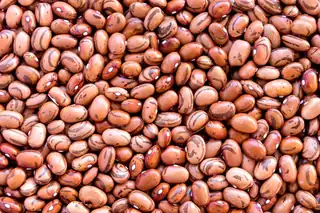
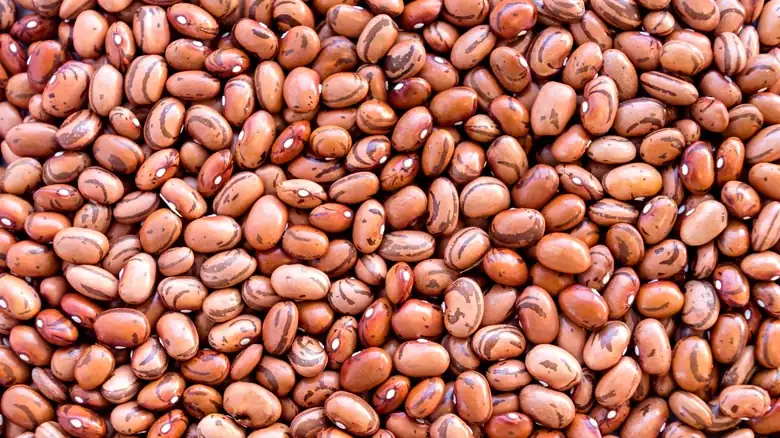
Pinto beans have 245 calories, 15.4 grams of protein, and 1.11 grams of fat per cup, per Healthline. They're also full of fiber, thiamine, copper, manganese, and folate.
Both black and pinto beans are healthy carbohydrates with lower fat and sugar contents than other more typical carbs and are therefore usually encouraged in healthy diets. There really is no reason not to start including beans in your soups, salads, and mains, and the specific type of bean is all up to you. As far as your body is concerned, either bean is a good bean.