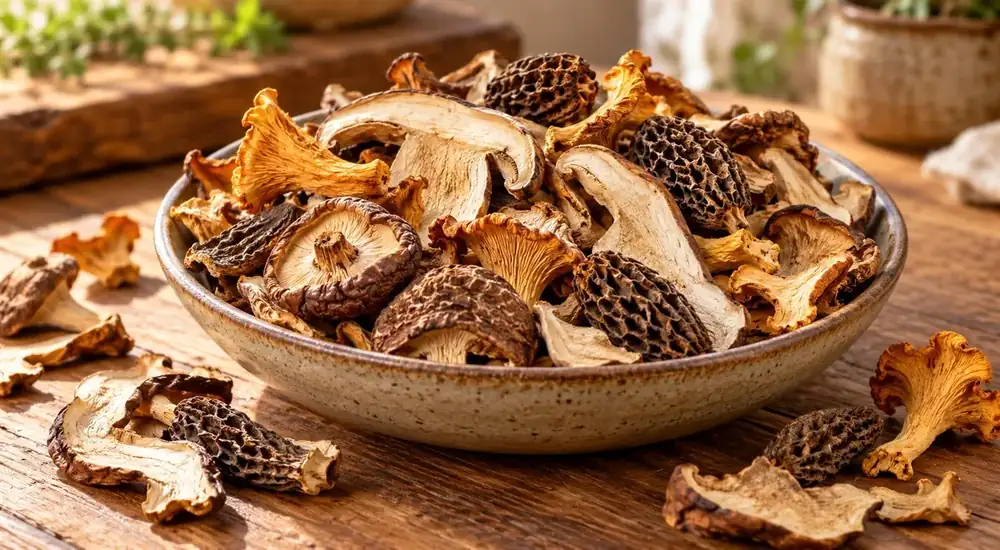
Dried mushrooms: why they are more flavorful than fresh ones and how to soak them properly
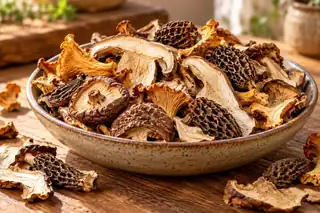
When dried, enzymatic and oxidative processes occur in mushrooms, breaking down some compounds and creating new ones. Furthermore, most of the water is lost, increasing the concentration of aromatic compounds.
Glutamic acid and guanosine monophosphate are included separately: their levels increase, hence the umami taste for which mushrooms are valued in cooking.
What changes during drying?
A special point: vitamin D2 content. Mushrooms are one of the few plant sources, and when dried in the light, the vitamin D content increases dramatically. For those who rarely spend time in the sun, this is a real boost.
What are the benefits of mushrooms?
They contain a large amount of beta-glucans, which support immunity and blood vessels. They also contain potassium, which is essential for supporting the heart and blood pressure. Mushrooms also contain:
- selenium and zinc for antioxidant protection;
- fiber for satiety and active bowel function.
And also a minimum of calories with high nutritional value.
How to soak mushrooms correctly
First, sort the mushrooms and rinse them to remove any sand or pine needles. Then, soak them in warm, not boiling, water. Hot water kills the aroma and makes the stems rubbery.
The ratio is 1 to 3: mushrooms to water.
Soaking time: 2–4 hours for regular mushrooms, 4–6 for dense ones (porcini, birch boletes).
Do not soak the mushrooms for longer than 8 hours at room temperature, as bacteria will actively multiply in the solution. If you need to soak the mushrooms for longer than 4 hours, place the container in the refrigerator. Do not add salt to the soaking water, as salt draws out the mushroom juices and thickens the tissues.
Who should limit or exclude mushrooms?
There are situations when it's best to temporarily avoid mushrooms or drastically reduce their consumption. These include gout and high uric acid levels, as mushrooms are rich in purines. Also, be careful if you have kidney disease, as mushrooms are high in potassium and phosphorus.
Be careful with gastritis and pancreatitis in exacerbation due to coarse fiber and with allergies to mold fungi, as cross-reactions are possible.
And the main rule: do not pick mushrooms near roads and industrial areas, as they accumulate heavy metals, and drying only increases their concentration in the product.
Previously, we talked about which mushrooms to pick in the forest in October.