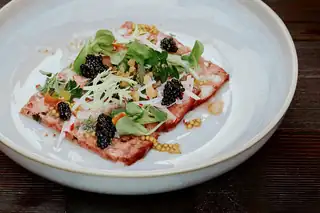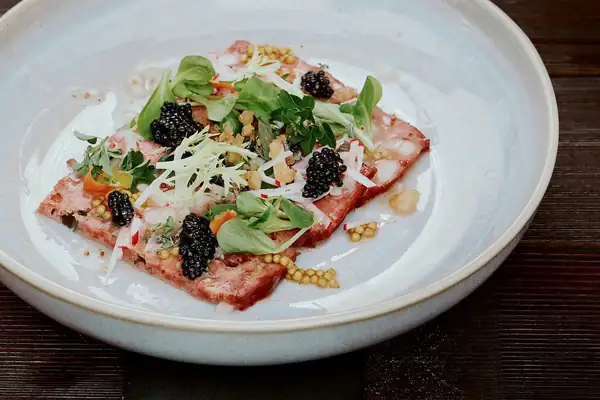
The catch of the day turned out to be a trompe l'oeil
The arrival of the catch of the day in restaurants was a pivotal moment for Lima's cuisine. It was barely the beginning of a concept, but it marked a shift in approach that proved vital.
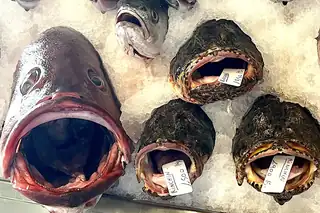
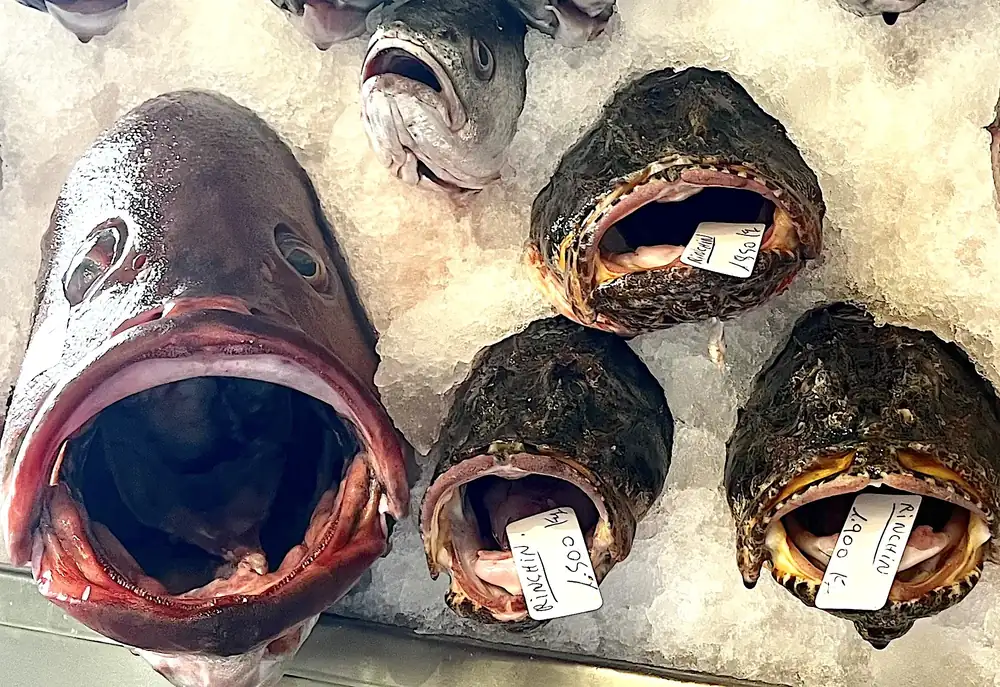
It wasn't common to find other fish, although you could find them in some markets, such as the fortuno, the perico, the cachema, the charela, the buri, the parrotfish, the cabrilla… This would have meant changing the menu—the great anathema of the local chef—and, what's worse, learning to work with new species: studying cuts, researching uses, adjusting cooking times. Lima's cuisine wasn't in favor of added effort beyond what its newly acquired status implied; we weren't in the mood for anecdotes. And then Gastón Acurio arrived—as so often happens when Peruvian cuisine has had to make decisions—and he emphasized the value of the day's catch: buying what's freshest at the market—generally the most abundant and therefore affordable—and working to get the most out of its natural qualities.
It was a novel concept, still foreign to a Latin America whose capitals had turned their backs on seafood, and it wasn't easy to implement, but it worked. The precarious state of the fish arriving (alas, it still does) at the Villa María del Triunfo fishing terminal (who ever conceived of a central fish market so far removed from the sea?) or the Ventanilla terminal, supplied by boats fishing without ice in their holds, forced a change in distribution channels. Some succeeded and began filling their pantries with what local entrepreneurs brought in: maximum freshness and immediate supply. The formula required working with what the sea provided each day; there were still some coveted species, but the unpopular fish gradually disappeared. And people learned to understand the sea: different species arrived, and they cooked with what was available.
There were ups and downs, but it finally materialized and became institutionalized. Pedro Miguel Schiaffino applied it at Malabar, as he now applies it with much greater generosity at La Rosa Náutica, as does Rafael Osterling at El Mercado, and many others. Héctor Solís put his supplier on the payroll and has had him providing raw materials ever since from every corner of the coast (and it's 2,500 kilometers): grouper for Fiesta and other species, starting with cabrilla, for La Picantería de Surquillo, where all the catch is fresh that day and when there's corvina, nobody disguises it.
Lima's restaurants now offer a daily fish special. They applied the experience of Gastón Acurio and the other pioneers, though they ended up giving it the same form that Virgilio Martínez later taught them at Central: cachema (Cynoscion analis) year-round. Their approach to the daily catch was different. Why change the species when it was enough to change the name? Their stagers joked, "What will the cachema be called today?" It could be disguised as corvina (the most common), grouper, or other species. The sea and the imagination that Mater displayed back then seemed almost limitless.
Practice, like familiarity, eventually breeds affection, and the cachema became one of us, a staple in our kitchens. It's not a great fish, but it's perfectly acceptable: equally suitable for a tasting menu or the daily special at a local diner. Lacking any brilliance or distinctive textures, with average performance, always rather bland, the best thing about cachema is that it's plentiful… and cheap. So much so, that Lima's restaurants have turned its name into a synonym for the catch of the day. The price improves the yield, and once you reach the sea, the price pushes the tides toward cachema.
- What catch of the day do you have today?
- Cachema.
- Like every day; it must be the catch of the five-year period.
I told the waiter serving me at Siete, the restaurant where Ricardo Martins caters to the culinary cravings of Lima's hipster community (their hell must take the form of a mid-sized neighborhood without barbershops, baggy shirts, bell-bottoms, and no-name sneakers), and after a while they came to explain that they'd made a mistake and the catch of the day was chita, a luxury fish these days. I'm sure that if I hadn't mentioned it, the cachema would have continued on its way to the table.
It hardly matters which restaurant you frequent. Barring unforeseen circumstances, the cachema will be the fish of the day, even when the storm keeps the boats from going out to sea. Thanks to this, our cuisine—both haute cuisine and the others—is becoming increasingly routine and disrespectful: to the sea, to the kitchen, and to the diner. The Peruvian sea has much to say, but few restaurants are capable of understanding it and translating it to the customer. Menus are once again static, with the fish of the day as the illusion that solves everything, and once again they are incredibly long (I counted over 140 dishes on La Mar's menu the other day).
Incidentally, the day the cachema turned into chita, Siete transformed the pil pil into a watery, meaningless sauce that barely complemented one of the six razor clams (al pil pil) advertised on the menu, and the garlic sauce of the day's catch (al ajillo) into eyes of oil swimming in a confusing broth that accompanied the fish. I was left wanting to know how this kitchen executes the meunière, the Szechuan escabeche, the chicken parfait, the curry, or the cacio e pepe that are also listed on the menu.