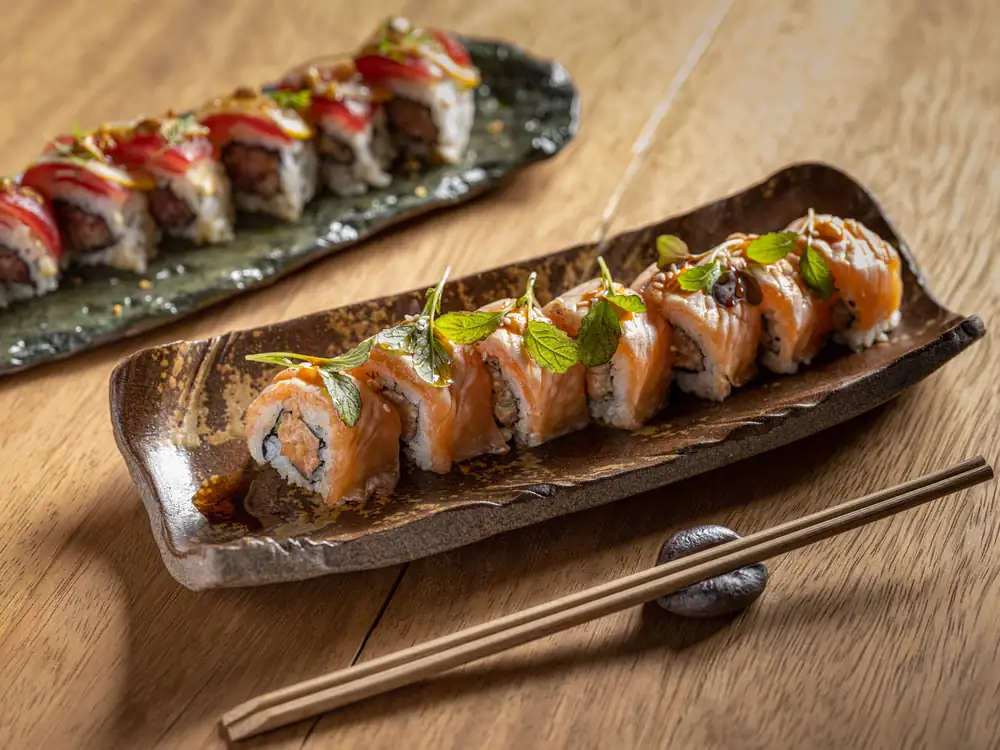
International Sushi Day: sushi and drink pairing with sommelier Imre Rácz
What are the general principles to follow when tasting and pairing sushi and wine together?
What does a good wine pairing actually do to the food? It harmonizes and elevates it. This is the most important rule for sushi as well: the drink should not be dominant, but should fit nicely with the food, not overpower the flavors, but not be so featureless and characterless that we forget its presence. For these dishes, wine is a small, delicate finishing touch, and you have to be careful not to change the flavor of the marinades and spices, or to have a big impact on the fish.
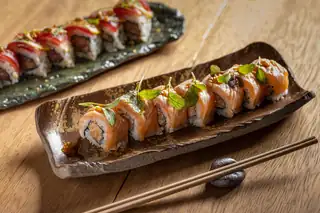
There are two main directions in sushi, dishes that emphasize raw fish, such as sashimi, and rolls. With marinated fish, the quality of the raw fish plays an extremely important role. The essence of sushi lies in the fresh ingredients, so when choosing drinks, we should also strive for fresh, vibrant flavors, whether it's wine or sake. The right acidity is also important to balance the slight sweetness of the rice and the saltiness of the fish.
There are many stereotypes when it comes to sushi and drink pairings, such as the misconception that red meat can only be eaten with red wine. These are clichés that are hard to get out of people’s heads – there can be much freer and deeper connections between food and drink than this. For example, there is a stereotype about sushi that it can only be eaten with sake. Of course, you should not forget about the Japanese rice drink when pairing, but it is not necessary to limit yourself to them exclusively.
Sushi, especially rolls, is often accompanied by strong flavors, such as ginger, citrus, and pickled ingredients. What should be considered when pairing drinks with such dominant flavors?
This is a very important issue, because when you work with raw fish, it only needs a minimal addition. The most important aspect with sushi is to know what goes with it, and whether the given ingredient represents sweeter, citrusier, or fuller flavors. For example, clean, reductive, fresh white wines go well with citrus ingredients. From our wine list, Sauvignon Blanc or Green Veltliner are the best choices. A chardonnay is a little creamier and butterier, and is worth drinking with dishes such as sushi that has avocado in it.
Could you highlight a few sushi items from the Spago Budapest menu and explain in detail what flavor notes are worth emphasizing in their drink pairing?
Spago recently added a very special bluefin tuna to its menu, which is both tender and very meaty, fatty, and juicy. It arrives at the restaurant in very high quality, and if you add a drink to it, only one that does not distract from it is worth it. This dish can practically only be ruined if you do not choose well. It is worth drinking a very soft white wine or the softest sake with it.
Similar principles apply to the 'Golden Sea Cucumber Tostada' with crispy corn tortilla, avocado, ginger, lime and coriander, a complex sushi that simultaneously features the fattier avocado, pickled ginger, and soft, fresh, but distinctively flavored coriander. In this dish, we also rely on the quality of the fish, and the drink is offered as a refreshing accompaniment.
The 'Flamed Hamachi Szechuan Style' sushi with Chinese chili oil, sesame and chives has a bit of spiciness, so it's worth pairing it with a so-called off dry wine that has minimal residual sugar, such as a yellow muscat, which is aromatic and floral, but not as sweet as a dessert wine.
Would you not recommend rosé or red wines with fish at all?
The exciting thing about this is that if the fish is heat-treated, for example fried with dragon fruit, these types can go particularly well with it. Of course, we don't choose the most full-bodied red wine, but a lighter, more tannic type: a siller, Pinot Noir, a fruitier, Provençal rosé, which is specifically tuned to be dry.
When pairing sushi with sake, what should you consider? How different are the rules for a rice-based drink?
The taste of sake is very special, elusive, and can best be described as umami. I think that in Hungary, sake consumption is in its infancy. In order for people to open up to sake, we need experts and knowledge that can truly introduce guests to the world of sushi. The knowledge that can be gained about sake is essentially inexhaustible, and one could learn from the great Japanese masters for decades, but it is still worth starting to delve deeper into it.
Last year I was at the World Sommelier Championship, where I worked as a volunteer and was assigned to the sakes. An amazing world opened up to me, and I learned a lot about sake, the fermentation processes, the whole culture. There are lighter and black belt items on the Spago menu. Making sake is fascinating in many ways, and water plays a huge role in it, which can be infinitely soft, pure glacier water, or water melted from snow.
What is worth knowing about sake as an introduction is that the quality classification is based on the type or types of rice used, the type of water used, and the degree of polishing of the rice grains. (Polishing removes the outer layer of each grain, exposing the starch-containing core. Sake made from polished rice grains is lighter, while those made from less polished rice are more pronounced and full-bodied.) Similar rules apply to sake as to wine: full-bodied sakes are better to drink with fatty fish or sushi that contains avocado, for example.
The most important thing about sushi is who makes it – you can feel it. If a true master has put his soul into it, the result will be inimitable. At Spago, the sushi chefs, Harumi Nomura and Gábor Vellai, handle these ingredients with amazing professionalism and humility. That's why finding the right drinks to go with them is an exciting challenge.