What Is Brandy Really Made From?
When portrayed in popular media, brandy often has a sophisticated, brooding, borderline literary feel to it. Suave, high-status men like James Bond might sip on the liquor as an after-dinner digestif while hatching plans in wood-paneled offices, a fine glass in one hand and a lit cigar in the other.
If you're wondering what's in brandy, a liquor that contains an average of 40 to 50% alcohol by volume, the origins of its name help demystify the spirit. Brandy comes from the Dutch word brandewijn, which means burnt wine. Unlike whiskey, which is made from a combination of grains, brandy is made from a mash of fermented fruits. Put more simply, the spirit is produced by distilling wine, although not necessarily the kind of red or white that you might serve at a dinner party. While many types of brandy are refined from grapes — such as French Cognac, which is best sipped from a very specific type of glass — many kinds of fruits can be used to make this spirit, from apples to cherries. The result is liquor that's remarkably diverse in flavor and color but classified under the same overarching name.
Brandy is made by distilling wine
While the earliest proposed date for brandy production is 1313, a feat credited to French distillers who strengthened wine for medicinal use, it wouldn't be made commercially for another couple of centuries. It's thought that the strong beverage became popular after 16th-century Dutch traders began distilling wine to save space on board and earn more profit at port. By the early 17th century, brandy distilleries (often Dutch-owned) were popping up throughout France, per an essay in the European Review. Rum would eventually compete with brandy as the port-burdened sailor's spirit of choice, but it remains a popular product of wine regions from Cognac to California.
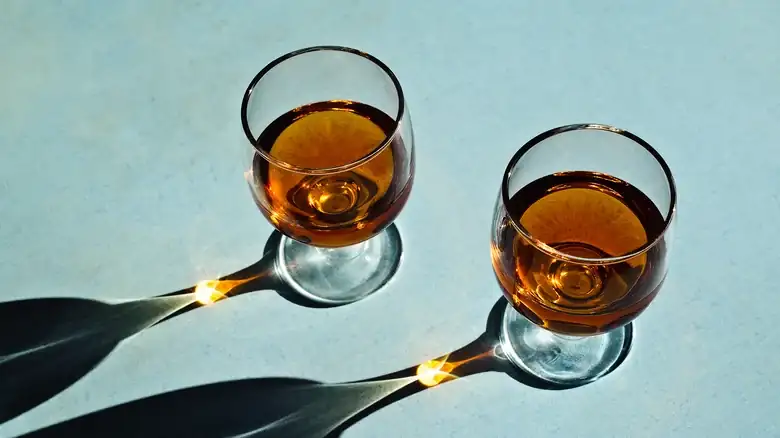
Brandy that's bottled today is still made by distilling wine, although the processes have evolved over the years. "The Oxford Handbook of Food Fermentations" notes that the liquor is typically produced from base wine, not table wine, which uses grapes that are purposely picked prematurely so they contain high amounts of acid and low sugar levels. Once the fruit mash is fermented, the wine is put through copper or stainless steel stills until it's concentrated. To mature brandy, the spirit is aged in wooden casks for a few years (or a few decades), giving it a darker amber hue and notes like oak, vanilla, or cinnamon that pair well with its fruity flavor.
Brandy can be made with all kinds of fruits
While grape-based brandy is the most traditional style of the spirit, it's far from the only one. Around the world, the liquor is made from many other fruits, including pears, apricots, and even some you may have never heard of. Plum brandy, which tends to be more yellow in hue than brown, is particularly popular in Balkan countries like Croatia and Serbia. Hailing from Germany, Kirschwasser (or simply Kirsch) is distilled from cherries, although it doesn't share the fruit's bright red hue. Portugal produces Aguardente de Medronhos, another clear brandy, with fermented berries that look like lychee but are grown on so-called strawberry trees. The United States even has a traditional apple brandy, often referred to as applejack, that's popular in the northeastern states and fit for fall cocktails.
Distilled and aged to shades more similar to white wine or bright red Campari than scotch, these various fruit brandies may be unrecognizable when compared to the standard version of the spirit. Naturally, they taste fairly different, too. The liquor's expansive range of flavors is partly why it's a common base spirit when making sweet liqueurs useful for cocktail-making. And, much like wine, brandy can also come in handy when cooking. For instance, Ina Garten's pound cake features a couple of secret ingredients, including brandy, to give the classic dessert an extra special oomph. It's a multifunctional and intriguing spirit indeed.