What German Beers Are Typically Served At Oktoberfest?
While most libationists know the simple difference between light and dark beer, more specific styles of this bubbly beverage can be much more elusive. For example, what exactly is an Oktoberfest beer? It can really only be one of two things.
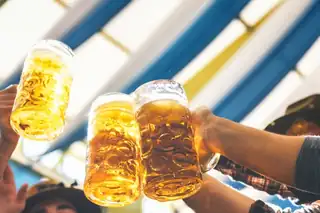
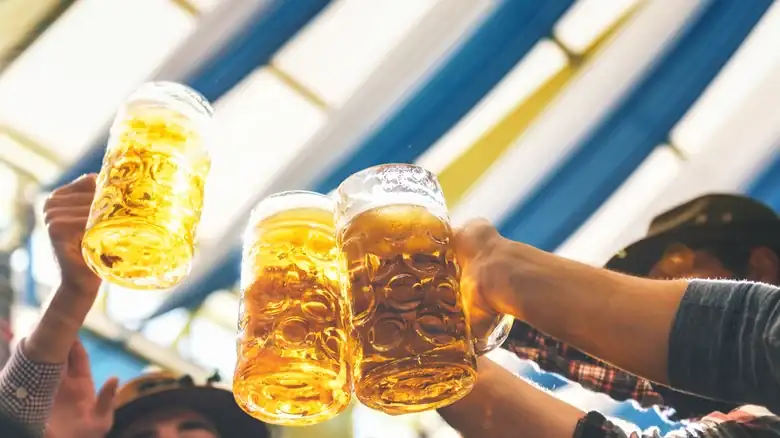
The Oktoberfest celebration takes place annually in Munich, Germany from the end of September to the beginning of October. While imbibers come from all over the world to experience this massive festival, only six Munich-based breweries can serve beer here. Those breweries are Augustiner, Munich's oldest brewery, Paulaner, Spaten, Hofbrau, known from the famous Hofbräuhaus, Hacker-Pschorr, and Lowenbrau.
Now, these breweries have to follow certain rules when crafting beer for the Oktoberfest. Firstly, each brew has to have a minimum alcohol content of 6% (or 13.5% Stammwürze), it must feature minimal ingredients such as barley, hops, and water, and the beer must also be brewed in Munich. While the flavor of each drink will vary, most will resemble a typical German lager such as a Dortmunder and lend a crisp, clean taste.
How Oktoberfest-style beers stand apart
While only those six beer brands can call themselves true Oktoberfest brews, plenty of other beers around the world still slap an Oktoberfest label on their bottles around this time of year. Here's how they compare.
While the exact flavor profile of Oktoberfest-style beers will vary per brand, typically they are in the lager category. These types of Oktoberfest beers are based on the true Oktoberfest-style beers of the past, all of which happen to fall in a similar vein. While modern beers served at the Oktoberfest are light and golden-hued, Oktoberfest - style beers are typically much sweeter and more closely resemble what's known as a Märzen. This is the style of beer that was served at the very first Oktoberfest.
So, while the beer served at Oktoberfest has evolved over the years, Oktoberfest-style beers are more of a homage to the festival's history. If you want to taste the real deal, you might just have to book the plane ticket to experience the ultimate beer fest for yourself. (And don't forget to order a bratwurst to pair, which, if you're wondering, yes, is a whole lot different from a hot dog.)