Don't Use Dairy-Free Milks For The Ultimate Vegan Mac And Cheese
Whether it's Veganuary or a random Tuesday in June, what better time to perfect your vegan mac and cheese game? Recreating your favorite childhood dish with a plant-based twist might seem like a job for dairy-free milk, especially when you're going for that perfectly cheesy sauce, but sadly, almond, coconut, or soy milk probably don't have a creamy enough consistency to satisfy or will impart a de
Pasta water, the water in which you boil your noodles and then usually throw away without another thought, is your new secret weapon. As pasta cooks, the heat causes the starch inside the pasta to swell and eventually burst, releasing it into the cooking water and creating a sticky, slightly viscous liquid. This starchy water will help create a silky emulsion that will bind the rest of your ingredients together, making a sauce that clings to every curve of your noodles. Plus, it's free of any nutty or coconut-y undertones that you definitely don't want sneaking in.
When it comes to picking your pasta, any chef worth their salt will recommend penne or macaroni as the ultimate noodle for mac and cheese. Make sure to cook the pasta al dente to ensure it can stand on its own in the sauce without becoming soggy (and to keep you out of trouble with Italy).
Creating a cheesy flavor without cheese
Now that we've covered creamy texture, let's talk about what else to add to your sauce to create that unmistakable cheesy flavor. Vegan cheese has come a long way, but there's a persistent myth that it still can't perform like the real thing. While yes that may be true, some vegan cheeses can be a bit stubborn when it comes to melting, there are other ways to get the desired effect.
Nutritional yeast will be your best friend for this one as those magic vegan flakes have a naturally cheesy taste. You can also enhance the flavor by adding lemon juice, garlic powder, miso paste, and a hint of mustard — ingredients that help replicate the tangy, savory notes we typically associate with cheese.
Throwing this all in a blender with your starchy water will create a creamy finish you didn't know plant-based sauces could achieve. And if your sauce isn't stretchy enough, try adding a boiled potato. This works by breaking down the cell walls of potatoes to release their starches — one of many common challenges when making mashed potatoes — but in the case of cheese sauce, that gooey texture is exactly what we're going for.
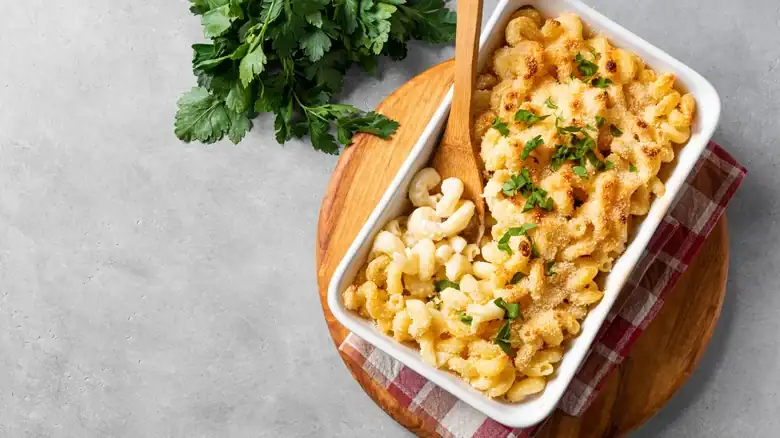
Finally, some grated vegan cheese added at the end will melt down nicely. And if you're feeling extra fancy, try using smoked vegan cheese for a bacon-flavored twist on a classic dish. The result? A cheesy, melty masterpiece that will have everyone, vegan or not, asking for seconds.