Spanish dried sausage chorizo
Step 1: Cut the meat and lard (fat content should be 25-30%) into 2 x 2 cm cubes, which are then ground on the middle disc of a meat grinder, having been cooled in the freezer for at least ½ hour beforehand. The meat and lard ready for grinding are also cooled in the freezer for ½ hour, all to prevent fat separation.
- 1000 g pork shoulder or 500 g pork shoulder
- 250 g pork lard or 500 g pork belly
- (meat + lard together 100%)
- 25 g ground smoked paprika 2.0%
- 13g salt
- 13 g Praganda (salt + Praganda together 2.0%)
- 3 g chili pieces 0.2%
- 3 g ground black pepper 0.2%
- 3 g oregano 0.2%
- 13 g garlic 1.0%
- 60 ml dry white wine 5.0%
- Cut the meat and lard (the fat content should be 25-30%) into 2 x 2 cm cubes, which are then ground on the medium disc of a meat grinder, having been cooled in the freezer for at least ½ hour beforehand. The meat and lard ready for grinding are also cooled in the freezer for ½ hour, all to prevent fat separation. Add all the ingredients to the ground meat and mix everything well.
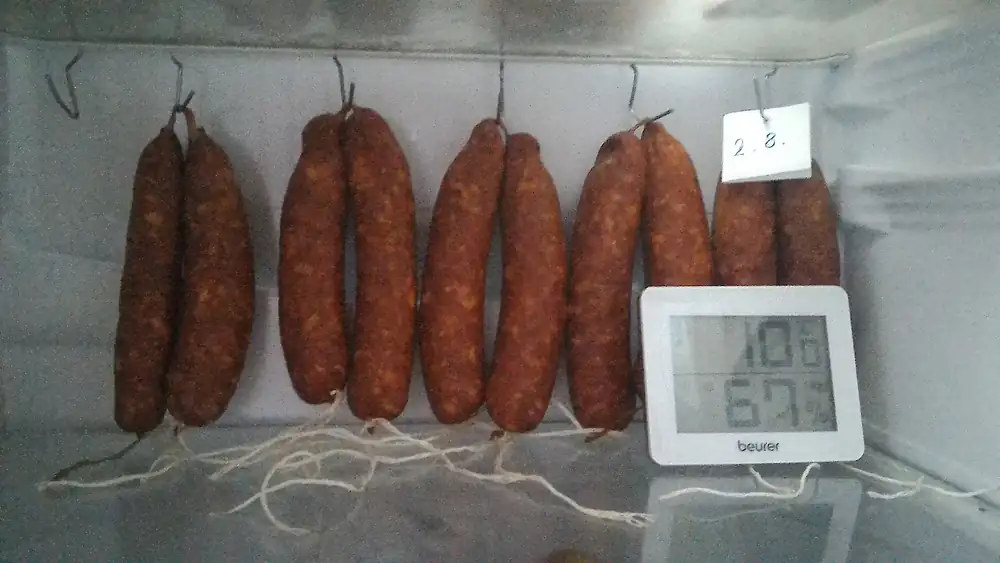
- Let the mixture sit in the refrigerator overnight. Then fill the 32/34 IAS pork casings. Form the sausages by twisting them alternately and piercing them with a toothpick. Let the finished sausages air dry for 24 hours at room temperature, during which fermentation takes place. For another 2-3 weeks, dry the chorizo in a room with a temperature of 10-13 degrees Celsius and 80% humidity. Cover the sausages with a thin cloth and leave a distance of about 10 cm between them.
- Air circulation is important because it dries the sausages. Sufficient humidity prevents the formation of a crust on the surface of the chorizo. Chorizo loses up to 35% of its weight during drying. If the room is too dry, place a bowl of water between the sausages and the air circulation source. If mold forms on the surface of the sausages, wipe the sausages with a clean cloth soaked in vinegar.
- After fermentation, the sausage can also be used raw after heat treatment (baking, grilling) as chorizo fresco.
White wine helps the subsequent fermentation by lowering the pH and also has an effect on microbial stability. It is necessary to use salt without iodine, which is harmful to fermentation. Praganda immediately prevents the development of Clostridium botulinum bacteria, which produce the highly dangerous botulinum toxin (sausage poison).
Fermentation is based on the presence of lactic acid bacteria and micrococci in the meat and in the environment and takes place on the basis of the original microflora and bacteria supported by salting, grinding and pounding. During fermentation, sugars are converted into lactic acid and water rises to the surface where it evaporates. These processes result in a decrease in pH. The final product is a stable product with a long shelf life, even if no heat treatment has been carried out.
Recommendation: Rinse the intestines from salt in cold drinking water before use, untie any knots and soak in cold water for 24 hours. About 1 hour before pounding, soak the intestines in warm water at about 40°C. Unused intestines can be stored again after removing them from the water and thoroughly salting them with table salt, at the recommended temperature stated on the label.
If the casings are stored in the freezer, we recommend thawing the casings by soaking them in cold water for at least 48 hours before use. Immediately after thawing, the casings should be opened, rinsed of salt, changed water, and the individual strands separated. This process is important so that the casings regain their original elasticity and strength.