Chonggak Kimchi
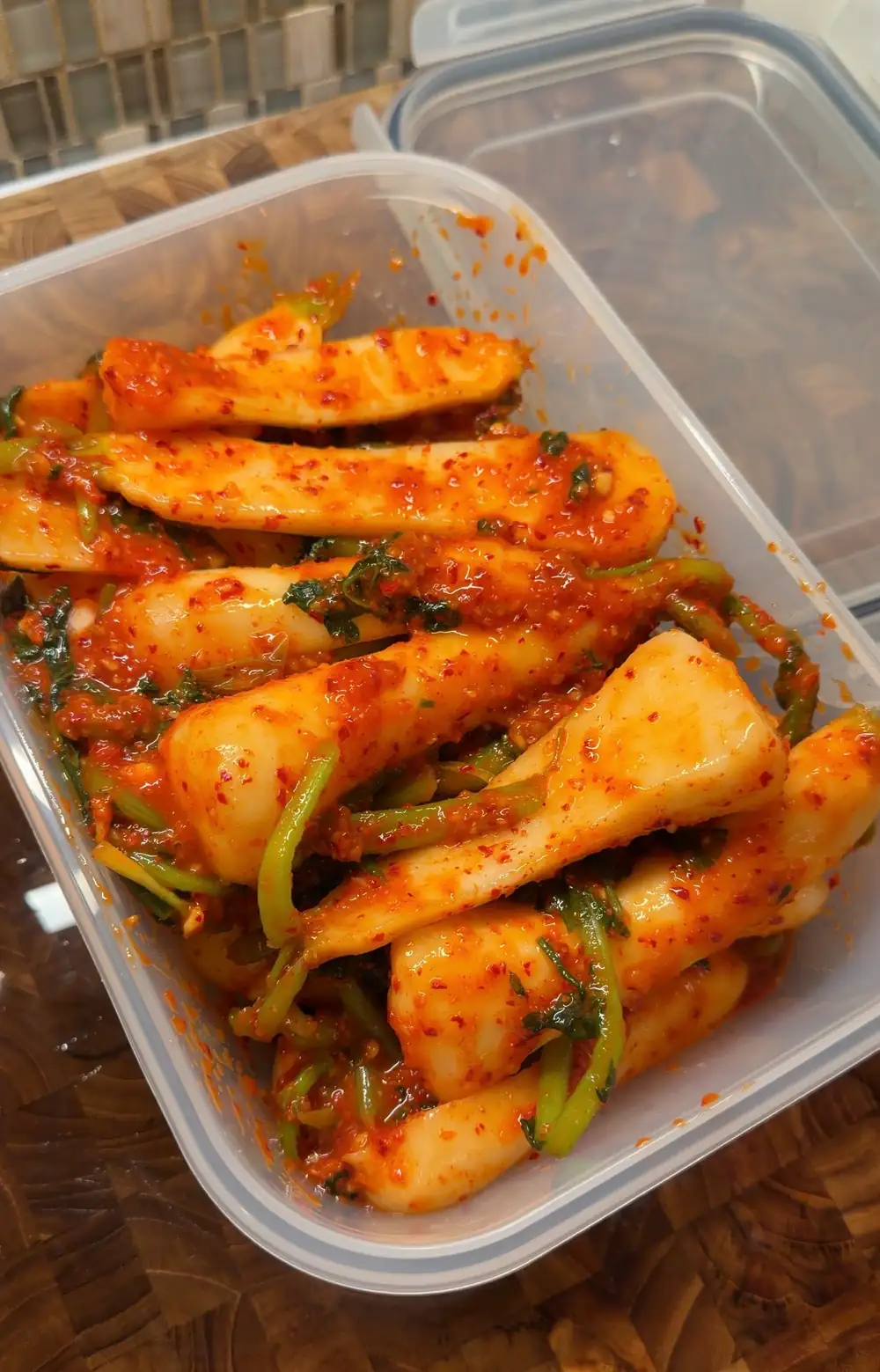
I had to make this kimchi because I was craving a bowl of hot white rice, mini sausages, a fried egg, and a pile of chonggak kimchi on the side. That combination is genuinely one of the best things I’ve ever eaten. It’s made with altari radish, which are small radishes sold with their long leafy greens still attached.
- 5 lb altari radish (washed and peeled)
- 1/2 cup water
- 1/2 cup coarse salt
- 1/4 cup glutinous rice flour
- 2 cups water
- 1 cup gochugaru (korean made preferred)
- 6 tbsp garlic (minced)
- 1/2 onion (grated/blended)
- 1 inch knob of ginger (grated about 1 tbsp)
- 2 tbsp anchovy fish sauce (adjust to taste)
- 2 tbsp korean fish sauce (adjust to taste)
- 3 tbsp sugar (adjust to taste)
- 5 green onions (cut into thirds)
- Clean: Wash all your radish thoroughly. Peel the exterior of each radish until smooth. Use a small knife to clean around the area where the radish meets the leaves, there will be more dirt trapped there. Trim any dead leaves but leave the fresh greens on.
- Brine: In a large bowl add your radish and pour in the water and coarse salt. Toss everything together so the salt is evenly distributed. Let sit for 1 hour, toss again to redistribute, and sit for another 1 hour.
- Make the rice porridge: In a small saucepan whisk together glutinous rice flour and water over medium heat, stirring constantly until it thickens into a smooth paste. Transfer to a bowl and let cool completely before adding anything else.
- Build the sauce: Once the porridge is cool add gochugaru — start with 1 cup and adjust based on the color and taste. Then add minced garlic, grated onion, grated ginger, anchovy fish sauce, Korean fish sauce, and sugar. Add the green onion pieces and mix everything together well. Taste and adjust — more sugar if you want it slightly sweeter, more fish sauce if you want more depth, more gochugaru if you want more heat and color.
- Rinse the radish: Rinse the brined radish about 4 times under cold water to wash off all the salt. Drain well.
- Mix: In a large bowl add the kimchi sauce and the drained radish. Mix together until every radish is well coated in the sauce. Get in there with your hands, wearing gloves is a good idea unless you want red, garlicky hands for a few days.
- Pack and ferment: Transfer to an airtight container. Let sit at room temperature for 1-2 days to start fermentation. Taste it periodically to check where it's at. Once it starts to develop that tangy fermented flavor move it to the fridge. It will continue to slowly ferment in the fridge and gets better over time.
The best kimchi with rice or ramen — the whole radish with its greens attached makes it the most satisfying kimchi to eat alongside simple meals like rice, eggs, and sausage.
Crunchy and savory — altari radish stays satisfyingly crunchy even after fermenting in a way that regular kimchi sometimes doesn’t.
Homemade kimchi paste from scratch — the glutinous rice flour porridge base makes a sauce that clings to every radish and distributes the flavor evenly.
Chonggak Kimchi: aka Bachelor Kimchi
A little background on the name, I grew up knowing this as bachelor kimchi. When I asked my mom why it was called that she told me it was because of the suggestive shape of the radish. I believed this for years. Turns out upon actual verification that’s completely wrong! It’s called bachelor kimchi because in the Joseon era, unmarried young men wore their hair up in a long ponytail called a chonggak. The altari radish with its long green tail looks like that hairstyle. Absolutely no relation to anything else, so most people say the direct translation is just “ponytail kimchi”.
Chonggak Kimchi Ingredients
1 cup gochugaru, Korean-made preferred — more on this below
½ onion, grated or blended
2 tbsp anchovy fish sauce
2 tbsp Korean fish sauce (sand lance fish sauce)
Gochugaru
My mom is very specific about this, she says to use gochugaru made in Korea. The difference is noticeable. Korean gochugaru will actually dissolve into the sauce and become part of it rather than just sitting on top like a layer of red powder. The color is more vibrant, the flavor is more complex, and the texture of the finished kimchi sauce is completely different. It’s worth seeking out at a Korean grocery store rather than substituting with whatever red pepper flakes you have on hand.
Fish Sauce
This recipe uses two kinds of fish sauce: anchovy fish sauce and Korean fish sauce made from sand lance. Both are available at Korean grocery stores and they each add a slightly different depth of flavor. If you can’t find them a regular fish sauce works as a substitute but I’d add it a tablespoon at a time and taste as you go rather than swapping one-to-one — regular fish sauce can be saltier and more pungent so you want to adjust based on your preference.
Preparing the Radish
Altari radish needs a little cleaning before you brine it. Peel the exterior of each radish so the surface is smooth. Pay special attention to the area where the radish meets the leaves! There tends to be more dirt trapped in there. Use a small knife to shave carefully around that spot and clean it up. As for the leaves, cut off any that look dead or wilted but if they look fresh keep them on. The fresh greens ferment beautifully and taste great in the finished kimchi.
How To Make Chonggak Kimchi
Mix: In a large bowl add the kimchi sauce and the drained radish. Mix together until every radish is well coated in the sauce. Get in there with your hands, I like to wear gloves and I would recommend it unless you want red garlic hands for a few days.
Storage
Store in an airtight container in the fridge. Freshly made chonggak kimchi is great but it gets more complex and flavorful as it ferments. Keeps well for several months in the fridge. As it ages it will get more sour and funky which is perfect for kimchi fried rice or kimchi jjigae.