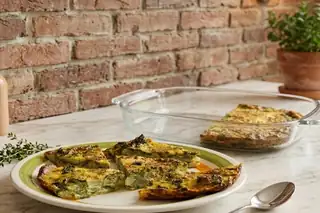
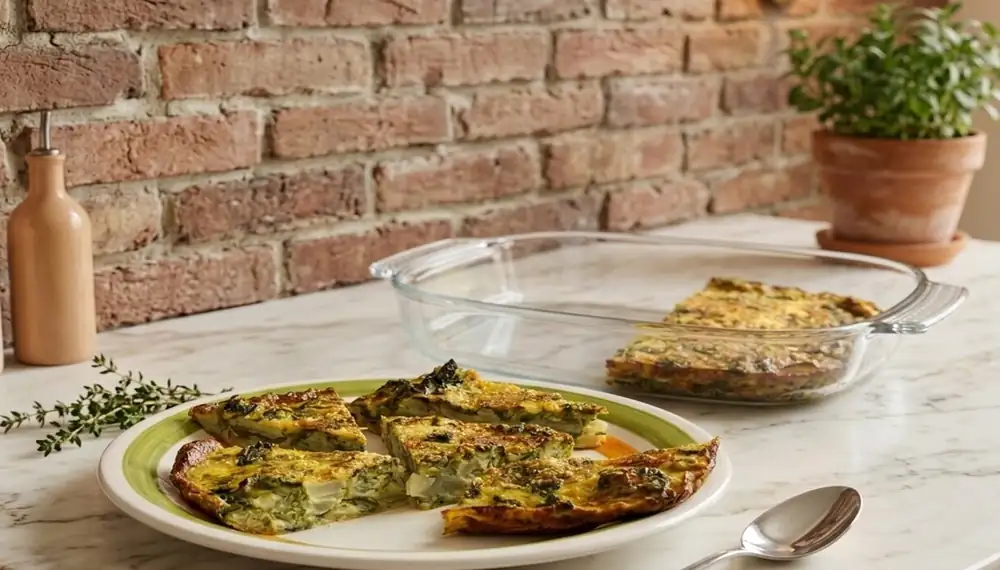
A vegetarian flan that enhances green leaves and can also be enjoyed warm
Swiss chard flan
Perfect as an appetizer, aperitif, or main course, chard flan showcases a vegetable that, when eaten plain, is very flavorless. In this recipe, even though it's not sautéed but simply boiled, it absorbs the flavors of all the other ingredients and becomes incredibly tasty.
What to know before you start
For our chard flan, we didn't use potatoes or butter, but it's still incredibly soft. The credit goes to the Greek yogurt, which, besides making it soft without weighing it down, lends a delicate texture that pairs perfectly with the other key ingredients: eggs and grated Parmigiano Reggiano.
The rustic texture, however, comes from polenta flour and a pinch of semi-whole wheat flour. All these ingredients, combined in a balanced way, transform into a soft flan with a flavorful center and a golden crust, a healthy and nutritious dish.
As mentioned at the beginning, for our flan, we simply cooked the chard in boiling water for a few minutes. We decided not to sauté it with oil and garlic to make the dish lighter and more digestible, but that doesn't mean it's forbidden. Therefore, if you like, you can easily sauté it again before using it for the flan.
Useful tools
In addition to a large bowl to mix all the ingredients, you'll need a baking dish. Remember that the size you use will determine how tall the flan will be, so choose according to your taste. If you don't have a glass or ceramic baking dish, you can use a cake pan.
Ingredients
- Greek yogurt (or other plain yogurt) 2 tablespoons.
- Pepper to taste (optional)
Preparation
- Rinse the chard thoroughly under running water to remove any remaining dirt. Pour a little water into a large pot, bring to a boil, and add the chard. Boil for 5-8 minutes, until tender. Drain and let cool in a colander.
- In a large bowl, beat the eggs with a fork or a hand whisk, then, stirring after each addition, add the Greek yogurt, Parmigiano Reggiano, extra virgin olive oil, polenta flour, and whole wheat flour. Mix until smooth and lump-free. Season with salt and pepper.
- Take the boiled chard, squeeze it well with your hands or a clean cloth, and chop it as desired with a knife. Add it to the mixture, stirring until the vegetables are well combined.
- Grease the baking dish, dusting the bottom with polenta flour. Pour in the batter and level it with a spoon. Drizzle with oil, sprinkle with polenta flour, and sprinkle with Parmesan cheese, then bake in a preheated oven at 200°C (400°F) for 30-35 minutes, until golden brown.
- Remove from the oven, let cool for about 10 minutes and bring to the table.
Swiss chard releases a lot of water, so remember to squeeze it well, even several times if necessary. Otherwise, it could release moisture during cooking and turn the flan into a soft, unpleasant-tasting pie.
For extra flavor, you can add a pinch of nutmeg to the dough, or a stringy cheese or cured meat like prosciutto or speck. If you want to make the recipe gluten-free, replace the whole wheat flour with the same amount of rice flour.
The chard casserole can be stored in the refrigerator, in an airtight container, for up to 2-3 days. Before serving, you can reheat it in the oven at 180°C for 5-10 minutes or eat it at room temperature. If you used only fresh ingredients (i.e., no frozen vegetables), you can freeze it, preferably pre-cut into portions, and consume it within 2 months.
Serve the flan warm or at room temperature, cut into squares or slices. Accompany it with a crispy fennel salad and, if desired, oranges. If serving it as an appetizer or snack, dice it and thread it onto skewers.
A crisp, dry, and delicate white wine is perfect. Opt for a Falerio, a Sardinian Vermentino, or a Ligurian Pigato. If you prefer beer, choose a top-fermented one like a Saison or Farmhouse Ale.