Daily menu for babies from 6 to 9 months
From six months of age, it's necessary to introduce new foods to ensure your baby's healthy development. In this process, Baby-Led Weaning (BLW) can be a good option, allowing your baby to feed themselves soft pieces of food, fostering their independence and motor skills.
It's normal to have doubts about introducing solid foods. When do I start? How much? What time? What if they don't want it?
As we've always said, introducing solid foods should be done slowly and gently; there's no rush. At this age, the baby's main food is and should be milk (breast milk or formula).
You should offer food to the baby, but never force it; every baby has their own rhythm.
To better understand the menu and introduce new foods correctly, I invite you to read the following articles, which will guide you in the gradual introduction of new food groups from approximately 6 to 18 months:
We also recommend downloading this baby food introduction chart so you can quickly see which foods can be introduced as your baby grows. Additionally, once your baby starts solids, it's advisable to offer small amounts of water during meals to aid digestion and establish healthy hydration habits.
How often should a 6-month-old baby eat?
Once fruits and cereal porridge have been introduced (6 months), the baby should have the following feeding schedule (this table is a guide, each family should adapt it to their schedules):
- 8-9 am (Breakfast): Breast milk or bottle.
- 11-12 am (Mid-morning): Breast milk or bottle
- 12-13 am (Lunch): Cereal porridge.
- 4-5 pm (Snack): Fruit puree.
- 8-9 pm (Dinner): Breast milk or bottle.
- 12 pm: Breast milk or bottle (Some babies have already eliminated this last feeding).
Breastfeeding should continue on demand, and added sugar should be avoided in the baby's diet, as recent studies have shown that its early consumption can increase the risk of developing metabolic diseases later in life.
Once vegetables and meat have been incorporated into the baby's diet, the scheme is as follows (7 months).
- Breakfast: Gluten-free cereal porridge.
- Mid-morning: From 7 months onwards, we can offer a piece of bread so that they can gradually incorporate gluten into their diet.
- Food: Vegetable puree with meat.
- Snack: Fruit puree.
- Dinner: Cereal porridge.
Some babies may still ask for their nighttime milk feed.
How to introduce different foods
The WHO recommends introducing fruits, gluten-free cereals, or vegetables interchangeably. And although there have always been disagreements on this topic, the latest recommendations from the Spanish Association of Pediatrics regarding the introduction of different fruits are that “it is advisable to gradually introduce the full range of available fruits and vegetables into any of the daily meals, and also vary how they are presented (pureed, mashed, in small pieces, etc.). There are no fruits that are better than others to start with; the decision will depend on the family's preferences.”
However, I recommend starting with gluten-free cereals or fruits, and once these have been accepted, then starting with vegetables, since, as we said, some can have levels of nitrates, oxalates, and fiber that are too high for the baby's body.
How should we prepare gluten-free cereal porridges?
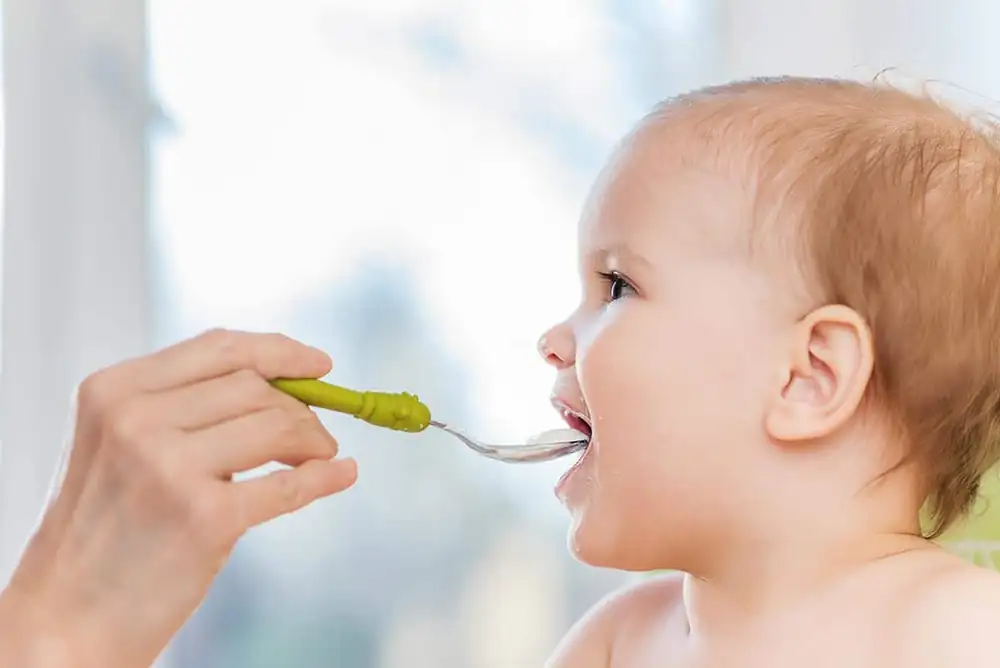
From 6 months onwards, babies are ready to start eating gluten-free cereals or baby food. However, it's not advisable to add cereals to the bottle, as this could hinder the baby's learning to eat with a spoon and increase the risk of overfeeding. It's best to offer them as a porridge with a spoon once the extrusion reflex has subsided (that is, when the baby can swallow a spoonful without pushing it out with their tongue). This way, the baby will also learn to regulate their satiety by closing their mouth or turning their head when they're full.
Cereals can be prepared with breast milk, infant formula, or follow-on formula. If using breast milk, more cereal will be needed to achieve the right consistency, as breast milk is thinner. Introduce cereals gradually, starting with one level spoonful and increasing to about five spoonfuls. As with any new food, it's important to introduce it slowly and watch for any adverse reactions.
The recommended amount is around 200 ml, but this is just a guideline. Not all babies consume the same amount: some will drink 100 ml and others 250 ml. The important thing is not to force them and to respect their feeling of fullness. If the baby still seems hungry, you can gradually increase the portion.
It is essential to remember that milk remains the baby's main food and that its consumption should not be less than 500 ml per day.
Cereals containing gluten
The recommendations of ESPGHAN and the Spanish Association of Pediatrics indicate that cereals containing gluten can be introduced around 6-7 months of age, without delaying it too long. It is recommended to introduce them in small amounts to reduce the risk of intolerance or celiac disease in susceptible children. Recent studies have ruled out the idea that the timing of gluten introduction influences the development of celiac disease, but it is still advisable to do so gradually.
A safe way to introduce gluten is to offer small pieces of bread, a teaspoon of cooked semolina, or by mixing gluten-free cereals with a small amount of gluten-containing cereals. You can start with a ratio of 4 parts gluten-free to 1 part gluten-containing cereal, gradually increasing to a porridge containing only gluten within a week. This allows you to detect potential intolerances with minimal doses.
First fruit purees
Fruit puree is one of the first complementary foods offered to babies. It is recommended to start at 6 months for breastfed infants and between 4 and 6 months for formula-fed infants, as advised by a pediatrician.
- To start, you can blend 60 ml of milk (breast milk or formula) with 100 g of pureed pear or apple. The milk can be warmed slightly. This amount is sufficient for the first few days (complementing breast milk). If your baby doesn't like it, you can add 1-2 scoops of cereal. Never add sugar, cookies, or honey. All fruit must be peeled and seeded.
- Once the baby has been accepting the pear and apple puree for a couple of days, we can add 30g of banana.
- If the baby finishes the cereal, we will gradually increase the amount up to 250 ml (90-100 ml of which will be milk). Remember that complementary feeding is "complementary" to milk, not the other way around. The baby decides when they no longer want more; when they turn their head away or close their mouth, we stop. Keep in mind that fruit is less nutritious than milk, so as long as they reach at least 500 ml of milk daily, we shouldn't worry, since at this age, milk should continue to be their main source of nutrition.
- If the baby has digestive problems, avoid apples, as they are the fruit with the most gas and can be difficult for the baby to digest (boiled, microwaved or baked apples are much easier to digest).
Regarding the most recommended types of fruit, while it was previously advised to delay the introduction of red fruits, peaches, and apricots due to their higher allergenic potential, the latest recommendations from the Spanish Association of Pediatrics (AEPED) contradict this, as it is believed that small portions can prevent the risk of future allergies. However, we remind you again that each food should always be introduced one at a time, allowing several days between each addition to observe for possible allergic reactions.
Vegetable purees
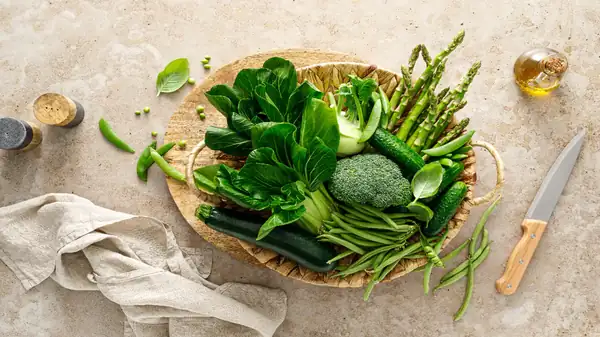
It's also time to introduce vegetable purees. Suitable vegetables to start with at 6 months (always introducing them one at a time to see if any cause allergies, gas, constipation, diarrhea, etc.) are:
- Green bean
- Zucchini
- Pumpkin
- Potato
- Sweet potato
- Broccoli and cauliflower can be introduced from 6 months of age, provided they don't cause gas; if they do, their introduction can be delayed. However, don't confuse cauliflower with cabbage; cabbage should be delayed until 12 months due to its high oxalate and nitrite content.
- Onions and leeks can be introduced with caution, observing the child's tolerance, as they can cause gas.
- Carrots also have high levels of nitrites, but they can be offered from 6 months onwards if in small quantities (and always discarding the cooking water, since most of the nitrites will remain there).
- Tomatoes are one of the most allergenic vegetables. You can introduce them from 6-7 months of age, and if you see a reaction, wait until 9-12 months. Choose the ripest tomatoes and serve them cooked, without skin or seeds.
- Peas are usually given at 6 months, but as a precaution I recommend introducing them with the other legumes.
- Spinach, chard, cabbage, parsnip, asparagus, turnips, beetroot and celery should be avoided until 12 months of age due to their nitrite and oxalate content.
How to make your first vegetable puree
Vegetables can be introduced using the same system as fruits, with a milk base.
- We can put 100g of potato and 50g of green beans boiled in unsalted water or steamed, and blend them in 100ml of milk.
- To this papilla we will add 3-5 g of virgin olive oil (½-1 dessert spoon).
- It can be made thinner by adding milk or thicker by adding a scoop of gluten-free cereal.
Once the baby has been accepting it without problems for 3-4 days, you can introduce other vegetables: zucchini, onion, pumpkin, sweet potato… The total volume will be about 250ml of puree. Remember not to force the baby.
It is advisable to make different combinations of vegetables so that the baby gets used to the variety of flavors.
Just as we discussed Baby-led Weaning with fruit, we can also do it with vegetables, provided you see that your baby is ready, starting from 6 months old. For example, you can use a large piece of potato, sweet potato, broccoli, carrot, etc., already boiled.
These are some basic rules that should be followed when preparing food:
- Choose fresh, quality food.
- Maintain perfect hygiene when cooking food, both for the person preparing it and for the utensils and work surfaces.
- It's very important to always wait a couple of days between introducing each new food to see the baby's reaction. If you notice anything unusual, consult your pediatrician immediately.
- Cook the food with little water, which we will also use for preparing purees and baby food.
- The cooking time should not be too long so as not to lose all the nutrients.
- Never add salt, sugar, or honey before the first year of life.
- It's important to respect the baby's learning process, making their introduction to food a relaxed and pleasant experience to avoid future conflicts. Never use aggression or force them to eat.
And please always remember that a chubby baby is not synonymous with healthy. It is the pediatrician who should monitor their weight and height and determine if the baby is healthy. When we force babies to eat excessively, we may be paving the way for future childhood obesity problems.