What Flavor Is Blue Curaçao Liqueur?
With its bright blue hue, blue curaçao liqueur is an anomaly in the often clear or brown world of liquor colors — especially when you find out what it actually tastes like.
Specifically, blue curaçao tastes like a variety of orange that's native to the tropical Dutch-Caribbean island of Curaçao, the Laraha orange. This type of orange is known for its particularly appealing citrus-scented peel and bitter flesh. Because the liqueur is traditionally made with the Laraha orange peels rather than the bitter flesh, the result is considered mostly sweet in taste, with just a hint of bitterness in the aftertaste. Be warned that some varieties of blue curacao are made with artificial orange flavor, so check the bottle carefully if you want to avoid that.
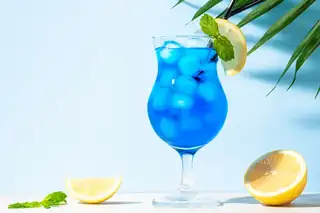
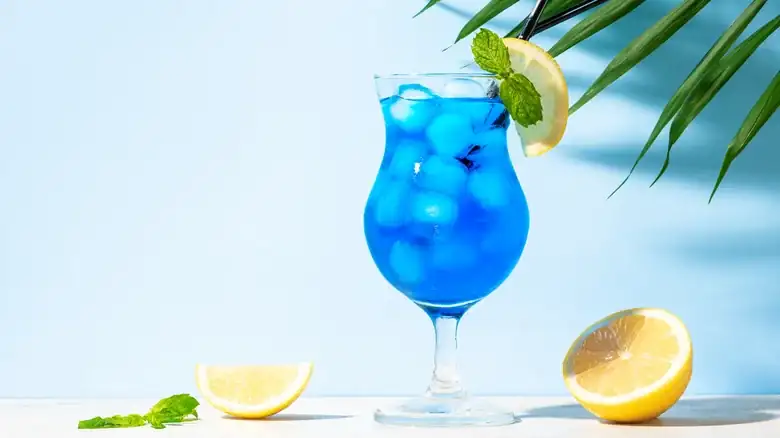
In terms of taste (although not appearance), blue curaçao is pretty close to other orange liqueurs like Triple Sec and Cointreau, which are also decent substitutes for it. You can use it in any cocktail that calls for an orange liqueur, but remember that you'll get that vibrant blue color (and it may mix weirdly if you have other deeply-colored ingredients). Otherwise, there are specific and very vivid cocktails that call for it, like the vodka-lemonade Blue Lagoon or the beachy Blue Hawaii, with vodka, rum, and pineapple.
So why is it blue?
Unsurprisingly, blue curaçao doesn't get that color naturally; after the distillation process, this orange liqueur is naturally clear. The blue comes from a synthetic color called Brilliant Blue FCF — and while it's produced with petroleum products, it's considered safe by the FDA and European Union food authorities. It was previously banned in certain European countries, but those bans no longer apply, as it turns out that the coloring (also called Blue No. 1) simply passes through your body without harming you or getting absorbed. It's commonly used in products like candy, too.
Since the liqueur originates from Curaçao, its producer Senior & Co suggests that the blue color is meant to evoke either the blue skies or sea that you'd encounter on that tropical resort island. However, the company also notes that the original purpose of the blue color was likely to make a dazzling cocktail that would stand out. (Less charitable sources have suggested that the blue is a gimmick, used for style over substance.)
Blue is not the only variety of curaçao out there — if you don't want your cocktails to take on that intense azure shade, there's also a clear curaçao, made the same way but considered to be fractionally more bitter. If you want a different color, there are red and green varieties that date back just as far as the blue version. They also offer the same taste, however, they're less popular and harder to find than their blue counterpart.