Linfa, Eat Different, review: the vegan wave is rippling through Milan
Whenever a new vegan restaurant pops up, especially if the hype swirls around it almost before it opens, as is the case with Linfa in Milan's Via Savona area, you can't really limit yourself to the food itself. Whether it's good or not is a narrow question of fact.
Or at least I can't help but broaden my reflection on the momentum veganism is experiencing throughout the West and on those chefs, activists, thinkers, and artisans who are attempting to define a new dietary canon that many believe represents the necessary future. A perimetric work of synthesis, some of whose guidelines are already identifiable. In these first steps of the Well-Tempered Vegetable Cuisine (to paraphrase, with a bit of venal Pindarism, the original codifier of Western music, Bach), some are aiming for animal-free alter egos for animal products, deriving from the frenzy of contemporary technology. Chicken and burgers without either chicken or burger. Others, deploying sophisticated arsenals of technique and imagination, are working with vegetables, ultimately distorting their meaning, attempting to recreate, with ill-intended saudade, the tastes and characteristics of animal products. And they're also receiving glowing reviews, like the three-starred Eleven Madison from the New York Times. Then there are those, and not just recently, like Noma and the company of the new Nordic cuisine, who manage to enhance the pure essence of vegetables with artifices so complex that they appear natural and unobtrusive.
At Linfa, an intermediate vision prevails, far from extreme vicissitudes, within which roots, fruits and other seasonal green delicacies find appropriate elevation, but where the use of plant substitutes and various technologically-based trompe l'oeil effects is also not disdained.
Gnocchi, then, are a proudly, triumphantly vegetable dish. The predictability of the pumpkin dough is completely undermined by the brilliant, kaleidoscopic swirl of flavors that season them: truffle cream, dried blueberries, and raw Romanesco cabbage slices. On the other side, the technological side, are the "kebab" and the "chicken" curry, both from an industrial producer. The curry is praiseworthy with its blend of powerful, indistinguishable flavors; however, it lacks a small bowl of white rice to accompany it, which would break its natural richness and stickiness.
I have the impression that even the tempeh (a cousin of tofu, but with a grainier texture) is sourced from outside, thus further easing the kitchen burden. It's a shame because it can be made at home, but it's a minor flaw when the dish it stars in is delicious and very substantial, a truly weighty main course. Marinated in citrus, it's a rustic and lively composition of seasonal vegetables and roots in varying textures, punctuated by the crackling of puffed lentils. The pasta is also very good: in the mezze maniche, the turnip greens pesto is a herbaceous and bitter base, against which the sweetness of the almond ricotta and the citrusy strands of candied lemon peel appear intermittently.
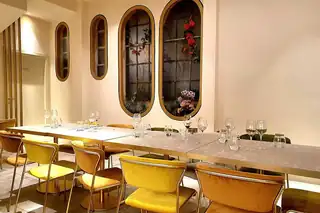
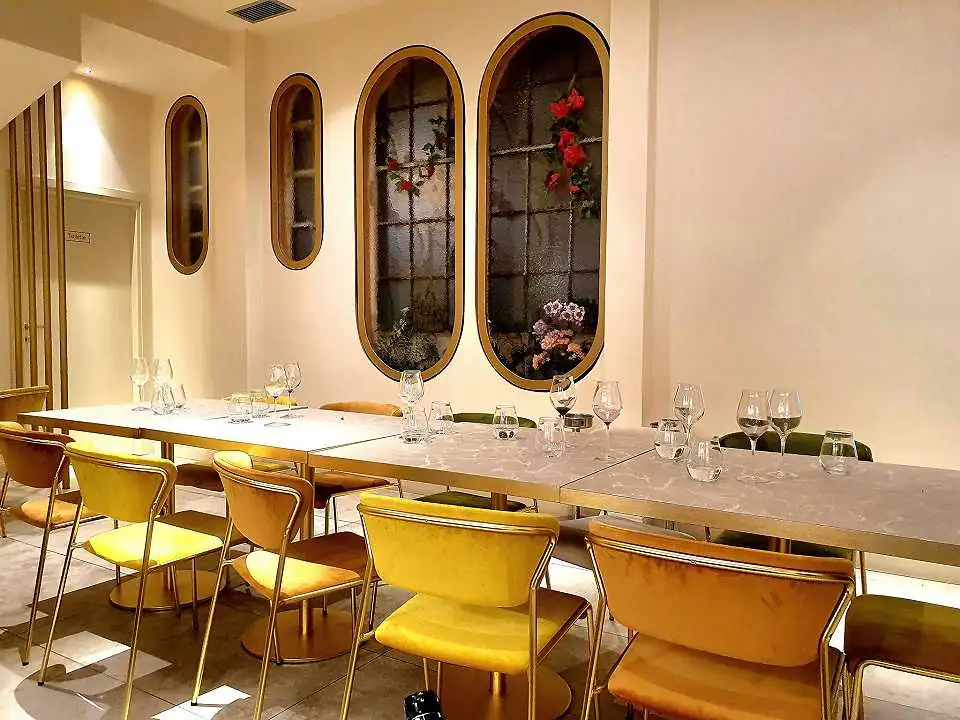
Beyond the noble vegan intentions, it's clear the place is carefully designed with a nod to Milan's trendy, trendy vibe, hungry for novelty. The prevailing, tired aesthetic of peeling paint, exposed brick, rough, and vintage—the quintessential fake even when it repurposes authentic finishes, because it's fake and rehashed in its intentions—here sadly gives way to something very different, yet equally conformist. Between gold-colored, pastel or sunny yellow velvet armchairs, mirrors, and an atmosphere filled with powder pink and other sugary tones, it feels like a West Wing showroom.
Linfa has been literally overrun in its first few months, partially explaining some inconsistencies in service, which were quickly countered by a glass offered at the bar before the table was ready. Strangely, the tasting menu, featuring potato gateau and leek cream soup, is less original than the à la carte selection, which features, for example, jackfruit sushi, a rare tropical fruit whose pulp has the consistency of shredded meat or fish. It's a somewhat underwhelming dish, however, despite the lovely garnishes like ginger mayonnaise and caper powder. Because when sushi lacks properly made rice, everything else is missing. The wine list is conventional and carries significant markups, but the house filtered water for one euro is a welcome sign of honesty.
So while Linfa cleverly avoids unpredictable and dangerous virtuosity, like Eleven Madison's eggplant canoe—a sore spot for New York Times pundit Pete Wells—I would perhaps have preferred a few fewer open packets and an exclusive focus on homemade preparations, as is the case at another leading exponent of the Milanese vegan scene, Altatto. It still remains a more than worthy addition to the city's restaurant scene.
Opinion
We begin with a pre-established advantage: that of promoting and enriching high-quality plant-based dining, which in itself is a laudable mission. Linfa lives up to this mission, albeit with some limitations. The cuisine is imaginative and balanced, a good expression of the plant-based world without over-the-top virtuosity, although not all dishes are equally successful, with the additional small flaw of frequent use of industrially prepared vegetables. The design and ambience are sophisticated but still reflect a certain fashionable conformism.
PRO
- A beneficial contribution to the vegan scene and its potential, even in ambitious restaurants.
- Imaginative and balanced menu.
AGAINST
- Significant use of packaged products from the vegan industry.
- Wine list could be improved.
- The atmosphere is a bit cloying and trendy.