Ricci Osteria in Milan, review: Puglia's strengths, Milan's weaknesses
The idea behind Ricci Osteria, which opened just a few weeks ago in the Sottocorno neighborhood, is to bring Puglia—or more broadly, the entire Mediterranean—to Milan, gastronomically speaking.
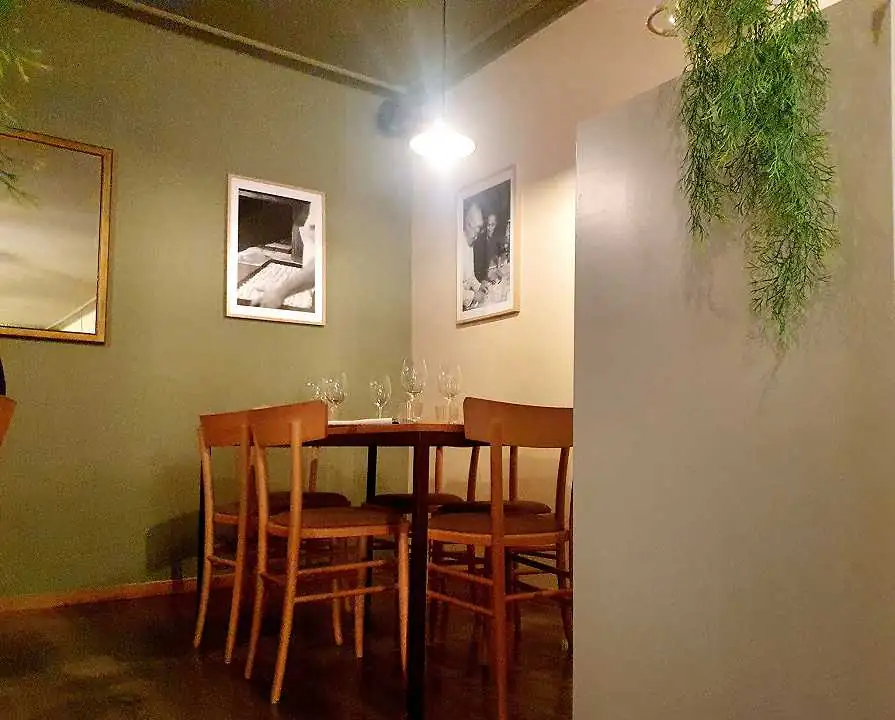
If these are the premises, after the visit, one begins to wonder whether the original intention has been achieved all too well, when the atmosphere, the cuisine, and the hyper-local Apulian products are inserted into a context that has everything Milanese, even its less desirable aspects. While the space is tastefully and tastefully furnished and decorated, where the reference to the simple, homely atmosphere of Apulian farmhouses is appropriately only hinted at in the rustic colors and natural materials, there is nevertheless something unnatural, unpolished, and unpretentious about it. The dishcloths hanging on the walls, rather than a forced reference to a homely atmosphere, contribute to a subtle but nevertheless insidious sense of staging.
If the service is impeccable, attentive, and appropriately cheerful, dim lighting encourages an immediate, automatic attitude that evokes a "night out," a casual occasion. This stiffens rather than loosens the spirits, and has little to do with the atmosphere of a tavern. This is certainly not the first instance in which the concept of a tavern has been stretched to the point of improbability. No big deal; restaurant names can draw on all the imagination possible. It's not false advertising, but it's enough to know.
True Mediterranean cuisine, legible, concrete, and simple in its noblest sense, but in Milan, therefore calls for zucchini flowers swollen with Apulian ricotta and browned by a superb frying, yet arranged in a somewhat timid, submissive mixed antipasto composition, which, rather than the healthy brashness of a tavern, evokes a decidedly peaceful night free of digestive disturbances. A geometric, intellectual, and parsimonious square of parmigiana finds further placement on the beautiful bottle-green plate. Yet exquisite, dense with flavor, the tomato sauce that dresses it has the color and texture of fine velvet. It's not strictly a question of quantity, nor even of plating. Perhaps it's more a question of the tavern's concept, of (missed) sharing, of healthy exuberance.
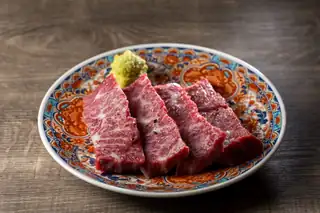
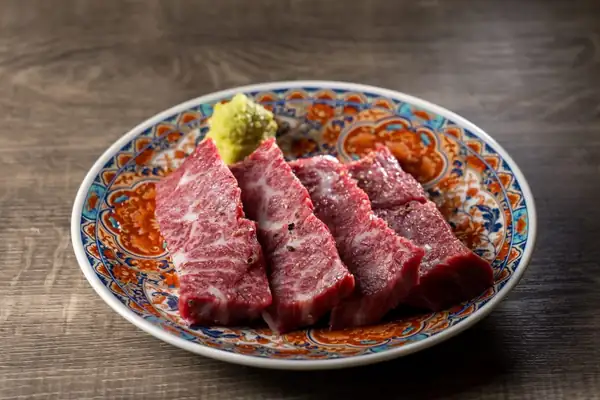
According to regulations, Martinafranca capocollo is refined by soaking in cooked wine and smoking over oak wood and almond shells. The one served here delivers all the profound complexity you expect from a cured meat like this. The platter for two is accompanied by a few pieces of excellent cheese, a green olive each, and a wedge of baby artichoke. One and one.
The homemade taralli are fragrant, with the crumbly, not-too-crunchy texture of a freshly baked biscuit, almost giving the illusion of being still warm. Ricci (non) Osteria brings with it one of the iconic dishes of the Michelin-starred restaurant where the owners hail. Leaving aside the evocative jargon, the ricotta drops wrapped in semolina are plump and delicious gnocchi, the coarse, speckled texture of the semolina enriching the bite with an irresistible rub. They rest on a delicate and delicate zucchini cream, topped by a restless and vigorous pairing of black truffle and crispy pancetta. The best dish of the evening. A blend of no less than three different tomato varieties, from three different Apulian micro-regions, flows into the red sauce of handmade orecchiette. Its pronounced acidity shouldn't be taken as a defect, but rather as a fresh and lively sign of a sauce with remarkable personality.
The mixed roast is an anti-triumph of mixed roast. Lamb, pork chops, and a sausage roll, all satisfying to the taste, make up a solitary, individual, anti-convivial portion, garnished only with an inappropriate bit of cooking water.
The sun-dried fava bean puree with sweet and sour red onion and friggitelli peppers is simple, intense, and impeccable. The dessert section is not to be overlooked, thanks to the presence of Ceglie biscotti, a specialty made with almond paste and jam that has cemented the small town's reputation as a gastronomic gem. The wine list is quite concise, but the balance in the selection of markups is appreciated.
Opinion
It's not uncommon for restaurants these days to assume the identity of an osteria or trattoria, a completely incongruous one with the reality they embody. In Ricci's case, this incongruity is particularly stark. The food is good, and great care is taken in selecting authentic Apulian products, but straightforward, straightforward cuisine isn't enough to qualify as an osteria. Small portions, a somber and dim atmosphere, and a lack of conviviality leave a feeling of incompleteness.
PRO
- All the products used are authentically Apulian, often rare and from micro-regions.
- Some dishes are excellent, such as ricotta drops wrapped in semolina and parmigiana.
AGAINST
- The place doesn't have much in common with any other osteria. It's a rather "tidy" restaurant, not very convivial; the portions are modest and modest.