Encyclopedia of Hungarian dishes: dödölle
The origin and history of dödölle are closely linked to Hungarian peasant cuisine, especially in Transdanubia, specifically in Vas and Zala counties.
Dödölle fit well into the peasant cuisine of Zala and Vas, which was characterized by fatty, substantial, simple dishes.
About potatoes
We wrote more about the arrival of potatoes in Hungary under the gratin potatoes, but briefly, it arrived in Hungary through the Habsburg Empire, probably from Austrian and German territories, in the early 18th century. Maria Theresa encouraged the cultivation of potatoes by decree, because she considered them a reliable source of food, especially in times of famine. The empress popularized the consumption of "earth apples", which facilitated the spread of the plant.
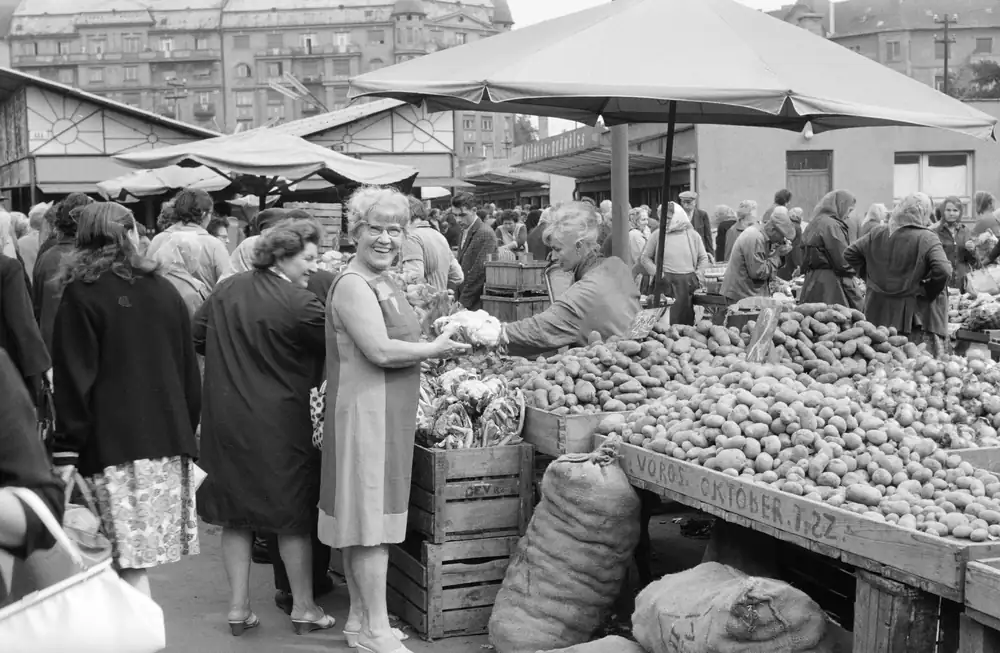
By the end of the 1800s, potatoes had become an important staple food, especially in Transdanubia and the northern counties, where growing conditions were favorable. Along with flour and other cereals, they formed the basis of the diet of the poorer classes.
Dödölle was probably first made around this time. Different versions of the dish can be found in other Central European cuisines. For example, the Slovenian "žganci" and the Austrian "Erdäpfelnockerl" are based on similar bases.
The names of the dödölle and their differences in preparation.
Dödölle is a dish known throughout Hungary, although it has different names in different regions, and there are also minor differences in its preparation. It is basically made from a dough kneaded from potatoes and wheat flour, and the dumplings are served with onions fried in fat and sour cream. In the Palócs and Mátra regions, it is called ganca, and in Zala, in addition to dödölle, it is also known as krumpligánica, and in the past it was also made from corn. In Szabolcs-Szatmár-Bereg County, it is called cinke. Gánica, which is the equivalent of dödölle in some areas, in others, such as Somogy County, refers to a different dish: flour is not added to the crushed, unpeeled boiled potatoes, but only onion fat is mixed in.
According to ethnographic literature, the names dödölle and gánca became known at the end of the 18th century, with the spread of potatoes, and first appeared in 1792. This was followed by the Austrian/German sterc (1798), then the Slavic gánica (1799) and ganca (1817). To make dödölle in Zala and Vas counties, boiled, crushed potatoes are thickened with flour, then mixed with onions fried in fat, and finally fried in a pan until crispy. In Somogy and Őrség, gánica is made in a similar way, but less dense, a bit more like a dumpling. Palócok are mixed with sour cream and served with bacon sauce, while gánica in the Uplands is often topped with cottage cheese.
In a cookbook preserving local dishes, we can find the original recipe for dödölle as well as the version made with corn:
Goceji's dodölle
10-12 potatoes (1.2 kg), 40 dkg flour (2 cups), 1 heaped tablespoon salt, 2 onions, 2 eggs' worth of fat (12-13 dkg), Peel the potatoes, cut them into cubes, wash them, and put them in a four-liter pot to boil in enough water to cover them by one finger. When the potatoes are cooked, mash them in their juice with a potato masher, add salt. (It should be quite mush-like.) Pour in the flour, mix well, and almost knead with the potato masher or a wooden spoon. Knead until the flour is absorbed by the potato mass. Continue kneading until it becomes very difficult to knead. Leave it for a while on the edge of the stove or over a low gas flame, with a mat. Clean the red onion, cut it into small cubes, and fry it in the heated fat until golden brown. Put a little onion fat in a clay bowl or saucepan, and use a greasy spoon to cut large dumplings from the thick mass. Drizzle with onion fat again and continue cutting until the substance holds. Fry the cut-out dough in the oven or on the stove. If you like it more oniony, you can sprinkle it with fried onion cut into rings in fat when serving, and drizzle with cold sour cream. But this can be omitted. In the summer, it is a very good and filling dish with tomato salad with sour cream. You cannot make dough from new potatoes.
Corn Dödölle 8-10 potatoes, 1 liter of corn flour, fat as large as an egg, 1 onion, salt, 1 cup of sour cream. Peel the potatoes, cut them into small cubes or thin slices, and put them in a pot. Pour enough water to cover them by 2 fingers. Add salt and cook until very soft. Mash them very thoroughly with a potato masher. Add the corn flour and knead them in with a sturdy wooden spoon. Knead them well and put them on the edge of the stove, let them puff for a while, and stir them in between, being careful not to burn them. Chop them into a greased pan with a greasy spoon, drizzle with fatty sour cream. Fry the onion in the remaining fat. Sprinkle with the fried onion rings when serving. It can also be made without sour cream.
About the cuisine of Zala and Vas counties.
The cuisine of Zala and Vas counties preserves the traditional peasant flavors of the western part of Transdanubia, dominated by hearty, simple, but very tasty dishes. The people here mainly used potatoes, dairy products, cabbage, beans and various meats to prepare their dishes. One of the best-known dishes is dödölle, which is made from boiled, mashed potatoes and flour, then mixed with onions fried in fat or oil and fried in a pan until crispy. The similar gánica has a looser texture and is more like a dumpling, while krumpliprósza is a flatbread made from grated potatoes, flour and sour cream, which is baked in a pan.
The region also has plenty of meat dishes. The Vasi pecsenye is a roasted pork loin seasoned with garlic and paprika, while the Zala wine pecsenye is made from pork or beef, which is stewed in a wine and onion juice. The Vasi vadpörkölt is popular in the forested areas of the county and is often made from deer, venison or wild boar. Another typical meat dish is the Göcseji gombás tokány, a juicy dish made from beef and mushrooms, with sour cream. The babsterc is a traditional one-dish dish in which mashed potatoes and boiled beans are cooked in onion fat.
Floury, leavened dough dishes include kapośtszátka, which is a folded pie with a fried cabbage filling. Prosza is another popular dish, made with potatoes or cornmeal and baked in the oven.
Among the sweets you can find caraway seed cake, which is made in both savory and sweet versions, as well as Zala béles, a yeast-leavened, filled cake whose filling can be cottage cheese or cabbage.
Although originally a food for the poor, dödölle is now a traditional, regional specialty. In the meantime, dödölle has its own capital, the Zala Dödölle Festival is held annually in Nagykanizsa, which is one of the most popular events in the area, and we can find countless dödölle variations.
The Páskom 1802 Gastro Workshop's dödölle
At the Páskom 1802 Gastro Workshop in Lajoskomárom, local flavors meet a philosophy close to nature. Chef László Csécsei prepares dödöllé alongside a venison stew.
Wild mushroom stew (Ingredients for 10 servings)
- potatoes 1300 g
- duck fat 200 g
- 300 g porcini mushrooms
- finely chopped red onion 200 g
- garlic, finely chopped 30 g
- 5 sprigs of thyme
- corn flour 150 g
- corn grits 50 g
- salt, fresh pepper
Preparation
Cut the potatoes into small cubes and put them to boil in salted water, but there should be just enough water to cover them. Fry the finely chopped red onion in duck fat with garlic very slowly, so that the onion becomes creamy. Clean the porcini mushrooms, then fry them with thyme and add them to the finished onion. When the potatoes are cooked, pour off half the water and mash them, then add the cornflour, the semolina and the onion mushrooms and stir over low heat until they separate from the walls of the pot. Then cover them on a baking tray and place cling film on top and let them rest for about 20 minutes. Using two spoons, form equal-sized dumplings from them, fry them in duck fat before serving.