Cancook and its Aragonese geographical cuisine
“Less is more. It’s impossible to achieve a high level of customer care and attention with a lot of volume.” This is part of the philosophy of Ramsés González, chef of the Cancook restaurant in Zaragoza (c/ León XIII 2-4, 26. 976 239 516).
In fact, their future plan is to remove one table from the dining room, leaving the remaining four tables like a bespoke suit for each client. Right now there are five tables and three kitchens, an unusual ratio that aims for a perfect harmony between the diner and the menu.
Cancook boasts eleven years of experience, but it was three years ago that Ramsés González decided to make a significant investment in the city center, though it doesn't appear so from the street. Upon entering the premises, one has the feeling of standing before the discreet entrance to an apartment building. Elegant, but a building nonetheless, like the wrapper of a chocolate whose charm begins to unfold the moment the door opens and a few steps descend to the cold storage room. There, the ingredients that will form part of the subsequent tasting are displayed. Naturally, of course. "Here we are," they seem to say, "enjoy our presence, and you'll soon be surprised by how we transform."
The three tasting menus offered (Grand Menu, 90 euros; Festival, 120 euros; and Evolution, 150 euros) feature plenty of seasonal vegetables. Most of them come from their own garden. “We have several gardeners who work for us,” says Ramsés, as he invites us into the R&D kitchen, where the team's creativity is put to the test to create the 78 dishes the chef aims to offer each year.
It is also the setting where consulting services are designed for other clients because such technical and human resources for four tables would be difficult to maintain solely with the daily revenue from the gastronomic menus.
Right next door is the wine cellar, which currently boasts 670 different wines. Here, the first bites are served: a cocktail with kombucha, hibiscus, and roses; a Pyrenees trout tartlet; and a mochi filled with sobrasada from La Fueva, one of Cancook's iconic products. Inside the cellar, guests can enjoy homemade vermouth made with black lemon.
The setting suggests that a wine pairing is the most appealing option. Wine pairings range from 90 to 150 euros, and the sommelier is adept at tailoring them to the customer. For regulars, the sommelier often includes some new wines, and for those from outside Aragon, he showcases the new Garnacha wines from the region of masters of wine like Fernando Mora and Norrell Robertson. There's flexibility, but the guiding principle for the pairing is always the culinary creations on the menus.
Back on the ground floor, it's time to settle in at a table. In addition to the five already mentioned, there's one known as the chef's table, located in front of the plating area. Here, you can intensely experience the rhythmic flow of dishes being transformed into colorful and beautiful works of art. It's like a Japanese bar, but with a Mediterranean twist—ideal for four friends or two couples who don't know each other at all.
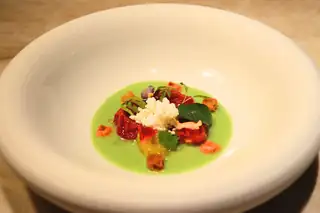
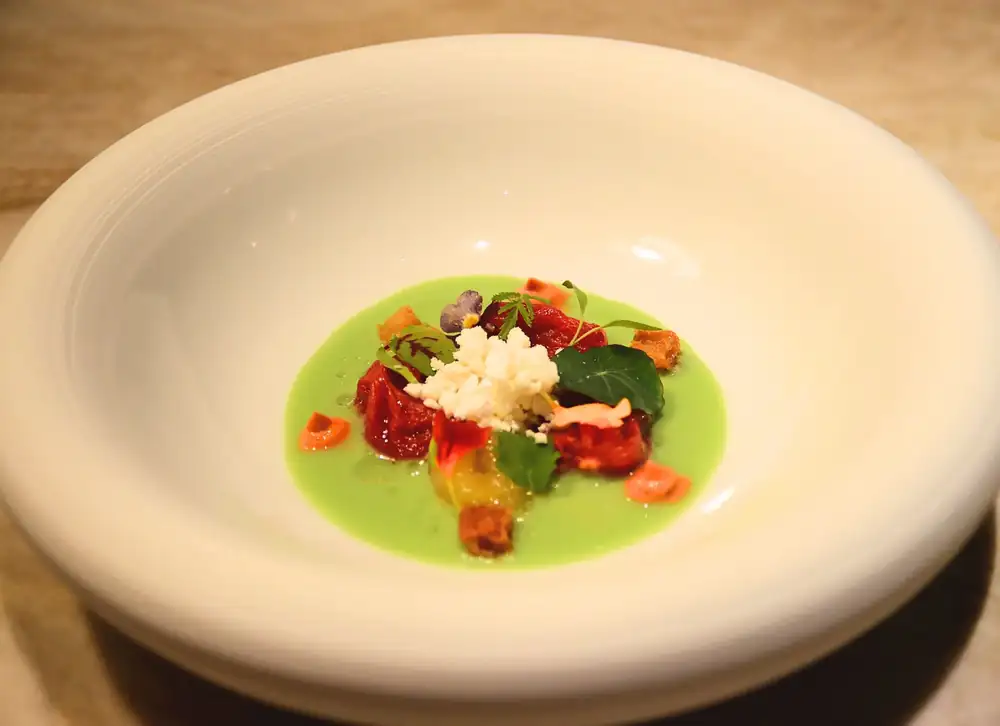
From their own garden come tomatoes in various forms: preserved, confit, puréed, even in soup. Mushrooms, snow peas, and asparagus in different textures and dressings complete the vegetable section, which then gives way to the elegant presentation of offal. On the plate appears a sweetbread cooked in its own juices with an olive cream and raw egg yolk. The sommelier suggests a perfect pairing with a 100% Palomino Fino, and he's right.
At Cancook, the rule for fish is to always offer the best available at the market each week. Zero risk is taken when it comes to showcasing the freshest product, with minimal processing. If anything, a touch of pickled vegetables and seasonal zucchini. As for meat, they currently focus on the different cuts of Iberian pork. The less desirable parts—trotters, snout, and ear—are hidden inside a fritter, presented as a traditional stew. And the presa (shoulder cut) is treated like pastrami. It's refreshing to find such a different product on the plate these days, when pigeon meat is ubiquitous and dominates so many high-end menus.
Little by little, we reach the final stop on this gastronomic journey, where pre-desserts and desserts come together to explore the art of resourceful cooking, using, for example, leftover sourdough toast, grains, and cocoa. It's a true homage to dryland farming. One simple and humble pre-dessert uses the whey left over from making homemade butter with cream from the Villa Villera cheese factory in Sieso (Huesca), which is used to create a praline with sun-dried tomatoes from the garden.
The latest sweet offering is a real doozy: you either love it or hate it. It's a dessert featuring different preparations of the humble mushroom, chocolate, and tonka bean, presented like a classic Magnum ice cream bar.
As mentioned, a captivating tour around the restaurant that boasts a well-deserved reputation as one of the best in Zaragoza. Incidentally, the journey concludes in Cuba, the birthplace of Ramsés González, with a refreshing and evocative combination of mango and coffee; coconut, tobacco, and rum; and kumquat, citrus, and mint. Aragonese cuisine with a broad perspective.
Cancook
Address: Calle Leon XIII n2-4, Zaragoza.