
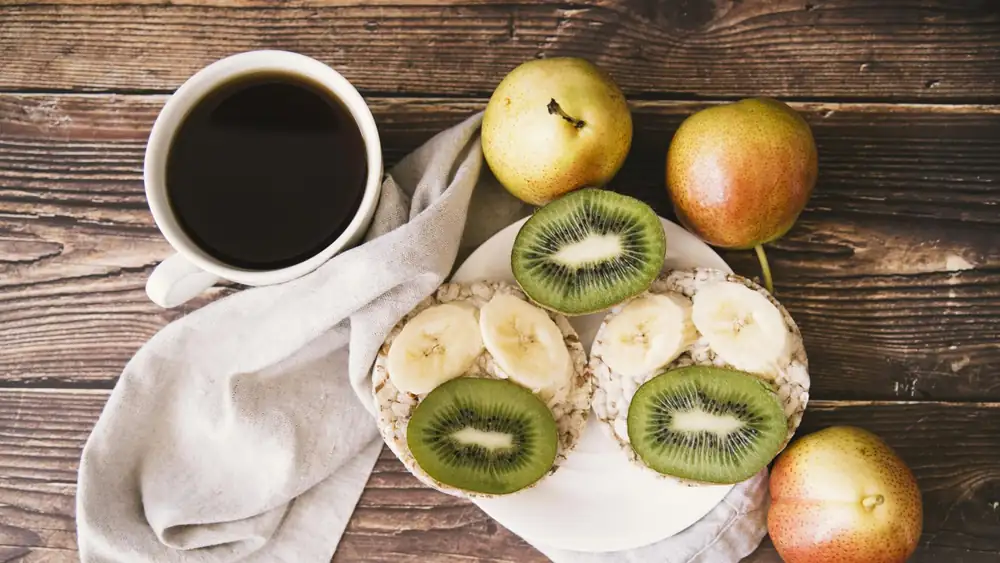
Sandra Moñino, nutritionist: “A breakfast with two kiwis and a coffee is not enough: you'll get hungry.”
Having two kiwis and a coffee for breakfast might seem like a healthy option. The fruit provides fiber, vitamin C, and various antioxidants, while coffee helps many people get going in the morning.
Nutritionist Sandra Moñino discussed this example with her colleague María Pérez Espín. When asked to imagine a breakfast consisting solely of two kiwis and coffee, she acknowledged that it might aid digestion, but cautioned that it would likely be insufficient to sustain energy throughout the morning.
“That’s great for going to the bathroom, but it’s not enough because you’ll get hungry,” Moñino explains. Her suggestion isn’t to eliminate kiwis altogether, but to pair them with a food that provides protein and, depending on individual needs, also healthy fats or complex carbohydrates.
The expert suggests a simple solution: add yogurt. This way, the fruit remains whole, but a source of protein is added, which can prolong satiety. If two medium-sized kiwis are used, the breakfast provides a significant amount of fiber, but very little protein and fat.
The problem, therefore, is not with the kiwi itself. This fruit is particularly notable for its vitamin C content and also provides potassium, folate, vitamin E, and fiber. Furthermore, eating it whole preserves the food's structure and requires chewing, something that doesn't happen in the same way when it's juiced.
Soluble fiber retains water and contributes to a more viscous intestinal content, while insoluble fiber increases stool volume. This combination explains why kiwifruit is being studied for its potential effects on constipation and bowel regularity.
Coffee doesn't make breakfast a bad choice either. In healthy people with good tolerance, it can be part of a balanced diet. Caffeine temporarily stimulates the nervous system and can also activate colon motility in some people, reinforcing the effect that Moñino colloquially attributes to that combination.
However, coffee provides very little energy or nutrients when consumed alone. It also shouldn't be used to suppress hunger for several hours. The response to caffeine varies, and excessive amounts can cause nervousness, palpitations, digestive discomfort, or difficulty sleeping.
How to have a more filling breakfast
The suggestion to add yogurt aims to balance the meal's composition. Plain yogurt provides protein, as well as calcium and other micronutrients. Greek varieties tend to be denser and, depending on the specific product, may contain a higher proportion of protein or fat.
It doesn't have to be skimmed or labeled "light." It's more useful to check that it doesn't have large amounts of added sugar and choose the type that best suits your preferences, digestive tolerance, and overall diet.
Those who don't consume dairy can use a fortified plant-based alternative. In this case, it's advisable to check the ingredients, because not all are equivalent: those made with soy often provide more protein than many coconut, oat, or almond-based products.
You can also add a small handful of nuts, almonds, or seeds. These foods provide unsaturated fats, fiber, and some protein, which increase the nutritional density of breakfast and can make it more satisfying.
Another option is to accompany the fruit with eggs, fresh cheese, cottage cheese, or whole-wheat toast with hummus. The choice will depend on whether you prefer a sweet or savory breakfast, how long until your next meal, and what you plan to do that morning.
A practical combination would be to mix the two kiwis with natural yogurt, rolled oats, and walnuts. The fruit provides freshness and fiber; the yogurt, protein; the oats, complex carbohydrates; and the nuts, unsaturated fats. This isn't a strict recipe, but rather an example of how to combine different ingredients without complicating the preparation.
Oatmeal or whole-wheat bread can be especially helpful for someone who is going to exercise, do physical work, or go many hours without eating again. On the other hand, someone with a smaller morning appetite might find yogurt, fruit, and a few nuts sufficient.
Quantity matters, too. Adding seeds, peanut butter, nuts, oats, and granola all at once can create a breakfast that's more calorie-dense than necessary. Adding fruit doesn't mean filling it with healthy ingredients without considering portion sizes.
The feeling of hunger doesn't depend solely on nutritional composition. Body size, physical activity, rest, the previous dinner, meal times, and individual differences all play a role. Therefore, it can't be guaranteed that absolutely everyone will feel hungry after eating two kiwis and drinking coffee.