The Reason You Should Reconsider Using Dairy To De-Glaze A Pan
Deglazing your pan can be a great way to get some extra flavor into your dishes. When you've finished cooking in your pan, simply add some liquid to the hot surface.
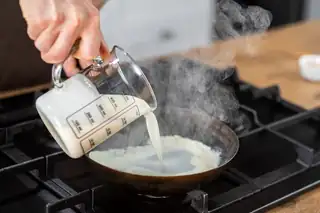
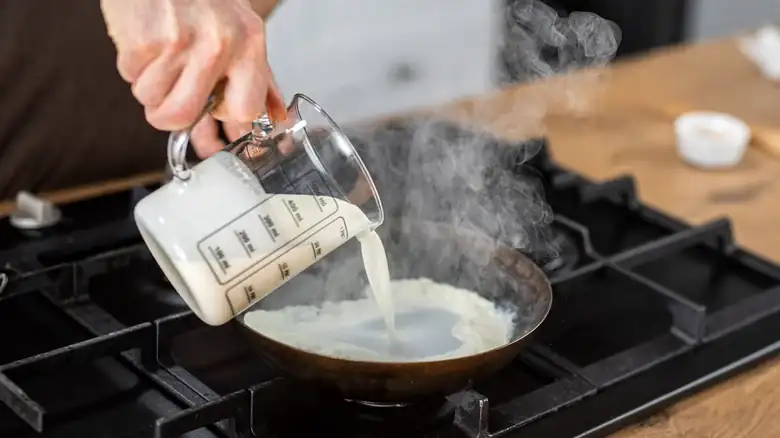
To deglaze a pan, you'll want to choose a liquid complementary to the flavors of the sauce you're planning to make. Although deglazing can be done with a variety of liquids, there are a few that you should avoid — specifically, anything containing dairy. Milk, heavy cream, or half-and-half should all be avoided if you want your food to taste fresh.
When dairy is introduced to high heat — like a hot pan that's just finished searing some steak — it can curdle pretty quickly. Milk curdles at 180 degrees Fahrenheit, and your pans can be upwards of 325 degrees after searing foods on the stovetop — more than hot enough to create that unpleasant curdled texture.
Dairy can always be added in later
If you really want to add dairy to your sauce, you'll first want to deglaze it with a different liquid. Water and wine are both popular choices when it comes to the process. While wine will add a little extra flavor to the sauce, water is neutral enough to give way to the flavors of the remaining food and other seasonings.
You'll want to first add a more heat-resistant liquid to the pan to start the process of scraping up the leftovers. That first liquid will take on the brunt of the heat. Allow it to boil, then simmer and reduce, adding any additional seasonings or ingredients to the mix as it cooks down.
Then, once things have cooled down just a little, you can turn the heat down and mix some milk or cream into the pan to mix it all up into a sauce, without the risk of curdling. The dairy should always be added as a last step once the heat has been turned down, just to play it safe.
You can still save a curdled sauce
You know by now that if you decide to add some dairy to your sauce after deglazing, you should be sure to turn down the heat to avoid any accidental curdling mishaps. However, if your dairy does curdle in the pan, you'll need to decide if you want to try to salvage the mixture, or simply toss the sauce. Curdling is caused when the milk's butterfat, water, and proteins separate. The proteins become more solid, leaving your sauce looking chunky. Fortunately, this process doesn't actually change the flavor, and it's still perfectly safe to eat.
You can even salvage sauces that have curdled with a few extra steps. The easiest is simply to pour the sauce into a different container through a mesh strainer. This will catch all the thicker, curdled bits, leaving you only with a smooth sauce. You can also thicken the sauce up using cornstarch or heavy whipping cream slowly whisked in to disguise the curdled parts.