Dairy-Free Milk Alternatives Have More Sugar In Them Than You Think
The choices are seemingly endless when it comes to shopping for milk nowadays. Dairy-free milks fill grocery store shelves as consumers gravitate more towards these alternatives, whether due to medical reasons or flavor preferences.
Some plant-based milks contain a hefty amount of sugar. A single cup can reach up to 13 grams or more. That's more than half of the daily recommended limit. These aren't natural sugars, either; often they come from additives, such as rice syrup or cane sugar.
Many people reach for plant-based milks in an effort to eat healthier or to add more nutrients to their diet. While these milks can be a nutritious addition to a balanced diet, there are some steps you can take to ensure you're not getting an unexpected sugar bomb in your cereal or morning coffee.
Why so much sugar?
Why does non-dairy milk have so much sugar? Many plant-based milks take on the flavor of the plants they're made from, meaning you might be left with a nutty, starchy, or bitter final product. Companies add sugar and flavorings to make the beverages more drinkable and to approximate the flavor of traditional cow's milk.
If you read the labels closely, you may notice that some dairy-free milks are vanilla-flavored — these are typically the varieties that have additives in them. Adding vanilla flavoring like this is particularly common with soy, almond, and oat milk.
If you're thinking of switching back to cow's milk because of this, think twice. Cow's milk has nearly as much sugar in it: 12 grams per cup, and that goes for all varieties, including 1% and skim. One difference, though, is that sugar in cow's milk is naturally-occurring, unless you're purchasing flavored milks like chocolate or strawberry.
Tips for avoiding sugar overload
Want to enjoy dairy-free milk without a sugar rush? Look for the word "unsweetened" or "original" on the carton while you shop. These varieties have little or no added sweeteners, with some clocking in at less than 1 gram of sugar per cup. Unsweetened, unflavored milks are also generally better for use in cooking and baking.
Stay away from rice and oat milk, even if you're going unsweetened. Rice milk still has about 11 grams of sugar in it without added sweeteners due to the sugars in the rice itself; oat milk has about 4 grams. Nut milks are preferable to starch-based milks if you're really watching your carb intake.
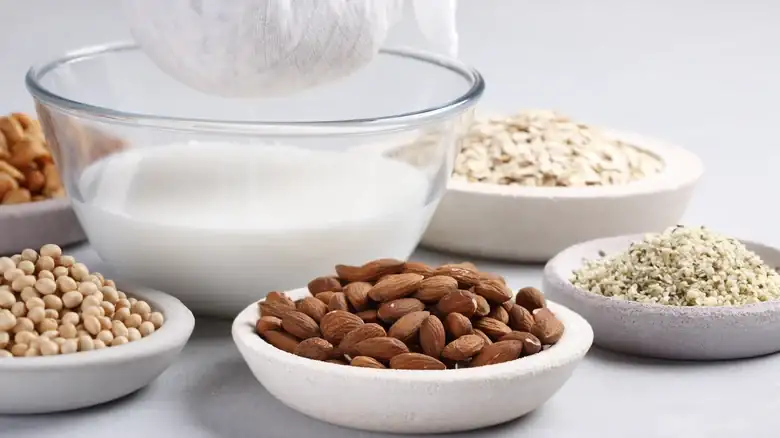
Still craving that touch of sweetness in your milk? To have full control over what goes into your beverage, try making homemade non-dairy milks. These can be sweetened naturally with honey, agave, or whatever you prefer.