How To Prepare Goat Meat For Maximum Tenderness
Although less common in the U.S., goat meat is one of the most popular protein sources worldwide. Nutritionally packed and able to thrive across many environments, it's not only an essential subsistence food but also a delicious cornerstone to many global dishes.
However, goat comes very lean — its fat content is one third that of beef. So knowing how to properly prepare the protein to maximum tenderness requires technique. Generally, many cuts of goat — just like a quality beef brisket — require slow-cooking to shine. Braising, stewing, or roasting are the most common methods to get the best out of this protein. Simmering in liquid is another effective way to compensate for the small amount of fat. And to meld with its naturally strong flavor, aromatic-heavy marinades and rubs are common. After all, it is the typical meat of choice for a traditional pepper-heavy birria. So get the technique and seasonings right, and you'll certainly end up with an ultra-tasty result.
Goat shines when slow-cooked in aromatics
Undoubtedly, goat does require extra effort in comparison to other meats. In contrast to other gamey animals, goat is high in collagen, which turns to rich gelatin with patient heating. As a result, preparing goat is all about knowing how to cook low and slow. If you give the meat time to develop its notes, it will turn into a dish that is more flavorful and more tender.
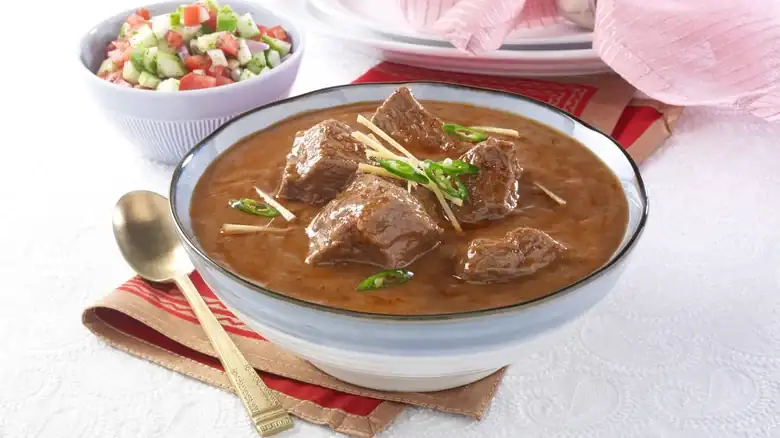
The meat shines in a variety of stews. In addition to birria, goat is the preferred protein in an aromatic-loaded Jamaican-style curry. Slow-cooked with peppers, a bouquet of spices and stock, the resultant curry turns out rich and tasty, with a thick consistency by way of the meat. Such a technique is similarly employed in the rich peanut, tripe and goat stew from Ghana — the consistency amazes, and the goat's strong notes stand up to the aromatics.
Alternatively, goat meat can also be showcased through marinating and slow-roasting. Especially useful for larger cuts, a low temperature, plenty of spice, and some added fat yield a dish reminiscent of shredded pork. Serve it as a Middle Eastern shawarma or Mexican barbacoa tacos, and the meat's stringy nature is appetizing rather than tough.