TomKat Ranch: Measuring the Benefits of Regenerative Agriculture with Precision Ag Tech
Regenerative agriculture is a method of farming that aims to restore the fertility of the soil and the overall health of the land it’s conducted on.
“When you’re doing something that is regenerative, you’re basically saying that my productive asset should not be losing value. My productive asset should be gaining value, and that appeals to everybody,”
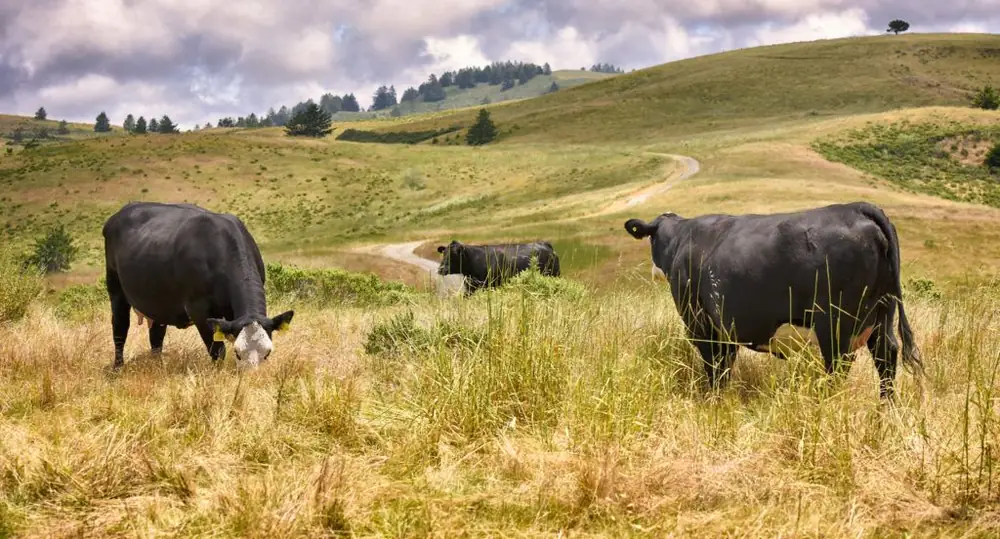
There are various ways this can be done that are consistent with sustainable agriculture practices more generally such as limiting the use of synthetic inputs like pesticides and fertilizers and limiting tillage of the soil, which can negatively impact soil health. Through what’s called holistic slated grazing, or rotational grazing, ranchers strategically move their cattle around the land so that no one area is too depleted, yet every inch of rangeland is trimmed and fertilized by the cows.
TomKat Ranch , a proponent of regenerative ranching, is betting that the rise of precision agriculture. Big data technologies could help prove the financial viability of regenerative ranching, as well as the environmental benefits. Kevin Watt, land and livestock manager at TomKat Ranch, thinks that once the benefits of regenerative ranching can be fully quantified — through soil carbon measurements, forage density, and more — it could become a mainstay of both ranching and soil management. “When you’re doing something that is regenerative, you’re basically saying that my productive asset should not be losing value. We caught up with Watt at the Forbes Agtech Summit in Salinas California to find out what kind of technology he’ll need to make his case, and what challenges are standing in the way.
How are you working at TomKat to measure the benefits of regenerative agriculture? What is really exciting is the fact that we see precision farming booming; the idea of ‘Let’s not use more than we have to.
And so what is exciting is that as we’re better able to quantify and capture what those co-benefits are, whether it’s humane animal treatment or nutritional density, or whether it’s carbon sequestration or watershed services. Typically speaking about 60% to 80% of that sugar is being fed into the microbial community because of its incredible benefits for the plant, but that is building this organic matrix that will hold water and grow me more grass next time. For every 1% of soil organic matter change, or advance, we get an extra 25,000 gallons of water per acre being stored (and that’s a USDA figure so people know about this ).
We’ve learned that if you can get that feedback from your landscape, whether or not you share a philosophical interest in environmentalism or humane treatment of animals, you start to see that it really makes sense to evolve with your landscape; to see what the ROI is on every one of your management choices. We are working with partners in aerial monitoring and satellite monitoring to see if there are cheap, effective, and accessible tools that would democratize monitoring.
How many different elements do you have to monitor in order to have a complete picture of what’s going on in the soil and on the land in general? And what is great is with Landsat , [the image-taking satellite] which has been going since 1985, is we have a worldwide database that can easily show not only what I’m doing over time, but show me how other people with my same soil type, my same rainfall fall, my same solar hours, are doing it.
That will start up a conversation in rangeland management that is pretty unprecedented as the general feeling is that you kind of inherit from the weather and from the land how much grass you’re going to get. And anecdotes are certainly data, but they’re not the kind of rigorous experimental data a board needs to see to change how it’s at present doing things. So this is what we’re trying to do: an agnostic search of what strategies provide overall societal value from rangeland management and then build the case so that people who are skeptical or who have boards or constituencies have the evidence that they need.
We really try and show the long-term potential of unifying that information and showing people that it’s not just about any one data point, but it’s how they all relate, as ranchers and producers, and most consumers, aren’t really interested in a single tool for a single purpose. We are trying to figure out what are the right passive monitoring tools that can be standardized across the entire country, and the entire planet.
If we can raise the stakes of beef production, then we can really show that land management, cattle production, ranching, is a white collar job. And then hopefully the compensation and the value will follow as we’re able to really showcase it.
- Who: TomKat · TomKat Ranch
- Money: $20 billion
- Percentages: 18% · 60% · 80% · 1%
- Figures: 18% · 20 billion · 60% · 80%