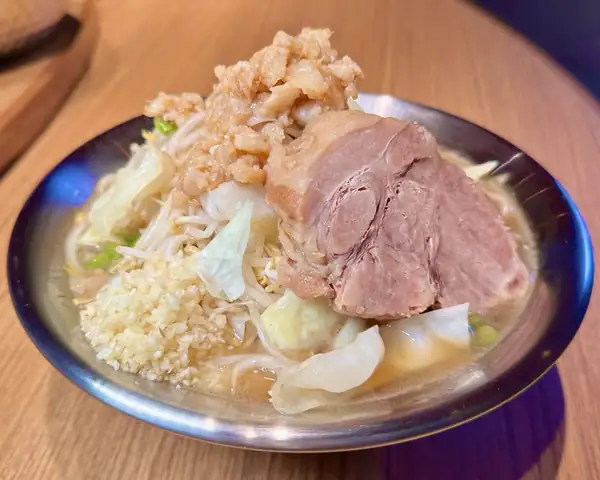
Reverse Ramen: Frozen Broth Shavings Over Hot Noodles
Our test kitchen inverted the bowl. The tonkotsu is frozen into a block and shaved like Peruvian raspadilla over steaming noodles, so the broth melts as you eat and the temperature of the dish changes with every chopstick. Absurd on paper, addictive in practice.

- 2 kg pork trotters and neck bones
- 1 onion, 1 head of garlic, 5 cm ginger
- 80 ml soy sauce
- 40 ml mirin
- 2 tablespoons salt (to taste, seasoned strongly)
- 720 g fresh ramen noodles
- 6 soft-boiled eggs
- Spring onions, black garlic oil, nori to serve
- Blanch the bones for 5 minutes, drain and rinse. Cover with 4 litres of fresh water, add the onion, garlic and ginger, and simmer, topping up with water, for 12 hours until the broth is milky and thick.
- Strain, season with soy, mirin and salt (it should taste slightly too salty), cool, and pour into a rectangular tub. Freeze for at least 10 hours.
- Cook the noodles in boiling water for the time on the packet, drain very well, and divide between six warmed bowls.
- Working fast, shave the frozen broth block with a plane or box grater directly over each bowl, about 180 g per bowl.
- Top with egg, spring onion, nori and a spoon of black garlic oil. Serve immediately, without spoons.
Ramen is a hot dish about a hot broth. Everything in a ramen shop, from the noodle timing to the way the bowl is warmed, exists to keep the soup near boiling until it reaches you. The test kitchen wanted to know what happens when you remove that premise entirely. The idea came from Lima's raspadilla carts, where a block of ice is shaved by hand into a paper cone and drenched in fruit syrup. What if the ice were broth?
A proper tonkotsu, simmered from pork bones for twelve hours, is so rich in gelatine and emulsified fat that it sets solid in the fridge and freezes into an opaque, creamy block. Shaved with a Japanese kanna plane or a heavy box grater into a bowl of just-boiled noodles, the shavings fall as a pale snow, sit for a second, and then collapse into liquid where they touch the pasta. The first mouthful is cold and almost creamy, the next is warm, and by the bottom of the bowl you are eating ordinary hot ramen.
The numbers
- Broth: 12 hours of simmer for 2 kg of pork trotters and neck bones yields about 1.8 litres, enough for six bowls at 300 ml each. Cost per bowl of broth in our kitchen: about 1.10 euros.
- Freezing: pour the strained, seasoned broth into a 1 litre rectangular tub and freeze for a minimum of 10 hours. Shave straight from the freezer; it softens in under four minutes at room temperature.
- Ratio: 120 g cooked noodles to 180 g shaved broth per bowl. More broth and the bowl floods; less and it never quite becomes soup.
Why it works
Cold suppresses salt and fat on the tongue and flatters aroma, so the first cold shavings taste clean and porky rather than heavy. As the bowl warms, the salt returns and the dish becomes the ramen you know. The frozen broth also keeps its aroma better than a pot held at a simmer for hours, which is why shops that reheat carefully taste better than shops that boil. Season the broth 20 percent more heavily than you would for hot service; cold needs it.
Serve with the usual soft egg, spring onion and a spoon of black garlic oil, which stays liquid and pools in the melting snow. Do not offer a spoon until the third minute. The point is the change.