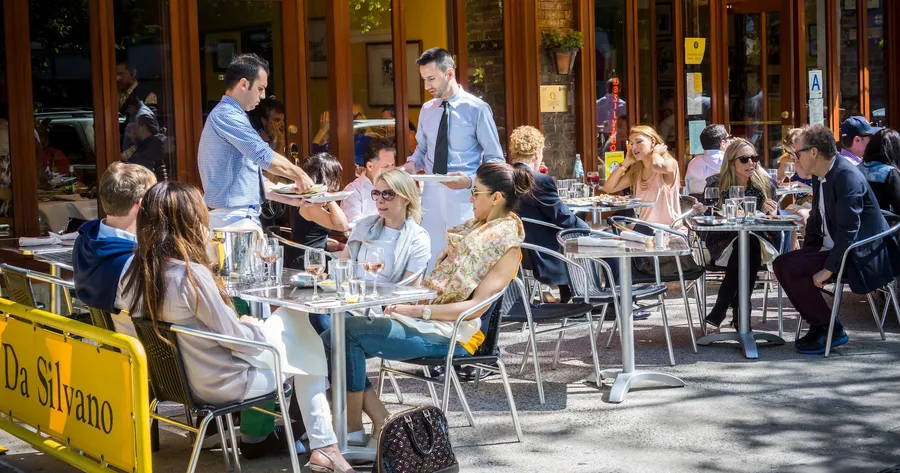
More evidence that shoppers prefer independents
Per to Bank of America credit card data, shoppers, including lower-income and younger diners, are spending more at restaurants this summer. But they’re not spending it at chains, preferring to direct their spending toward regional concepts and independents.
“That doesn’t mean there aren’t national chains that are doing great. I’m talking about, in the span of averages, local restaurants are doing better at this time.”
As we’d written before, and covered in a recent episode of the A Deeper Dive podcast featuring Sysco CEO Kevin Hourican, independents are performing better than chains. “Mom-and-pop restaurants are performing better than national chains at large,” Hourican stated. “That doesn’t mean there aren’t national chains that are doing great. I’m talking about, in the span of averages, local restaurants are doing better at this time.” National chain performance has very much been hit or miss, but in general turnover have not kept pace with inflation.
For every Chili’s and Texas Roadhouse that are pulling in a lot of diners, there are Wendy’s and Sweetgreen that are losing them. The average American visits a chain restaurant about 9% fewer times every year than they did in 2021. Two-thirds of them tell Technomic that they prefer dining at locally-owned restaurants when given the choice.
But local restaurants can be more innovative and nimble, and when those problems come up, they can make changes that ensure their survival. And they have the backing of that consumer preference.
That advantage has grown in recent years and will likely keep growing in the future, given the state of chains right now. For one thing, as menu quotations have went up, more shoppers are questioning the value they get from chain restaurants, and they are opting for independents instead.
At the same time, shoppers want experiences when they visit restaurants. The percentage of shoppers who are dining in has been mounting steadily, albeit slowly, over the past few years.
Going to Technomic, 52.8% of visits were in the restaurant in the second quarter, compared with 51.5% a year ago. That remains well below the 60% from before the pandemic, and it may never return to that level.
Those dine-in occasions give independents an advantage, because it’s less about convenience and more about experience. Many fast-food chains have abandoned dine-in as an experience, relying on kiosks to take inside orders while much of the staff balances the needs of multiple ordering channels.
Many full-service chains, meanwhile, have burdened themselves with enormous debt levels or they franchised roughly everything, leaving them little room to provide the types of investments required to win in an environment like this. But much of that problem was driven by chains at the bottom, including concepts like TGI Friday’s, On the Border, Pinstripes, Razzoo’s, Bar Louie, Brio Tuscan Grille and others that have bankruptcies and mass closures in their histories.
And both fast-food and casual-dining chains rely heavily on franchising, where the store operations rules are more restrictive and where it’s more difficult to recover from takings problems. All of which means that chains have made themselves less competitive in recent years, and independents are primed to keep taking advantage.