Sponge cake, the best recipe
The best recipe for a classic white sponge cake. Baked without baking powder and doesn't sink after baking. The sponge cake rises only thanks to the careful, proper whisking of egg whites and sugar (eggs) and their gentle folding into the flour.
Also try the cocoa sponge cake recipe:
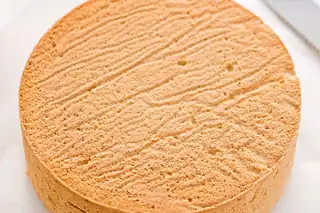
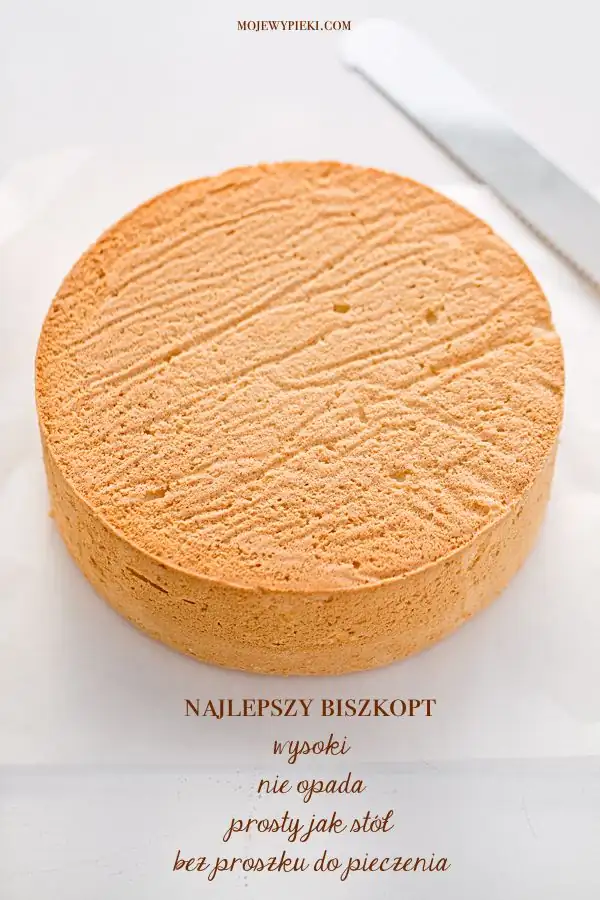
In a 23 cm diameter springform pan, the sponge cake reaches a height of 7 cm (as in the photos, I have a tall springform pan). In a classic 25 cm diameter, 5 cm high springform pan, it rises to the very edges of the pan, making it 5 cm high.
Ingredients for sponge cake:
- 5 large eggs 1 egg weighing 63-73 g
- 165 g of fine baking sugar (3/4 cup, 250 ml)
- 115 g cake flour 3/4 cup (250 ml)
- 45 g potato starch 1/4 cup (250 ml)
All ingredients should be at room temperature.
Separate the egg whites from the yolks, then beat until stiff peaks form (be careful not to overbeat them – overbeaten egg whites will appear curdled and will form "clouds"). While beating, gradually add the sugar, a spoonful at a time, beating after each addition. Add the egg yolks one at a time, continuing to beat.
Sift the wheat flour and potato starch directly into the beaten egg mixture. Gently fold in using a spatula (preferably) or a whisk until the ingredients are combined. Mixing the ingredients with a spatula will make the sponge cake very fluffy and will rise to the sides of the pan. Mixing the ingredients with a spatula is also the safest method; do not mix with a mixer.
Line a 23 or 25 cm springform pan (see the note on the height of the sponge cake after baking below the introduction) with baking paper (only the bottom), leaving the sides ungrease. Gently transfer the batter onto the sponge cake and smooth out the surface.
Bake the sponge cake at 170°C, preferably without convection, for about 35-40 minutes or until a skewer inserted into the center comes out clean. Immediately after baking, remove the still-warm sponge cake from the oven, drop it (in the pan) onto the floor from a height of about 30 cm, and then let it cool at room temperature. Once cooled, cut it into three layers, preferably with a sharp, long, serrated knife.
Note: the sides of the sponge cake should be separated from the form with a knife only after it has cooled down.
A new method I often use to prepare sponge cake is to beat whole eggs (without separating the egg whites and yolks) with sugar until frothy, adding all the sugar at once. This way, the eggs take longer to beat, but there's no risk of the egg whites over-beating. I also find this method simpler, especially since my planetary mixer does everything for me. From there, follow the recipe.
What to do if the sponge cake does not rise or falls after baking?
Review the preparation process to see what you could have done differently. Did you measure the flour and other ingredients correctly? Perhaps you used a different flour than wheat flour? Did you beat the egg whites properly (not overbeat them)? Or perhaps you didn't mix them gently enough with the other ingredients and the egg whites collapsed? This sponge cake is made without baking powder and rises only thanks to properly beaten egg whites.
Enjoy your meal!