Inside Monteverdi Tuscany, the Val d'Orcia village reborn around hospitality
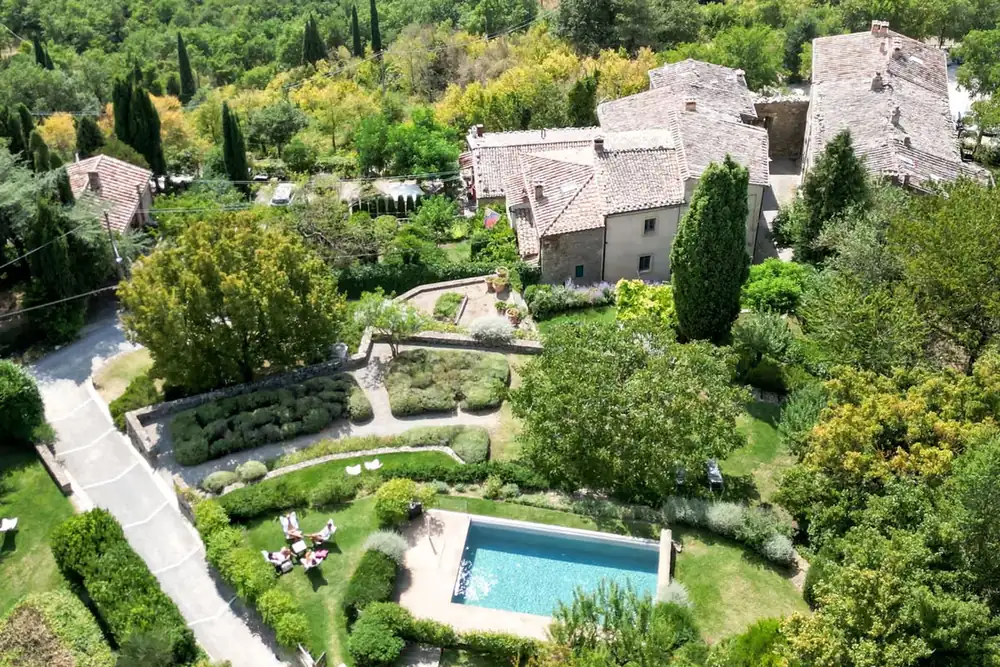
There are places you visit and places you experience. Monteverdi Tuscany undoubtedly belongs to the latter category. Perched in the tiny medieval village of Castiglioncello del Trinoro, in the heart of the Val d'Orcia, this refined, scattered hotel is more than just a luxury accommodation, but a cultural project that has restored life and identity to a town destined for abandonment. An example of
Arriving at Monteverdi is like entering a suspended dimension. The ancient stone houses interact with the landscape of the Sienese hills, while the silence of the Tuscan countryside becomes an integral part of the experience. Credit goes to the vision of founder Michael L. Cioffi, a New York lawyer who over the years has shaped a project capable of uniting hospitality, art, wellness, culture, and gastronomy into a single, coherent narrative.
When hospitality brings a village back to life
Today, Monteverdi Tuscany is much more than a boutique hotel: it includes 30 suites throughout the village, a spa, an art gallery, a medieval church transformed into a space for concerts and cultural events, a culinary academy, and diverse dining options. The Ilaria Miani architecture firm has carefully enhanced every detail of the village, breathing new life into each space, even maintaining thematic continuity. For example, what was once the village school is now the academy, but we could continue with the shop, bar, osteria, and so on. And it is precisely the gastronomic offering that represents one of the strengths of the entire destination; the most recent and perhaps most ambitious chapter in its evolution: Oreade.
Oreade, the contemporary face of Tuscany
The name recalls the mountain nymphs of Greek mythology, figures associated with nature and the woods. This reference is no coincidence. Oreade was born as a tribute to the surrounding landscape and the regenerative power of the Tuscan land. Here, the cuisine doesn't simply interpret the local area: it becomes a direct expression of it. The fine-dining restaurant, open exclusively for dinner, focuses on an intimate and highly personalized experience.
The space, designed by Foster + Partners, was conceived as a natural extension of the gastronomic philosophy. Reclaimed stone, olive wood, artisanal elements, and a refined aesthetic create an atmosphere that invites contemplation and places food at the center of attention. The impression is of a contemporary retreat where architecture, design, and cuisine interact without overlapping. Everything contributes to a vision of Tuscany that is authentic yet free from stereotypes.
The signature of Riccardo Bacciottini
At the helm of Oreade is chef Riccardo Bacciottini, a Tuscan professional with an international background that includes experience in top-tier kitchens, from Paris to London to Noma in Copenhagen, considered one of the most influential restaurants in the world. This expertise shines through in his technique and gastronomic sensibility, without ever becoming a stylistic exercise. His cuisine is rooted in raw ingredients and a respect for the local area.
Wild herbs, mushrooms foraged in the woods, edible flowers, meats from select farms, ancient grains, and local produce become the tools through which to showcase the biodiversity of contemporary Tuscany. The approach is sustainable and deeply rooted in identity. Dishes are born from simple ingredients, transformed with technical precision and modern sensibility. There's no desire to amaze at all costs, but rather to build a dialogue between memory and innovation, between landscape and food.
A journey through the territory
The tasting itineraries are the heart of the experience. They follow the rhythm of the seasons and accompany guests on a journey through the countryside, woods, mountains, and seaside vistas, offering a gastronomic snapshot of a lesser-known Tuscany. Each course seems to emerge from a dialogue with the surrounding landscape. The wild vegetation, the scents of the fields, and the agricultural and pastoral culture of the Val d'Orcia find expression in elegant, contemporary compositions that always maintain a strong sense of clarity. During the tasting, the sensation is that of ideally traveling the dirt roads that crisscross these UNESCO World Heritage hills, pausing to observe details often invisible to the casual eye. It's a cuisine that invites reflection, yet never sacrifices the pleasure and immediacy of flavor.
When the end of a meal becomes an experience
Monteverdi Tuscany's impressive project, where every detail is meticulously crafted, couldn't fail to offer the added value of a dedicated in-house pastry shop, led by executive pastry chef Luigi Margiovanni. The skilled team is evident from the bread and pastries offered at breakfast, but it's at the end of dinner at L'Oreade that the chef truly shines, rigorously interpreting his "three main ingredients" rule to engage all the senses in an extraordinary sweet journey, culminating with the main dessert course, a true work of art for the eyes and the palate, despite its simple and easily understandable structure.
Hospitality as an added value
In a setting like Monteverdi Tuscany, it would be easy to focus solely on the spectacular setting. Oreade demonstrates, however, that true luxury lies in the ability to build relationships and offer authenticity. The dining room, led by Giuseppe Pio Iannicelli, accompanies the experience with discretion and expertise, while the wine selection showcases the Tuscan and Italian winemaking heritage with pairings designed to enhance the chef's gastronomic story.
The alcohol-free menu is extremely interesting, with a mix of homemade products and alternative beverages from various sources, including international ones, offering a pleasant and intriguing experience. The overall impression is that of a mature project, where every element contributes to defining a precise identity. Not a hotel restaurant, but a gastronomic destination capable of standing on its own.
A destination that looks to the future
Monteverdi Tuscany today represents one of the most interesting examples of how Italian hospitality can evolve without losing its connection to its roots. The revitalization of the village, the attention to culture, the dialogue with contemporary art, and the promotion of local gastronomy create a model that goes beyond the simple concept of luxury. Oreade is probably the most effective synthesis. A place where the region transforms into a gastronomic tale and where cuisine becomes a tool for cultural interpretation.
In a Tuscany often depicted through well-worn images, Oreade offers a different perspective: more intimate, more contemporary, and perhaps for this very reason, more authentic. This restaurant is destined to quickly become a reference point for regional fine dining, and one more reason to visit that little corner of Val d'Orcia where time still seems to follow a rhythm all its own.