Aussie Lemon Coconut Slice Cake
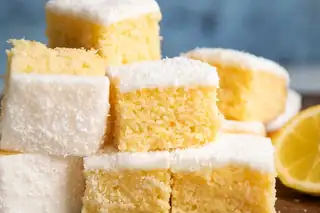
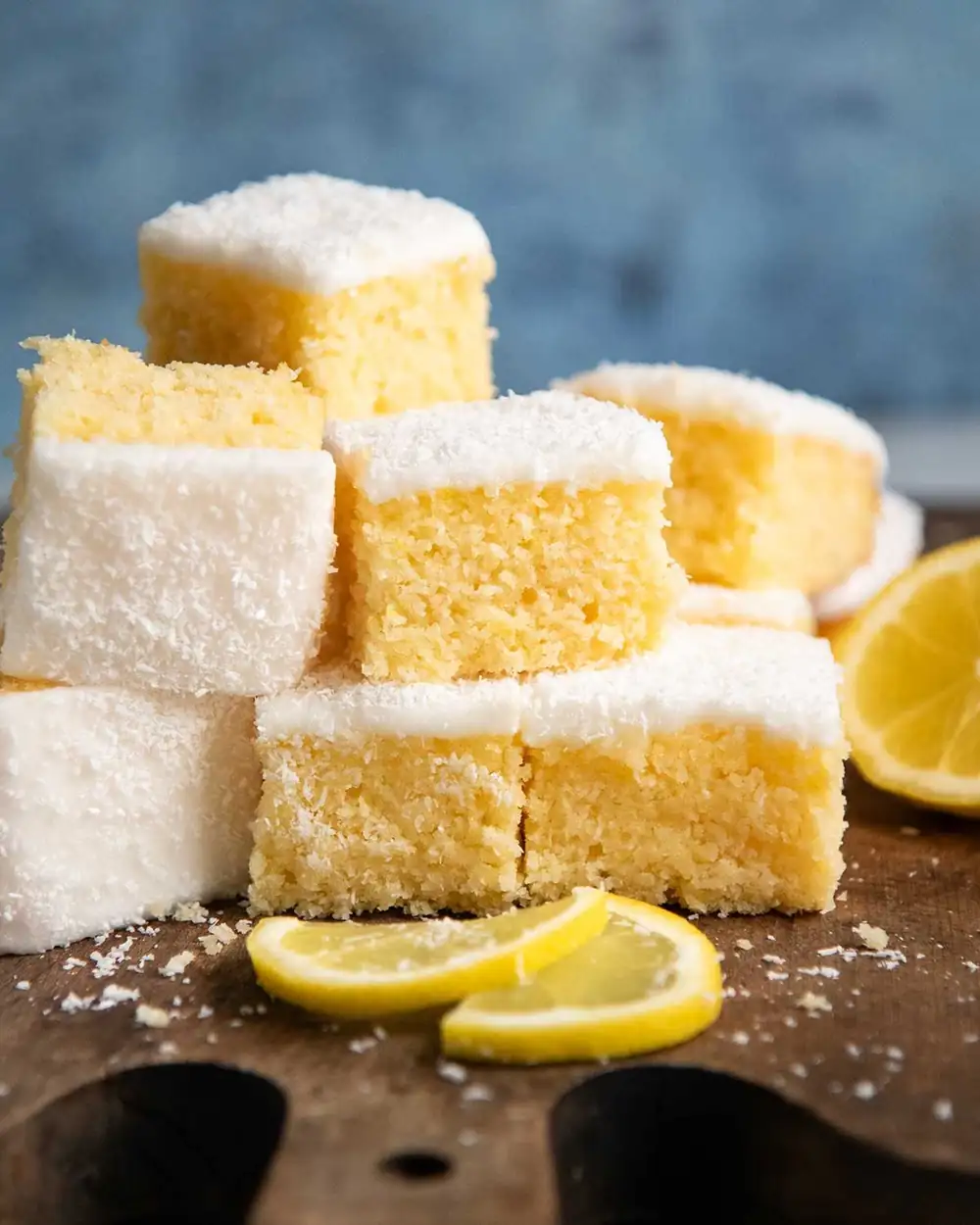
This is the cakey kind of Lemon Coconut Slice, with a lemon coconut butter cake topped with lemon icing, cut into little squares so it’s perfect with a cuppa. And because the icing is the crusting sort, it’s practical for bake sales or tucking into lunch boxes!
- 1 cup plain flour / all-purpose flour ((Note 3 for gluten-free))
- 3/4 cup desiccated coconut (, unsweetened (Note 1))
- 1 tsp baking powder
- 1/8 tsp cooking salt / kosher salt
- 125g / 8 tbsp unsalted butter (, softened (Note 2))
- 3/4 cup white sugar (, caster/superfine or regular/granulated)
- 2 large eggs (, at room temperature (~50-55g/2 oz))
- 1 tbsp lemon zest
- 2 tbsp lemon juice (, at room temperature)
- 1 tsp vanilla
- 1/2 cup milk (, full fat, at room temperature)
- 2 cups soft icing sugar / powdered sugar (, sifted)
- 7 - 8 tsp lemon juice (, BE CAREFUL! Goes from perfect to runny with the teeniest amount too much!)
- 2 tbsp desiccated coconut (, for sprinkling)
- Whisk Dry, set aside. Cream butter and sugar, beat in eggs one at a time. Beat in vanilla, zest and juice. On low, beat in 1/3 flour then 1/2 milk, repeat, finishing with flour. Finish mixing by hand. Bake in 20cm/8" lined pan 30 min at 180°C/350°F (160°C fan). Cool upside down, spread with icing, sprinkle with coconut.
- Preheat the oven to 180°C/350°F (160°C fan-forced). Grease and line a 20cm/8" pan with paper.
- Dry ingredients - Whisk the Dry ingredients in a medium bowl. Set aside.
- Cream butter - Using a handheld electric beater, cream the butter and sugar in a separate bowl until it is smooth and fluffy, about 2 minutes (don't use a stand mixer, there is insufficient volume).
- Eggs, lemon and vanilla - Beat in the eggs one at a time until smooth. Then add the vanilla, zest and lemon juice and beat just until combined. It will look a little curdled at this stage, that's ok, it comes together in the next steps.
- Alternate flour and milk - Add 1/3 of the flour and beat on low until mostly mixed in. Add half the milk and beat just until incorporated. Repeat with another 1/3 of the flour, the remaining milk, then the remaining flour, mixing only briefly after each addition. Stop beating as soon as the flour disappears, then finish mixing by hand with a rubber spatula, making sure all the flour is mixed in. The batter should be like softly whipped cream - not runny, but not thick like peanut butter, with little lumps from the coconut.
- Bake - Scrape batter into the cake pan and smooth the surface. Bake 30 minutes or until a toothpick inserted into the middle comes out clean.
- Cool in the pan for 5 minutes, then cool upside down on a rack - we will ice the base as it's nice and flat. Fully cool before icing.
- Spread with the Lemon Icing then sprinkle with coconut while wet. Let the icing set for 1 hour before slicing to serve!
- Preserver! Put the icing sugar and lemon juice in a large bowl and use a rubber spatula to mix, using a smearing motion to combine until the glaze becomes a thick spreadable consistency like peanut butter (rather than the runny drippy kind). Be patient, it takes time to mix and assertive smearing to combine just a bit of lemon with lots of icing sugar! Only add extra lemon juice 1/2 teaspoon at a time if needed - this will go from too thick to runny very easily!
Aussie Lemon Coconut Slice Cake
I’m sure this style of cake isn’t exclusively Australian, but I call it Australian because it’s a copycat of lemon cake slices I grew up seeing in cafes and at school bake sales. These days, you’ll even find packaged versions in grocery stores!
It’s a thin lemon butter cake cut into handheld pieces and thickly iced with a glaze that crusts on the surface, making it practical for wrapping, stacking and transporting without frosting smearing everywhere. Sometimes it has coconut in it, sometimes it doesn’t. I like it with, so mine does!
I’ve seen it called Lemon Slice, but to me that means a compact base topped with lemon curd, like these Lemon Bars. In my simple mind, bars and slices have compact bases, whereas this is actually a thin cake. Hence the awkward name – Lemon Coconut Slice Cake!
Ingredients in Aussie Lemon Coconut Slice Cake
Here’s what you need to make this.
1. For the cake part
1 very big lemon or 2 regular lemons – We need 1 tablespoon of zest and 2 tablespoons of juice for the cake, and 7 – 8 teaspoons for the icing. Fun fact: lemon flavour is in the zest. The juice just makes things tangy.
Flour – Just plain / all-purpose flour, not self-raising flour (wrong about of baking powder built in).
Desiccated coconut – This is the finely shredded type that is like panko breadcrumb size, called shredded coconut or finely shredded coconut in the US. Not shavings or flakes (too large), not coconut powder. Make sure it’s unsweetened (standard in Australia).
Baking powder – This is what makes the cake rise. We only need 1 teaspoon. Don’t substitute with baking soda, the cake gets a bit of a hump in the middle (we want flat for this slice-cake).
Unsalted butter – Softened to room temperature so it can be creamed.
White sugar – Caster / superfine sugar if you’ve got it (it’s finer so dissolves more easily) other regular sugar works too (granulated sugar).
Large eggs – Eggs around ~50 – 55g/2oz each, from a carton labelled “large eggs” (which are 600g for a dozen which suggests 50g each, but not all eggs are exactly the same weight – selfish hens! Why can’t they lay exactly the same size eggs every single time!! ).
Milk – Just regular milk is the liquid for this cake! Make sure the milk is at room temperature as fridge cold milk can make butter solidify and you’ll up with greasy little butter pockets in the cake, and it won’t rise as well.
Salt – Just a tiny amount, to bring out the flavours in everything else.
2. For the thick glaze icing
This icing is actually just a glaze, but I make it very thick so it spreads like a buttercream frosting rather than a typical runny glaze that is see-through and runs down the side of the cake. It will set with a crust on the surface and it’s not greasy like buttercream, which makes these slices really practical – you can stack them, wrap them in cling wrap, pack them into lunch boxes and bundle in gift bags without icing smearing everywhere.
Soft icing sugar / powdered sugar – If you’re in Australia, get the type of icing sugar called SOFT Icing Sugar rather than PURE Icing Sugar (which sets harder, like royal icing). If not presented with these options, just get what you can. .
Lemon juice – This is the liquid to make the icing. We only use a very small amount – 7 to 8 teaspoons for 2 cups of icing sugar – which sounds like nowhere near enough, I know! But trust me, keep mixing and smearing and that enormous pile of icing sugar will come together into a thick, smooth icing that stays on the surface rather than running down the sides like typical glazes.
Desiccated coconut – For sprinkling.
How to make an Aussie Lemon Coconut Slice Cake
The most important thing with this recipe is to ensure the eggs and milk are at room temperature, not fridge cold, else the butter will solidify and you’ll get little hards bits of butter in the batter rather than mixing in smoothly.
Oh – also! Don’t use a stand mixer. The volume of batter is so small, you will spend more time scraping down the sides than actual mixing time. (I tried, it was a pain!)
Dry ingredients – Mix the dry ingredients in a medium bowl (flour, coconut, baking powder and salt).
Cream butter and sugar – Using a handheld beater (don’t use a stand mixer, there’s not enough batter), cream the butter and sugar for 2 minutes until it’s light and fluffy. Start on low speed so you don’t get sugar spraying everywhere, then increase the speed to high when you can.
Beat in the eggs one at a time until it’s mix in, then the lemon juice, zest and vanilla. The batter will look a little curdled once the lemon goes in but it’s ok, it will come together into a smooth batter when the flour is added.
Flour and milk, alternating – Add 1/3 of the flour mixture and beat on low speed just until the flour is mixed in, then stop. Add half the milk, beat on low just until incorporated, then repeat again with half the remaining flour, beat, milk, beat, then remaining flour and beat. Stop when you can no longer see flour. Using this method minimises the mixing required to incorporate all the flour and milk (ie if you dump them all in one go, you have to beat for longer to mix in), and less mixing = softer cake. Over mixing batter = hard cake!
Finish by hand – Use a rubber spatula to sweep around the bowl and mix in any stray bits of flour.
Pour into a 20cm/8″ square pan lined with paper and smooth the surface.
Bake for 30 minutes at 180°C/350°F (160°C fan) or until a toothpick inserted into the centre comes out clean.
Cool upside down – Cool in the pan for 5 minutes, then turn it out onto a rack and cool it upside down. This gives us a perfect flat surface for icing.
Icing (frosting) – This is a very thick glaze, almost like buttercream, so it sits on the cake rather than running down the sides. Mix the icing sugar and lemon juice with a rubber spatula using firm smearing motions. It will seem impossibly dry at first, but persevere – at first it will turn into a dough-like mixture, then into smooth thick icing. Aim for a peanut butter consistency: spreadable, not drippy. If needed, add more lemon juice just 1/2 teaspoon at a time – glazes go from too thick to too runny very quickly, so use a tiny bit at a time!
Ice and shower – Once the cake is completely cool, spread the icing on from edge to edge. Sprinkle with desiccated coconut, then let the icing set for half an hour before slicing into squares or bars to enjoy!
Stays fresh for a week
Another very appealing feature of this cake is that it stays fresh for a week, thanks to the coconut which adds moisture into the cake. Nice not to have to resort to any bakers’ tricks for keeping this cake moist like buttermilk, yogurt, sour cream or oil!
In fact, I swear the cake was even softer and tasted better on day 2, once the lemon and coconut flavours had settled in and the moisture had worked its way through the crumb. A cake that improves overnight and stays fresh for a week – what more could you ask for! – Nagi x.
Lemon Coconut Slice Cake FAQ
This cake will stay fresh for a week. Keep it in a cool pantry in an airtight container. If it’s hot where you are, keep it in the fridge but I highly recommend bringing to room temperature (cold cake is hard and you can’t taste the flavours as well).
These worked very well with gluten-free flour! The cake was a little more crumbly when cutting but not so crumbly that it’s a problem to eat with your hands. The taste is the same, the texture has the faintest powdery-ness that comes through in some cakes using GF flour, but it is barely noticeable. I think I only notice it because I’m looking for it.
Note: These were tested with White Wings Gluten-Free flour, a brand that is carried by large grocery stores here in Australia. Gluten-free flour blends vary a lot between brands, so I can only vouch for White Wings. However, the fact that it worked so well gives me confidence other good gluten-free flour blends should work too, though results may vary.
I haven’t tried but the recipe as written should work for limes, oranges and other citrus fruit. The only question is how strong the flavour is – lime should be fine, but oranges etc may be a little light on flavour. If you’re after full-on orange flavour, you can’t beat this Whole Orange Cake – rind and all!
Aussie Lemon Coconut Slice Cake
Recipe video above. This is a lovely buttery lemon coconut cake topped with lemon icing and coconut, made for cutting into bars or squares and eating with hands. The icing crusts over, so it’s perfect for lunchboxes, gifting and transporting. And it keeps incredibly well – fresh for a week!You'll need one very large lemon or two regular lemons. You can leave out the coconut if you want, to make plain lemon.
Dry:
1 tsp baking powder (make sure yours is still active)
Lemon icing:
1. Desiccated coconut – The finely shredded sort that looks like panko breadcrumbs. Not flakes (too big), not powder (too fine).
2. Butter quantity – 125g butter is not exactly 1 US stick (8 tbsp, 113g), but because American cups are also slightly smaller than the rest of the world, the proportions work out closely enough that 1 stick is fine for US readers.
3. Gluten-free – Works great using gluten-free flour, just substitute then follow recipe as written. See FAQ above for tasting notes and more information!
Storage – Stays fresh for 7 days, thanks to the coconut! Keep iced cake in an airtight container in a cool dry pantry, or the fridge if it’s hot where you are (bring to room temperature before eating). The cake will freeze fine though the icing will get a bit wet when thawed, I think.
Nutrition per slice, assuming 16 slices.