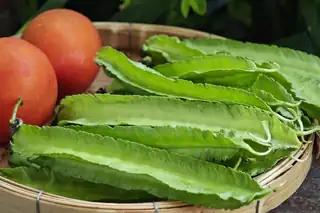
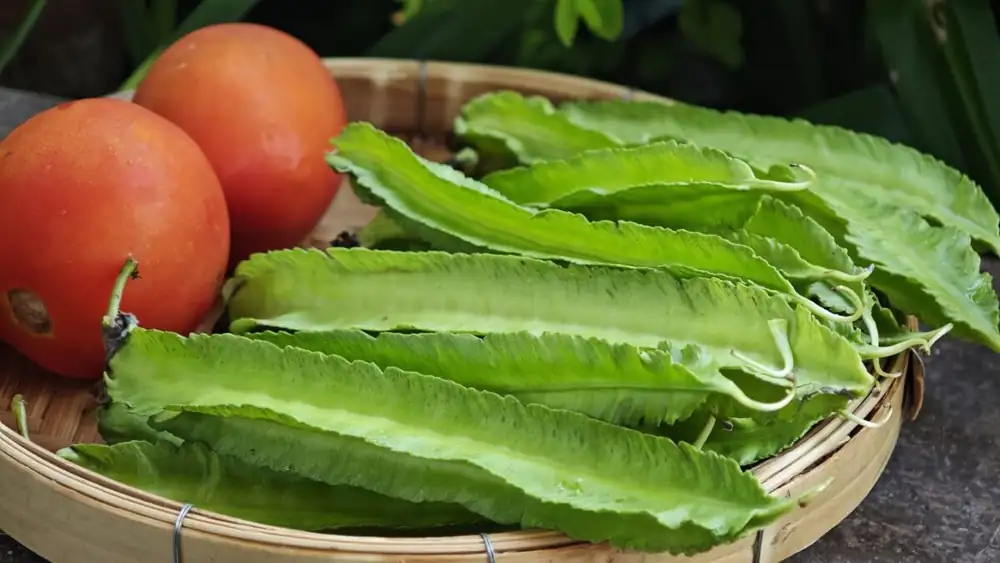
The winged bean, a legume from which almost everything is used
Its pods have four striated edges that resemble wings, and almost every part of the plant, from the pods to the roots, can be eaten.
The winged bean is native to tropical Asia and its scientific name is Psophocarpus tetragonolobus. It belongs to the Leguminosae family, the same as beans, chickpeas, and soybeans. It is also known as the Goa bean, four-cornered bean, Manila bean, or dragon bean.
The plant grows as a vine and can reach about four meters in height, with oval leaves and flowers that range from pale blue to purple. Its pods, usually green, can be cream, pink, or purple depending on the variety. As they mature, they darken, become more fibrous, and split open to release the seeds.
Growing it in Italy is possible, but with agronomic limitations. It needs stable temperatures above 20-25°C and is a short-day plant, flowering only when days have fewer than 12 hours of light. Therefore, in the Italian summer, it tends to develop a large amount of foliage and does not flower before the autumn chill.
Before sowing, the seeds can be scarified—that is, a small incision made in the seed coat—or soaked; both practices promote germination. Under good conditions, the first sprouts appear within a few days, and the pods reach their maximum size about two weeks after pollination. The plant is climbing and needs support, and initially grows slowly. If the pods over-ripen, they become fibrous and lose their tender texture.
Its roots contain bacteria capable of fixing atmospheric nitrogen, something common in many legumes, which helps explain why it can grow without large amounts of fertilizer.
In cooking, the young pods are boiled or blanched, a key step in inactivating the natural antinutritional factors found in almost all legumes. The leaves and shoots, briefly cooked, resemble the best spinach in taste and texture. The flowers are used as a garnish or natural coloring agent, for example, to color rice in some Asian dishes.
The roots produce edible tubers with a flavor reminiscent of hazelnuts. The seeds must be cooked before eating: dried, they are roasted or ground into flour; roasted, they can be used as a coffee substitute; and when soaked and boiled, they produce a type of plant-based milk very similar to soy milk. In some parts of Asia, the pods are used in traditional recipes such as the Filipino ginataang sigarilyas, cooked in coconut milk.


![A Visual Guide to Europe's Most Popular Olive Oil Varieties, From Koroneiki to Picual [MAP]](/static/img/86d97b87f6b17c38_p.webp)