When to add vegetables to the broth: cold water, order, and cooking times
For a traditional broth, the vegetables are usually placed in cold water, and the cooking time and texture of each vegetable determine the final flavor.
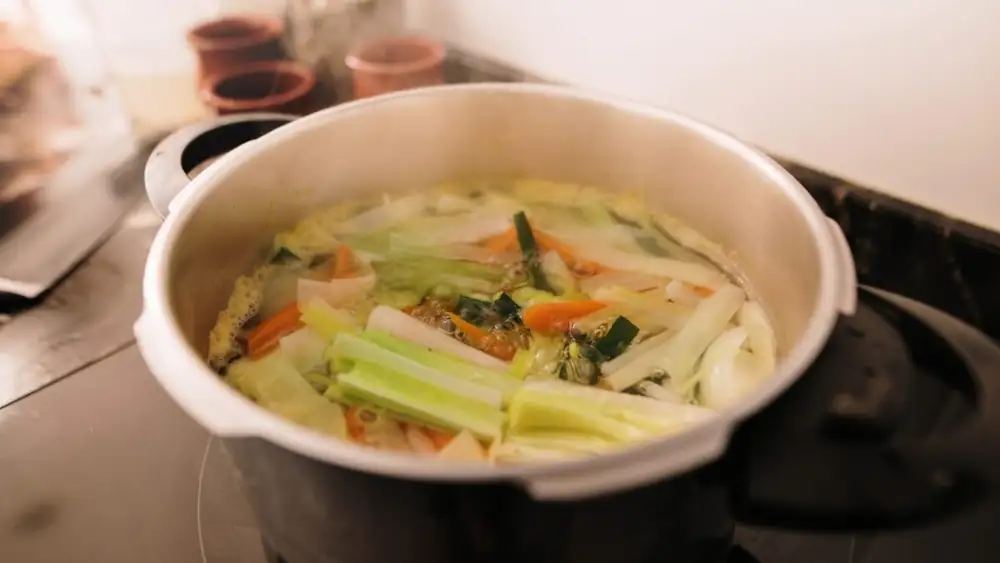
In vegetable or meat broth, the water usually starts cold, and the flavors, mineral salts, and soluble substances are gradually transferred to the liquid as it heats up. That's why carrots, celery, and onions are added to the pot with cold water, along with the other ingredients.
For a deeper golden color and a more pronounced aroma, culinary tradition recommends first toasting the halved onion on a griddle, which triggers the Maillard reaction. Once the water boils, it's best to continue cooking over low heat, without letting it boil excessively, so that the broth remains clearer.
In a classic vegetable broth, there's no strict order for adding carrots, celery, and onions, which can be added from the beginning, chopped into fairly large pieces to withstand the long cooking time. Vegetables with very different textures may need to be added at different times: the harder, more fibrous ones from the start, and the more delicate ones later. Potatoes, leeks, zucchini, tomatoes, and cabbage are examples of vegetables that require different cooking times.
In a vegetable broth that will be strained, a few minutes more or less won't necessarily affect the result, although it's best to avoid overcooking delicate vegetables. As a guideline, a vegetable broth usually needs between 45 and 60 minutes of simmering. A longer simmering time can intensify the flavor, but more time doesn't always mean a better broth.
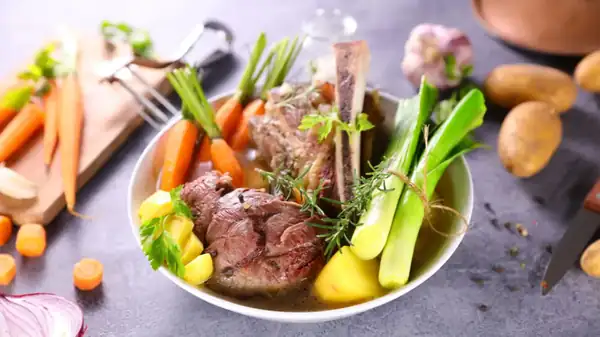
In beef broth, vegetables primarily act as flavoring agents and accompany the meat and bones during a longer cooking process, which can last several hours. It's advisable to skim off impurities with a slotted spoon to obtain a clearer broth. To avoid a bitter taste, the vegetables can be added in the second half of the cooking time, or cut into very large pieces and left unpeeled, in the case of onions.
Common mistakes include boiling too vigorously, which makes the liquid cloudy, and cutting vegetables into pieces that are too small, causing them to fall apart during prolonged cooking. Adding too much of a single vegetable, especially onion or celery, can mask the other flavors.
It's a good idea to add a pinch of salt at the beginning, without overdoing it, because the subsequent reduction will concentrate the flavor. The final adjustment should be made after cooking.