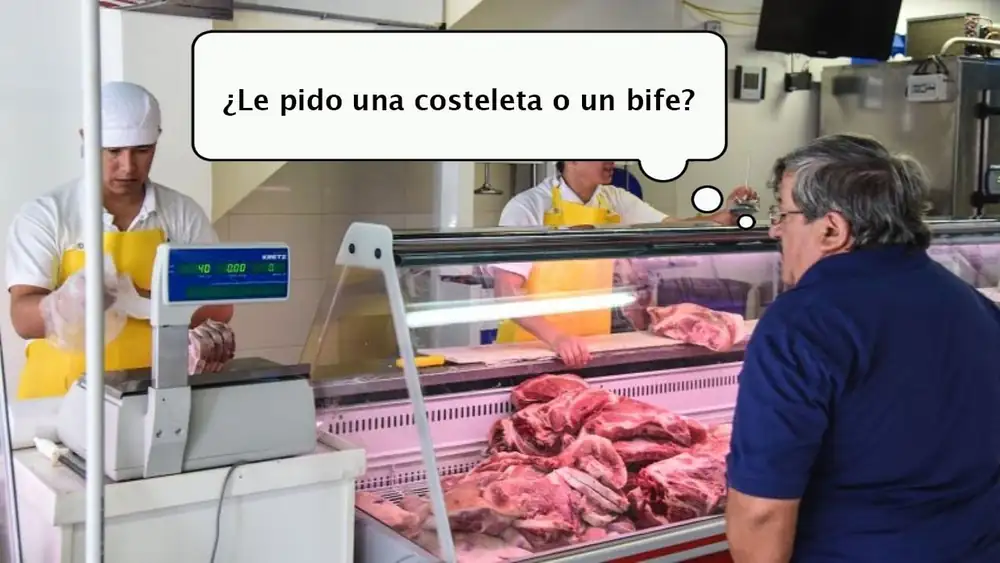
Argentine beef: what are the cuts called in each part of the country?
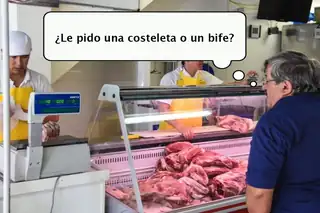
All Argentinians know the language of meat. There's a subtle dialogue between the cook, the fire, and the animal, regardless of the cut or cooking method. When the meat arrives at the table, we enjoy the signals it offers: the aroma, the crispy texture of the cooked fat, the perfect doneness, the touch of salt.
Up to this point, the codes are shared.
However, when we travel around the country, the language of meat has its dialects. There are several dictionaries circulating in different regions, and even if it's the same thing, it's not always called the same thing.
We all know different cuts of meat, but are they all the same? There are countless cuts of Argentine beef, depending on where the carcass is butchered. Some call it asado, others asado ruso, others palomita or marucha. What does this beef tongue twister say?
In the following lines, we look up, gaze into the distance, and consult experts from all corners of the world. With their responses, we compare the names of the most popular cuts of meat in each region (leaving aside the fact that some localities butcher beef differently, such as San Juan, where there is a unique cut called "Punta de espalda").
To accomplish such a task, we consulted Patricia Suárez Roggerone, from Mendoza (executive chef of Bodega Norton); Andrés Chaijale (renowned chef from Córdoba, advisor to various establishments and organizer of the Peperina Festival); Lucio Marini (expert chef from Santa Fe); the cook Tupac Guantay, from Salta, and the agronomist Adrián Bifaretti, head of the Internal Promotion Department of the Argentine Beef Promotion Institute.
Argentine beef cuts: an overview
While the IPCVA (Argentine Beef Promotion Institute) produces detailed reports on Argentine beef production, the differences in the names of cuts of meat across the Argentine provinces are not yet documented. However, it does offer general data that reveals certain patterns. “Perhaps the main differences in the names of the cuts involve the short ribs, which are called 'costillar' in Buenos Aires, but are known as 'costillar' in most of the rest of the country. It's also common to hear 'molida' (ground beef) instead of 'picada' (ground beef). And there are variations in the names of steaks: those with bones are called 'costeletas' (ribs), and the bife de chorizo (sirloin steak) and the ojo de bife (ribeye) are often referred to as 'entrecote' (ribeye).”
He continues: “Sometimes, the loin is called ‘filet’ or ‘soft rump’ (as happens in Corrientes), and the cuts used for milanesas can be called ‘pulpa’ in general and are accompanied by the name of the cut (‘pulpa de nalga’, for example). In some places, osso buco is ordered as ‘puchero’ and it is striking how many provinces cut narrow steaks as short ribs, which they call American steak,” says Adrián Bifaretti.
Roast
It was said that the 'asado' could very well be called 'ribs'. But, in addition, 'asado' is the word that defines the concept, as Chaijale explains: "We usually include in this word cuts such as 'matambre', 'vacío', 'falda', 'entraña' and 'tapa de asado', which acquire their own name when the 'asado' is butchered.
Then there are differences and different cuts of meat. Let's see:
Strip of asado. In Buenos Aires, the 'tira de asado' is a large rib (although it can also refer to a thin strip), what in Mendoza they call 'asado con hueso' and in Córdoba, 'costilla'.
Banderita: a classic cut from Buenos Aires grills, made by slicing the rib section crosswise and very thinly. It's called "tira fina" in Santa Fe and "banderita" in Mendoza. "It's about a finger's width, the bones are sliced very thinly, they look like a flagpole, and the meat is the 'banderita,'" says Suárez Roggerone. It's also called "banderita" in Córdoba.
Beef
Perhaps it's the cut with the most names. The 'tren de bife' in Buenos Aires is a cut from which others are derived, such as the 'bife angosto' (with bone) or 'bife de chorizo' (angosti steak without bone), the 'bife ancho' when it has bone or, when it doesn't, 'ojo de bife'.
Let's look at the differences:
In Córdoba, the ribeye steak is called "costeleta ancha" (rib steak). If it's boneless, it's called "ojo de bife y su ceja" (rib eye and its eye). The bone-in ribeye steak is called "costeleta redonda" (round ribeye). The "bife de chorizo" (a relatively new cut in Córdoba, according to Chaijale) is called "bife angosto deshuesado" (boneless ribeye steak). If it's cut lengthwise with the bone in, it's called "entrecote" (ribeye).
In Salta, they call a "steak" "entrecote." "We call a 'boneless narrow steak' 'rollizo' and a 'boneless ribeye steak' 'lomo chato'. If we leave the bone in, we simply call it a 'costeleta'," says Tupac Guantay.
In Mendoza, they call a "bife de chorizo" (sirloin steak) "lomo liso" or "lomo bajo" (lower loin). We call a "ojo de bife" (ribeye steak) "lomo alto" or "lomo veteado" (ribbed loin). "Now it's common to grill the 'ojo de bife' or 'lomo veteado' (ribbed loin). It's served nice and juicy, whole," says Patricia Suárez Roggerone. "Also, if we leave the bone in, we call it a 'costeleta' (rib steak), which can be either smooth or marbled. When it's smooth, in Buenos Aires they call it 'bife angosto' (narrow rib steak), and if it's marbled, 'bife ancho' (rib steak)."
In Santa Fe, the narrow steak is called 'costeleta'.
American steak
In Córdoba and Buenos Aires, a whole bone-in steak cut lengthwise is called a "bife americano" (American steak). In Santa Fe, it's called "asado Mar del Plata," "corte Malvinas," or "corte inglés" (English cut), says Lucio Marini.
Top round
A typical cut for milanesas, along with the rump, the top round, and the eye of round. In Córdoba, the top round, the rump, and the top round form a generic term called "pulpa." The top round can also be called "jamón cuadrado" (square ham). Adrián Bifaretti adds: "'Pulpa' is now accompanied by the name of the cut; for example, 'paleta' (shoulder) is 'pulpa de paleta' (shoulder pulp)."
Rump tail
It's the outer cut of beef from the hindquarter and is ideal for the oven or grill. "In Mendoza they call it 'palomita' and it's often used for making stews in a pot or oven. Or for casseroles, with Sunday pasta," says Roggerone.
In Cordoba it is called 'ram's foot'.
Skirt
The famous cut we all crave fresh off the grill is none other than the diaphragm pillars of the animal. In Córdoba, it's known as "sweet meat."
Skirt
In Mendoza, it's called 'butcher's roast'.
Lomo
In Salta and Mendoza, "lomo" is "filet." In Córdoba, they call it "lomo" and it's an emblematic product of Córdoba's sandwich shops, the "Lomito." "It's also a cut associated with celebrations and has been part of the menu at party venues in all its variations," says Chaijale. In Corrientes, they call it "cuadril blando," adds Bifaretti.
Marucha
“For the people of Mendoza, it’s called ‘marotilla,’ a cut of meat that requires long cooking and that we use to make carne a la masa, a typical dish that includes all the products of the province: wine vinegar, wine, rosemary, oregano, thyme, lots of garlic and paprika, and ground chili pepper. The dish is covered with dough, the meat is placed inside, it is covered again with thick dough (it’s just water and fat) and it is cooked in a clay oven,” says Patricia.
Tambourines
“In Córdoba, this fine cut that serves as a covering for part of the ribs and is highly appreciated for its delicate flavor when grilled over coals or for its ductility for rolls or being tenderized in milk, is called 'manta',” says Chaijale.
Osobuco
In Santa Fe, this cut is called 'caracú'.
Pallette
In Buenos Aires, it's called the rump cap or sirloin tip. "In Mendoza, we call it 'Russian roast.' It's a cut of meat that's usually baked with potatoes or roasted vegetables," says Suárez Roggerone.
Rump steak
It became well-known in Buenos Aires because it's highly sought after by Brazilian tourists. In Santa Fe, it's called the 'tapita de cuadril' or the 'punta del jamón cuadrado', says Marini.
Roast Beef
In Santa Fe it's called "aguja especial" (special chuck), but if they leave the bone in, we grill it and call it "aguja parrillera" (grilled chuck). In Salta, it's called "sobaco" (armpit). "It's the typical cut of meat for making empanadas or stews here," says Tupac. In Mendoza, they call roast beef "entrecote."
Roast beef lid
“In Mendoza we call it ‘pecho’ or ‘pecho liso’. This meat, ground, is used for the Mendoza-style empanada. It is flavorful and tough, which is why it is ground twice,” Patricia concludes.
This is as far as we've gotten, even knowing there are more cuts and variations. There are more Argentine cuts of beef, as many as there are butchers, towns, or customs across the country. Now you have a clearer understanding and your translator handy. Meat is calling.