Ogbono Soup Recipe
Ogbono soup is a Nigerian soup made with ground Ogbono (wild African mango) seeds. Ogbono soup is very popular and the method of preparation differs from tribe to tribe. This is my mum’s method of preparation and it has never failed me.
Ogbono soup is incredibly versatile. Babies and toddlers are introduced to solids with Ogbono, the sliminess helps them swallow with ease. Loads of people eat Ogbono soup with rice and I remember posting a photo of Ogbono on Instagram and was advised to try it with pasta. I did and it was really yummy. You can choose to make your Ogbono soup plain; without adding vegetables. This is also a tasty method. If you do choose to use vegetables, Pumpkin leaves(Ugu), Spinach and Bitter leaf are the most common vegetables used. Do remember if you choose to use Spinach to squeeze out as much water out of it as you possibly can.
I’ll be adding Efinrin/Basil leaves at the end, I just love the aroma of Efinrin when incorporated into Ogbono, you don’t have to use it though but I’m sure you’ll love it if you do. I’ll be using dried Efinrin.
Note: DO NOT cover the pot after the Ogbono has been added, covering the pot will make the soup watery and cause the Ogbono to lose its slimy consistency. Covering the pot is a definite NO NO!
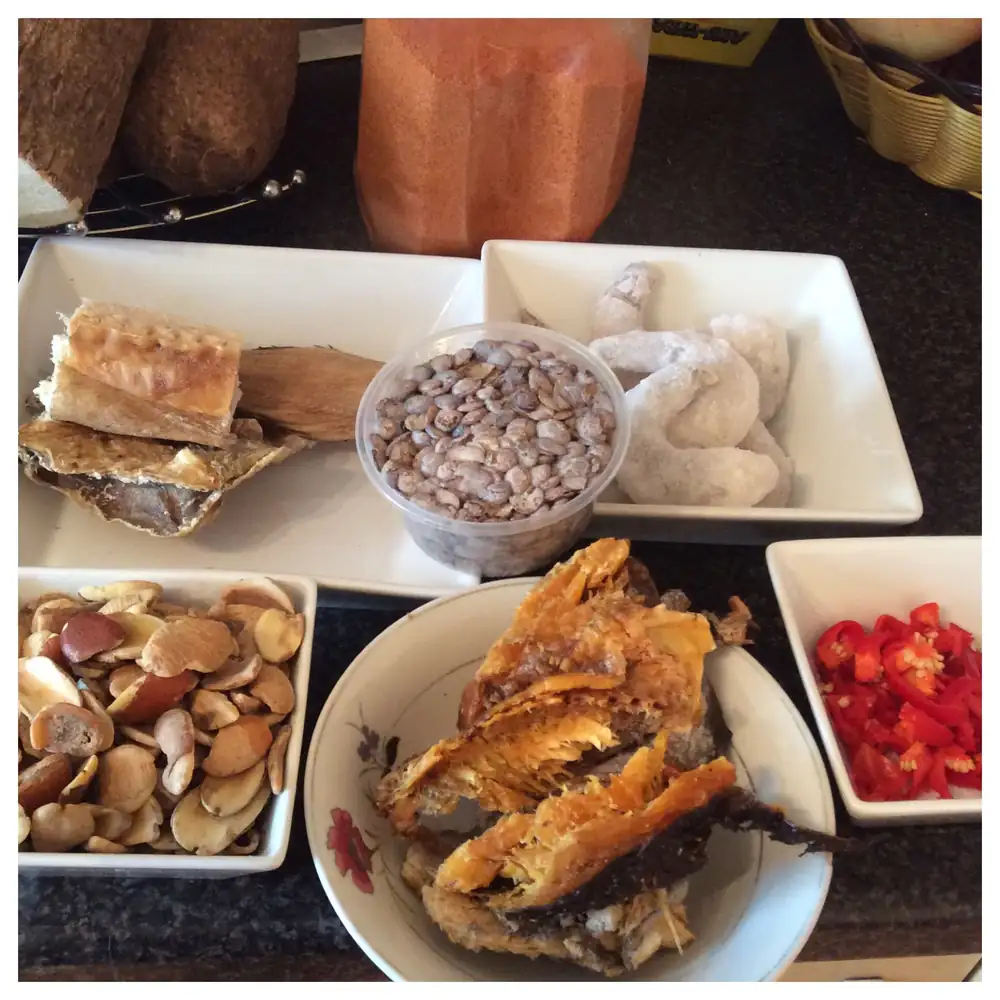
Ingredients:
Assorted meats (Ponmo, Shaki, Bokoto, Beef, Goat meat and Offals (internal organs) are ideal)
1 Cup Ogbono Seeds
2 Cooking Spoons Palm Oil
Ugu Leaves
Efinrin/ Basil leaves (Optional)
3 Tablespoons Ground Crayfish
1/2 Cup Smoked/ Raw King Prawns(optional)
Smoked Catfish
Dried Stockfish
1 or 2 Scotch Bonnet/ Ata Rodo (Optional)
1 Red Onion chopped
Tablespoon Cayenne Pepper (Atagungun)
Bouillon cubes (I’m using two Knorr cubes and 1 Maggi crayfish)
2 Tablespoons Iru (Locust Beans)
Salt to taste
Method:
Get your core ingredients ready… Grind your Ogbono seeds finely and set aside… Pick and wash the Ugu leaves with hot water to rid if of dirt. Be careful not to soak it in hot water for too long… If you’re using dry Basil leaves/Efinrin, soak in hot water for 5 minutes to soften and remove all traces of dirt…
Wash all the meats you’ll be using thoroughly to rid them of blood and dirt. I’ll be using Shaki (tripe), Ponmo, Goat meat, Bokoto (cow leg) and Fuku (cow lungs)… Then, set a big pot on a hob on low heat, add in the tougher meats, in this case, the Shaki, Cow leg and Ponmo, add the sliced onions and salt to taste. Cover and let it simmer on low heat for 20 minutes. This helps to release the meats’ natural juices. Boil Fuku (cow lungs) separately…
Most internal organs are very bloody and it’s a struggle getting all the blood out, what I do is clean and wash as much as I can, then add water and boil till slightly tender. When it’s half cooked, I decant all the water, wash again, then add more water and salt to taste, then continue cooking till doneness. After twenty minutes, turn up the heat to medium, add more water to cover the meats, cover and let this cook till tender, not soft, just tender. This should take around half an hour, you can save time by using a pressure cooker… When it’s tender, add the softer meats, in this case, the goat meat, Also add the stock fish, continue to cook till meats are soft….
Now, add the cooked offals (if you’re using any) and smoked catfish when the meats are cooked.. After 5-6 minutes, take out the stockfish and shred to smaller pieces, now add the chopped pepper…Now add the ground pepper, Iru, ground crayfish, both the raw and smoked king prawns…Now add the palm oil, cook for another 3-5 minutes to allow the palm oil melt further and be well combined with the meats… Then, add the Ogbono gradually, stir till fully dissolved (the Soup should begin to draw at this time) Combine thoroughly and leave to cook for at least 15 minutes, stir occasionally…. Now add the washed Ugu leaves, turn the heat to low at this time….. Stir and combine… Now add the Basil leaves/ Efinrin, let it cook for 3-5 minutes, then switch off the heat and let the soup simmer with the residual heat.. Add more stock/water if you find the consistency too thick (I added a cup of water, 250ml)and let it continue to simmer…
I try not to cook Ogbono soup with too much water.This is only because Ogbono soup is bound to curl up with time. This is because of the stock and also the palm oil, both ingredients have a tendency to make soups thickish, what we call “sleep” in Nigeria; causing soups to need water to restore desired consistency. You’ll find yourself adding water to “awaken”, (for want of a better word) your soup from time to time. This is why I leave the water adding process till after it’s fully cooked.
And that’s it, your Ogbono soup is ready. Serve with any swallow of your choice..