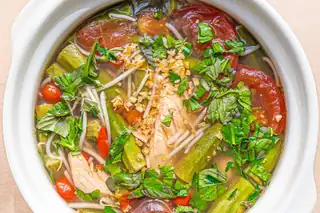
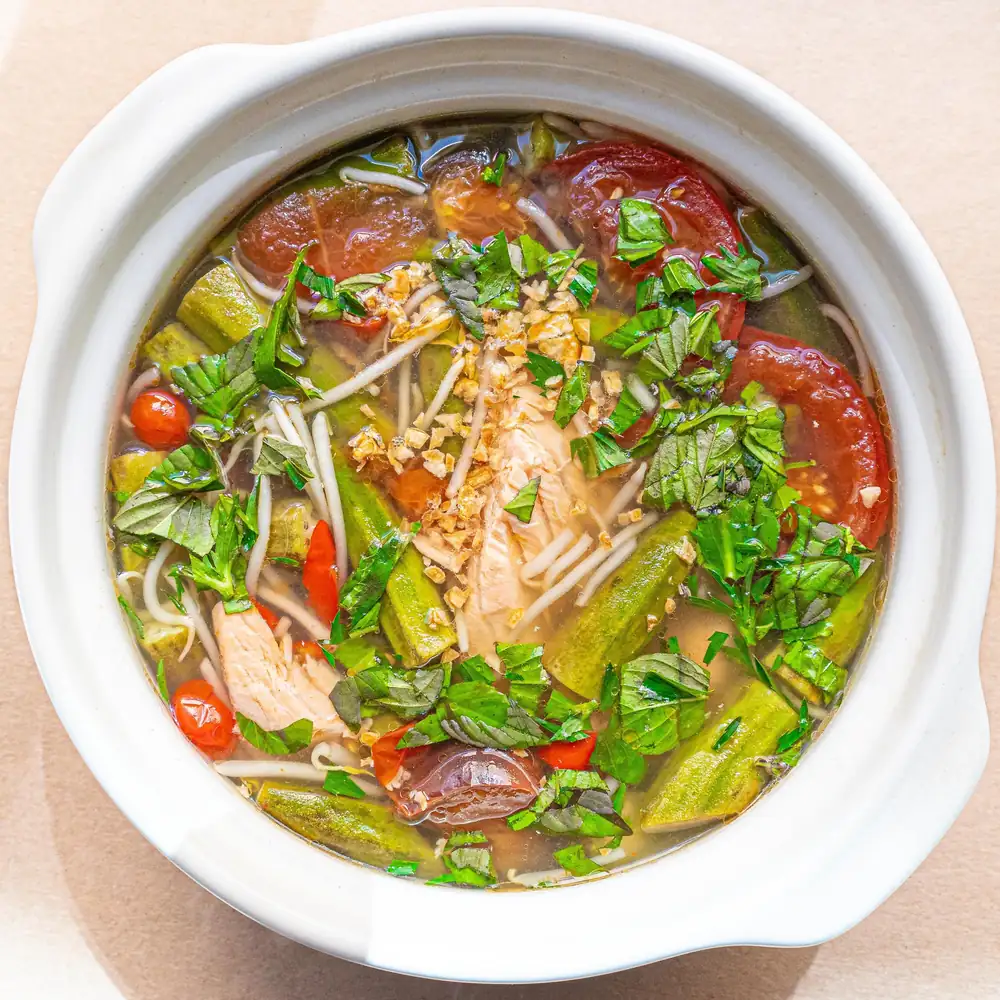
Vietnamese Sweet and Sour Fish Soup (Canh Chua Ca)
If you’re craving the authentic taste of Vietnam’s traditional home cooking, you have to try this sweet and sour tamarind fish soup.
- 1 lb fish (catfish and salmon preferred)
- 2 tablespoons vegetable oil (or other neutral oil of your choice)
- 5 large garlic cloves (peel and finely mince)
- 4 cups water
- 2 teaspoons fish sauce
- 3 tablespoons granulated white sugar
- 1 tablespoon tamarind powder (or 20 grams tamarind pulp)
- 1 tablespoon chicken or mushroom bouillon powder
- ½ teaspoon salt
- 2 large tomatoes (about ½ lb, slice into thick wedges)
- 2 cups okra or thinly sliced and peeled elephant ear stems
- 1 cup bean sprouts
- ¼ cup finely chopped herbs (Thai basil leaves, rice paddy herbs or culantro)
- Red Thai chili peppers (optional, cut at a diagonal into thin slices)
- Rinse under cold water, then slice into 1-inch steaks, keeping the backbone and skin attached.
- Heat oil in a medium pot. Add garlic and pan-fry until golden brown, tossing occasionally for even cooking. Remove half of the garlic and set aside for garnish.
- Carefully add water to the pot, being cautious of hot oil splatter. Bring to a medium-low simmer.
- Add the catfish to the simmering pot. Cook for 10 minutes, or until the fish is fully cooked. Remove and discard any scum that floats to the top.
- Add fish sauce, sugar, tamarind powder, bouillon powder, and salt. If using tamarind pulp, strain it through a small sieve directly into the pot, scraping the bottom of the sieve to add the strained pulp. Discard any seeds and fibers.
- Add tomatoes and okra or elephant ear stems, cooking for no more than 2 minutes. Turn off the heat.
- Stir in the bean sprouts; the residual heat will cook them.
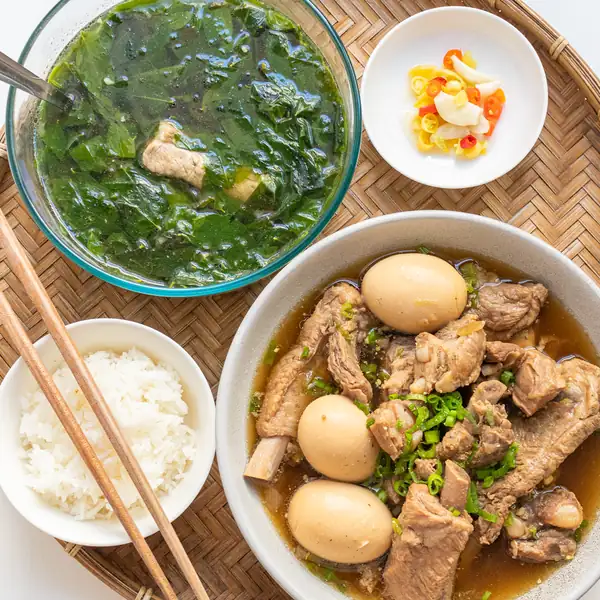
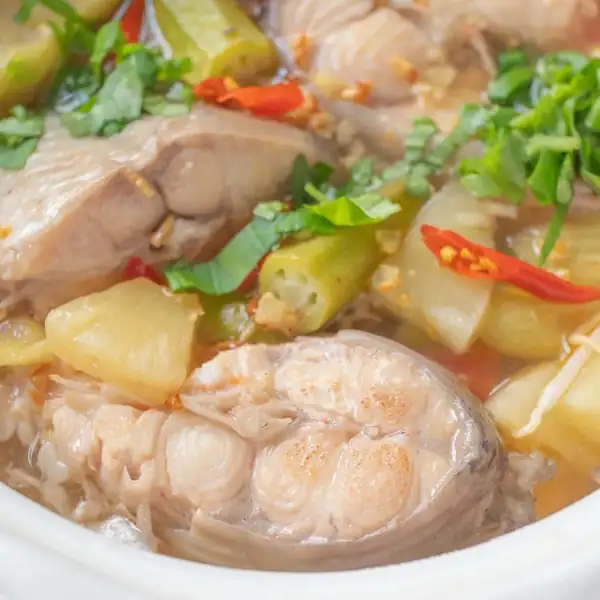
- When ready to serve, top the soup with fresh herbs, optional chili peppers, and the reserved fried garlic. Serve with a small saucer of fish sauce for dipping, alongside steamed rice and ca kho (braised fish) for a complete traditional Vietnamese family-style meal.
Made with your choice of fish, tangy tamarind, fresh vegetables, and aromatic herbs, this vibrant soup is a true classic.
While there are many traditional Vietnamese soups, sour tamarind fish soup stands out as the epitome of home-cooked comfort. It perfectly balances the four S’s: sweet, sour, spicy, and savory.
Whenever I come home from traveling, I just want traditional Vietnamese food. And nothing is more traditional and satisfying than Vietnamese sweet and sour fish soup (Canh Chua Cá) and its sister dish, Vietnamese braised and caramelized fish (Cá Kho).
Add steamed white rice and you have a complete and traditional Vietnamese home-cooked meal.
Make it Your Own
Vietnamese sweet and sour soup can be customized to fit your taste.
You can include a variety of vegetables, but tomatoes are usually the base ingredient.
Other popular vegetables include elephant ear stems (a type of taro known as Bạc Hà in Vietnamese), mushrooms, okra, celery, bean sprouts, and pineapple.
For the most visually appealing soup, try to include a variety of different colors of vegetables.
Proteins can be fish, shrimp, squid, chicken, or tofu. While you can use a variety of vegetables for the soup, stick to one protein.
Traditionally, Canh Chua Cá uses fresh water fish such as catfish, known as Cá Trê in Vietnamese. Nothing goes to waste so catfish head is typically reserved to make a more flavorful fish stock for the soup. Nowadays, fillets or steak-cuts are more widely used.
You can find catfish in many Vietnamese/Asian grocery stores. They also come whole so you can use the head in the soup as well.
If you can’t find catfish, use whatever fish you have on hand. My go-to substitute is salmon. Like catfish, salmon is fatty, has great flavor without too many bones, and it holds up well in the soup. Other recommended fish substitutes are cod, tilapia, and halibut.
Seasonings for Canh Chua
Fish sauce: Essential for Vietnamese and Southeast Asian cuisine, fish sauce provides umami flavor. I like to use the OGs of fish sauces. Viet Huong Three Crabs fish sauce is my go-to. It’s delicious and inexpensive. I also like to use Phu Quoc Flying Lion fish sauce.
Salt: Enhances the flavor of the other ingredients. I’m using fine sea salt.
Sugar: Counterbalances the tartness of the tamarind and adds sweetness to the soup. I’m using regular ole’ granulated white cane sugar.
Chicken bouillon soup base powder or mushroom seasoning/powder: Adds depth of flavor and makes the soup taste more authentic. I always have both chicken bouillon powder and mushroom seasoning powder for a vegetarian option on hand for Vietnamese home cooking. If you don’t want to use or don’t have these bouillon powders, feel free to leave out and replace with a smaller amount of salt.
Tamarind: Gives the soup its characteristic sour flavor. You can use either dried tamarind pulp or tamarind soup base powder. Both are readily available in Vietnamese/Asian supermarkets.
Garnishes for Canh Chua
The garnishes are what truly elevate Canh Chua to culinary perfection. When soup is ready, it’s topped with aromatic herbs such as Thai basil leaves, rice paddy herb, or culantro, and a heap of freshly fried garlic. The resulting aroma is simply irresistible.
Just make sure to add the fresh herbs at serving. You don’t want to cook it as it will darken in hot broth and lose its amazing aroma.
Pro Tip
I’m using a single small stock pot to keep things simple in the recipe below, but you can boil the water for the canh chua soup separately and use a small skillet to pan-fry the garlic.
This way, you can use the same garlic oil to pan-fry the fish before adding it to the boiling water. This adds extra flavor and eliminates any fishy smell, leaving a more pleasant aroma.
FAQs
Can I make Canh Chua ahead of time?
Yes, you can make the broth and cook the protein ahead of time. Add and cook the vegetables when you are ready to serve so they don’t get mushy.
I don’t have any of the fresh herbs you listed. Can I use something else that’s easier to find?
Thai basil is best but any other type of basil will do. Cilantro is the next best substitute. You can also simply omit it entirely but it won’t be as authentic and awesome.
I can’t find tamarind power or pulp. What can I use instead?
If you don’t have tamarind in any form, simply squeeze in lime or lemons for the tartness. Some people have used vinegar too and it works well. You will need to adjust sugar to taste.