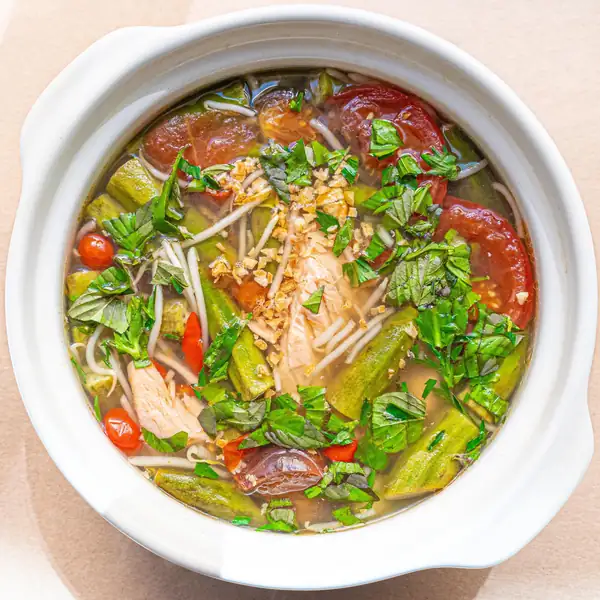
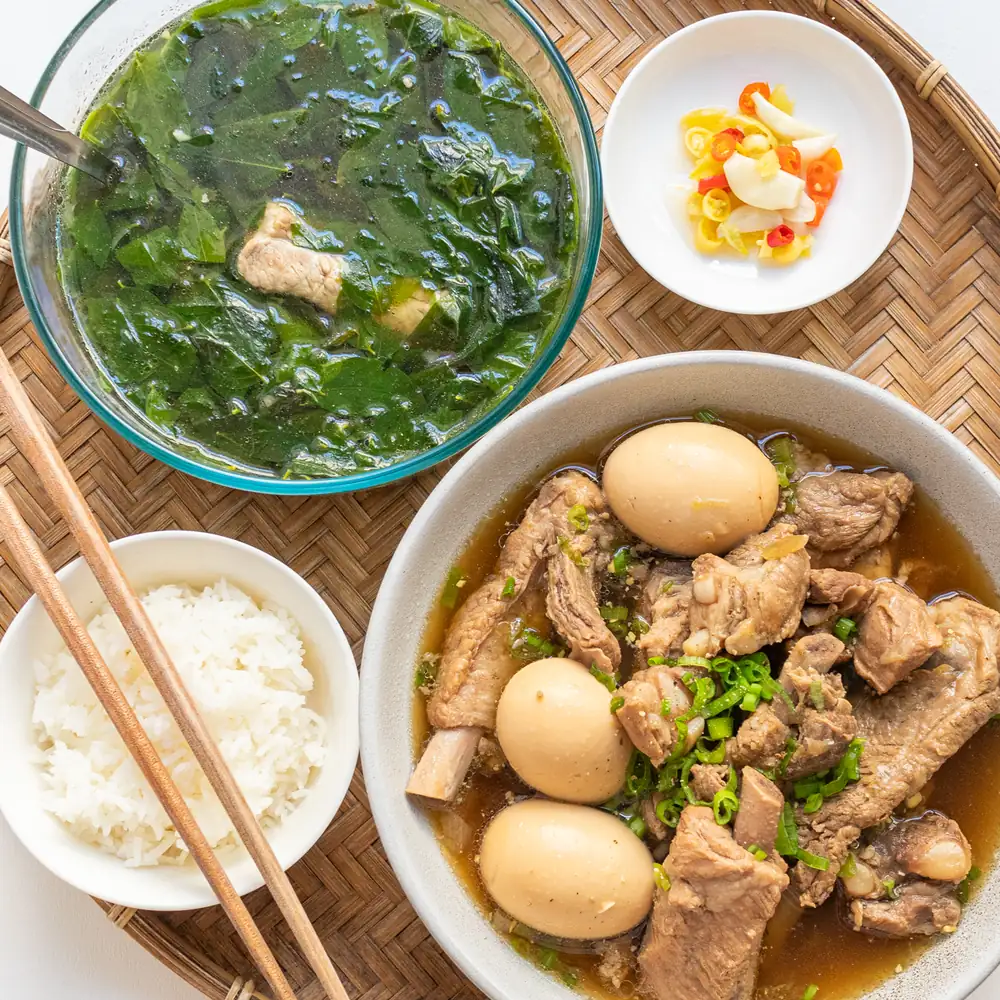
Authentic Vietnamese Sweet Leaf Soup (Canh Rau Ngót)
This classic Vietnamese soup is light and refreshing. It features sweet leaf (rau ngót) and pork ribs, but it’s easily adaptable with other classic, quicker-cooking protein alternatives like ground pork or shrimp.
- 6 oz sweet leaf / rau ngot (1 bundle)
- 8 oz pork ribs cut into small segments (or choice of meat)
- 3 cloves garlic (minced)
- 1 small shallot minced (can sub with whites of green onions)
- 2 teaspoons fish sauce
- 2 teaspoons chicken or pork bouillon powder (or 1 teaspoon MSG)
- 1 teaspoon fine ground sea salt
- 1/2 teaspoon granulated sugar
- 1/2 teaspoon ground black pepper
- 1 quart (4 cups) water
- 1 tablespoon neutral oil (vegetable or canola)
- Strip the leaves from the stems by running your pinched fingers down the stems. Wash the leaves while gently scrunching them to help them soften faster during cooking. Drain and set aside. Peel and finely dice the garlic and shallots. Set aside as well.
- Heat a little oil in a soup pot over medium heat. Add the minced garlic or shallots and sauté until fragrant (about 20 seconds).
- Add the small pieces of pork ribs or your protein of choice like ground pork. Toss pork ribs (or ground meat) with the toasted aromatics and cook until lightly browned on the outside.
- Pour in the water and bring it to a gentle boil. Let it cook until the ribs are tender (about 30 minutes depending on size). You can test them by piercing the meat with a fork or chopstick. If it pierces easily, it’s done. If using a quicker-cooking protein like ground meat, this boiling step will only take only 10 minutes.
- Season the stock to make it into a delicious broth. Add fish sauce, salt, sugar, bouillon powder, and ground black pepper, a little at a time to taste.
- Add the sweet leaf to the boiling broth. Let it cook for about 8 minutes, or until the leaves reach your preferred texture. Scrunch them into the boiling liquid a handful at a time (optional but that’s how it’s done traditionally)
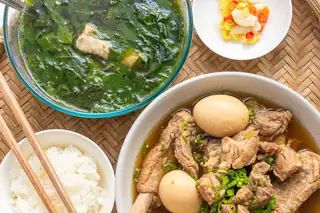
- Ladle the hot soup into a large bowl. Crack more black pepper for a aromatic finish and serve alongside steamed jasmine rice. Optionally, pair the soup with your favorite braised dish for a more complete, comforting Vietnamese home-cooked rice meal.
It makes a delicious, nutrient-dense side dish that pairs perfectly with steamed jasmine rice. Serve it alongside your favorite braised dish for a more complete, family-style meal.
What is Rau Ngót?
Rau ngót is commonly known in English as sweet leaf, katuk, or star gooseberry leaves.
It is a tropical, leafy green shrub native to Southeast Asia. The leaves are edible but the woody stems are not, so the leaves must be stripped from the stems before cooking.
The term “sweet leaf” is a bit confusing because I don’t find the leaves to be sweet at all. I suspect it might be a misinterpretation of the Vietnamese word ngọt and ngót when written without accent marks.
Ngọt (with a heavy/drop tone) means sweet while ngót (with a rising tone) means to shrink or wilt.
This is exactly what happens when you cook a large pile of these leaves. They shrink down to almost nothing, just like spinach.
Rau ngót is not sweet, not in the slightest. Rather, it has a mildly nutty, earthy flavor, somewhat similar to spinach, but with a firmer texture.
Because of the firmer texture, it actually needs to be cooked down a bit longer than regular spinach.
This is also why Vietnamese cooks traditionally like to scrunch or aggressively massage the leaves before adding them to the pot, but I don’t find that really necessary.
To make Canh Rau Ngót, gather the following ingredients:
Rau Ngót (Sweet Leaf): You’ll need about 1 bundle. You might have a hard time finding rau ngót in Asian grocery stores. You might have better luck in a Vietnamese grocery stores or from a Vietnamese friend who has it growing in their yard. If you can’t find it, substitute with regular spinach or Malabar spinach (mồng tơi), which has a similar texture. If using these substitutes, keep in mind that they don’t take nearly as long to cook as rau ngót and only need a quick blanch.
Protein: I’m using small pieces of pork ribs here, but you can easily swap in ground pork for a quicker-cooking option. Ground chicken or ground beef also work great, or you can omit the meat entirely.
Aromatics: Fresh minced garlic or shallots for the soup’s fragrant base. If you don’t have shallots, the white parts of green onions work nicely.
Seasonings: A blend of fish sauce, salt, sugar, ground black pepper and chicken or pork bouillon powder (or MSG) perfectly balances the broth. If you prefer not to use bouillon powder or MSG, simply omit them and adjust with additional salt to taste. Just keep in mind it might not taste exactly like the traditional versions.
Step 1: Prep the greens and aromatics
Strip the leaves from the stems by running your pinched fingers down the stems. Wash the leaves while gently scrunching them to help them soften faster during cooking. Drain and set aside.
Peel and finely dice the garlic and shallots. Set aside as well.
Add the small pieces of pork ribs or your protein of choice like ground pork.
I did one small hunk of pork ribs here but I don’t recommend because it took longer to become tender.
Toss pork ribs (or ground meat) with the toasted aromatics and cook until lightly browned on the outside.
Pour in the water and bring it to a gentle boil. Let it cook until the ribs are tender (about 30 minutes depending on size). You can test them by piercing the meat with a fork or chopstick. If it pierces easily, it’s done.
If using a quicker-cooking protein like ground meat, this boiling step will only take only 10 minutes.