How to Cook Rice Noodles (Bún)
Want to make bún bò Huế, bún thịt nướng, or bún thang, but don’t know where to get started with rice vermicelli? These springy, opaque-colored noodles are used in so many Asian dishes, and cooking rice noodles requires a different boiling method than their wheat and egg-noodle cousins.
What is rice vermicelli / rice noodles?
Rice vermicelli is a type of rice noodle commonly used in Asian soups and dishes.
Shape and size matter. Not to be confused with flat rice noodles, such as those used in pho, vermicelli noodles are round/cylindrical. Using the right shape and noodle thickness is critical for each dish. For example, if you used thin round rice noodles for pho, you will get called out by the Viet elders. It’s like if you ordered a fettuccine alfredo, but the restaurant used angel hair pasta instead. It might taste ok, but the experience will be different. The shape and thickness affect the mouthfeel, broth/sauce it carries, chopstick/fork experience, and people will notice.
Rice vermicelli is made from water and rice starch, which gives it an opaque white color after cooking and a bouncy texture. It differs from wheat flour or egg noodles in that it doesn’t dry out as quickly after cooking and is less likely to break. Like most noodles, rice vermicelli originated in China and quickly spread throughout Asia, with varieties in size and shape. Sometimes you’ll see brands add a small amount of tapioca starch to the noodles to increase elasticity and chewiness, so be mindful of this ingredient.
Types of rice noodles:
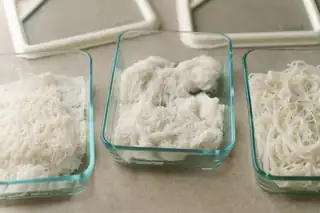
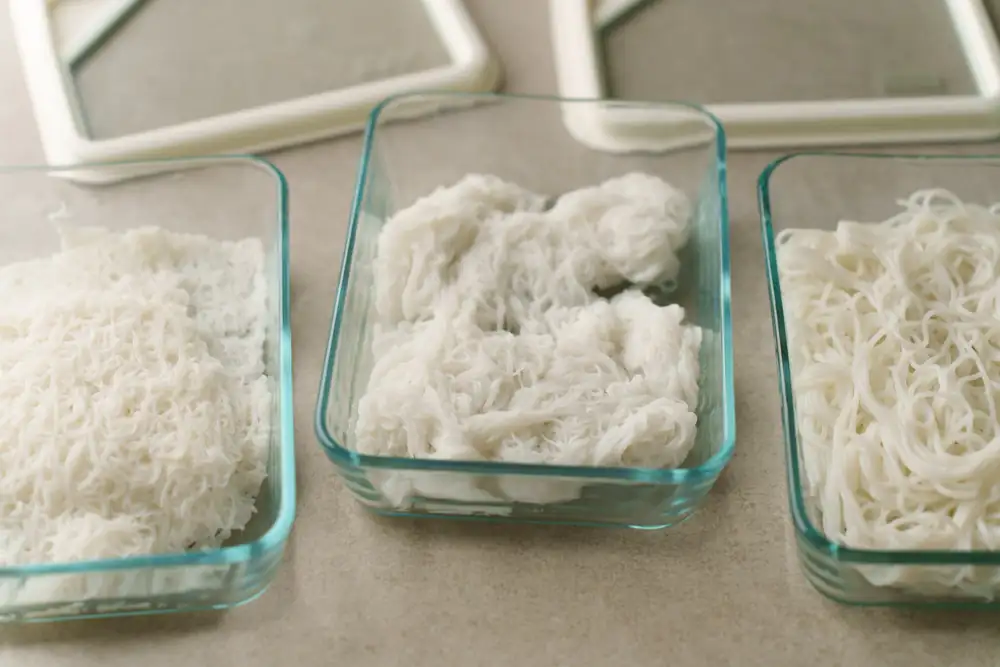
You can find vermicelli rice noodles under different names, for example: bún, rice vermicelli, rice stick, bihon, and bánh hỏi (sheets of layered rice vermicelli). Vermicelli rice noodles are used in various dishes, from soups to bowls to spring rolls. They also come in a variety of shapes and sizes, such as bánh hỏi, which are sheets of vermicelli rice noodles made from multiple layers pressed together; bánh hỏi can be used in spring rolls, noodle bowls, and other dishes.
I grew up eating the Three Ladies Brand vermicelli rice noodles, and you can find them in many Asian and American grocery stores these days. Other brands I’ve tried and liked are: Bamboo Tree vermicelli rice noodles / Bamboo Tree bánh hỏi, and Dynasty rice sticks.
Vermicelli rice noodles shouldn’t be confused with mung bean noodles (used in egg rolls), which look similar in that they are dried, thin, and somewhat transparent in color, because they are completely different noodles. When cooked, vermicelli rice noodles will become opaque and have a bouncy but soft texture. Mung bean noodles (also called cellophane noodles) remain transparent and become chewier after cooking.
How to cook rice noodles / vermicelli
Making rice vermicelli can vary depending on the brand and packaging instructions. Some brands may tell you to soak the noodles in hot water in a bowl. Some brands don’t really mention rinsing afterwards either. I’ve found that for consistency in cooking, boiling the water first helps, and using more water keeps the temperature more stable for more even cooking.
Here’s a simple way to cook the noodles without damaging them, and for consistent results:
- Boil a large pot of water.
- Add the noodles to the hot water until they’re softened. Only add enough so that the noodles are fully submerged with at least 1″ of extra water above the noodles. Cooking can take anywhere between 2 to 10 minutes depending on noodle thickness.
- Stir the pot often to ensure even cooking and to prevent sticking. The texture of cooked rice vermicelli noodles should be soft and bouncy to the touch. Rice noodles also turn opaque and white after cooking. The noodles will get mushy if they are overcooked; however, I’ve found they are more resilient than wheat or egg noodles. Test a noodle for doneness occasionally by tasting a single noodle.
- Once you’ve reached the desired consistency, drain the noodles in a strainer and rinse with cold water until they’re cool to the touch to stop them from cooking further. Use the noodles for your recipe.
How to use rice noodles
Rice vermicelli noodles are a large part of many Asian cuisines, especially Vietnamese dishes. Here are some of our favorite recipes with rice vermicelli noodles:
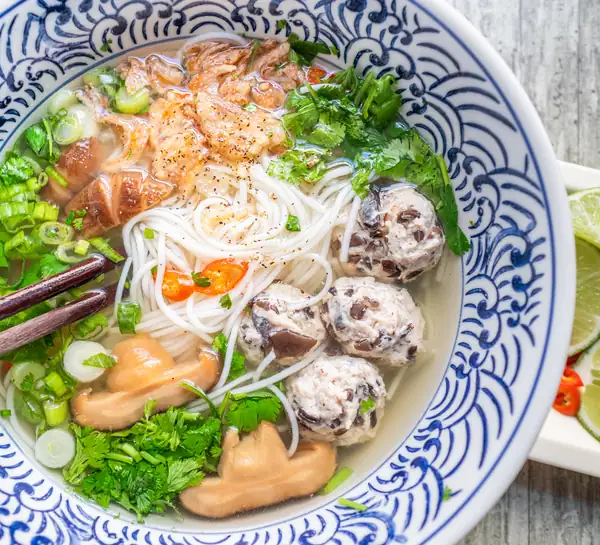
- bún thang (Vietnamese Ha Noi noodle soup w/ Chicken, Pork, & Egg)
Storage rice vermicelli noodles
Store dried rice vermicelli noodles in an airtight container in a cabinet until you’re ready to use them. Dried rice vermicelli noodles should last several years if they remain uncooked and fully dried.
Once you’ve boiled and cooked rice vermicelli noodles, you can store leftovers in an airtight container in the fridge for up to 3 days. To reheat rice vermicelli noodles, place them in a heat-safe bowl and add about 1-2 teaspoons of water over the noodles to help rehydrate them. Cover the noodles with a towel and microwave for 30-second intervals until they’re reheated.
- 1 large pots
- 1 Strainer
- 1 tongs or strainer ladle