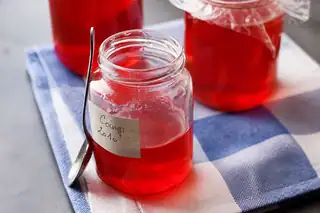
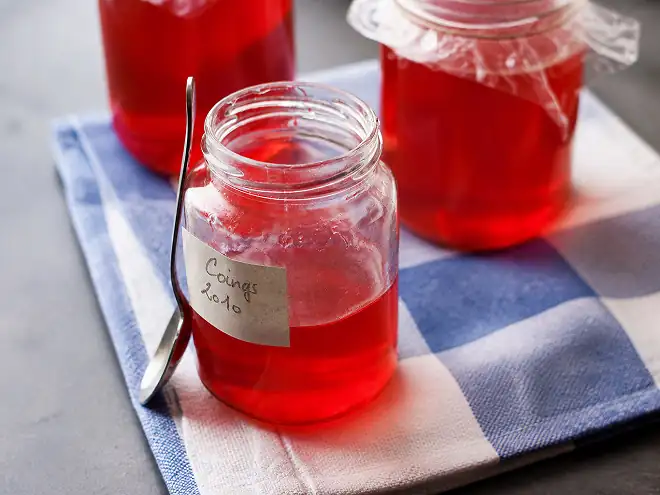
Quince jelly made with a juicer: golden and fragrant, a homemade recipe
Ingredients · Servings 8
- 1 kg Coings
- 500 pods Cane sugar
- 2 Lemons
Method · 1 h
- Wash the quinces thoroughly under cold water to remove the fuzz, which is often present on the skin. If the fruit is organic or of very high quality, you can leave the skin on, as it contributes to the flavor and beautiful color of the jelly. Then cut the quinces into pieces, remove the seeds, and place them in a small muslin bag, an empty tea bag, or a tightly sealed piece of cheesecloth. These seeds, naturally rich in pectin, will help the jelly set properly during cooking.
- Squeeze the lemons to extract their juice, ideally using a juicer with a strainer if you want to maintain the same preparation method from start to finish. You can also use a regular citrus press. Be sure to remove the seeds to ensure only clean juice. The lemon adds freshness, enhances the quince flavor, and its natural acidity also helps the jelly set properly.
- Pass the quince pieces through the juicer, always using the appropriate strainer, to obtain the clearest juice possible. Do this gradually to avoid overloading the machine. Collect all the juice in a large container and reserve the pulp for another use, such as compote or a cake. Take the time to measure or weigh the juice, as the amount of sugar must be precisely equal to its weight to ensure a smooth final texture.
- Pour the quince juice into a preserving pan or a large, heavy-bottomed saucepan. Add the lemon juice, then stir in an equal amount of sugar. If you have 500 ml or approximately 500 g of juice, add 500 g of sugar. Also add the bag containing the seeds to the pan. Stir well to begin dissolving the sugar before cooking and to obtain a smooth mixture.
- Bring the mixture to a boil over medium-high heat, then reduce the heat slightly to maintain a gentle, steady simmer. Stir occasionally to prevent the sugar from sticking to the bottom. Cook for about 45 minutes, until the mixture thickens to a syrupy, glossy consistency. At the end of cooking, you can perform the cold plate test: place a small amount of jelly on a cold plate and check that it sets slightly before removing the seed packet.
- Pour the still-hot jelly into clean, dry glass jars, being careful of splashes and the heat of the syrup. Immediately seal the jars with their lids, then turn them upside down for a few minutes to help preserve them. Turn them right side up and let them cool completely at room temperature. Once cooled, the jelly can be stored for several months in a cool, dry, dark place.
8 pers.
122/pers.
Quince, this generous and fragrant autumn fruit, invites us to reconnect with culinary traditions. Combined with lemon for a touch of zest, it reveals its full charm in a homemade jelly, golden to perfection. Easy to make with a juicer, this recipe embodies the pleasure of sharing and passing down traditions around the table. Enjoy it on fresh bread or use it to enhance your desserts; it's a sweet nod to our childhood memories.