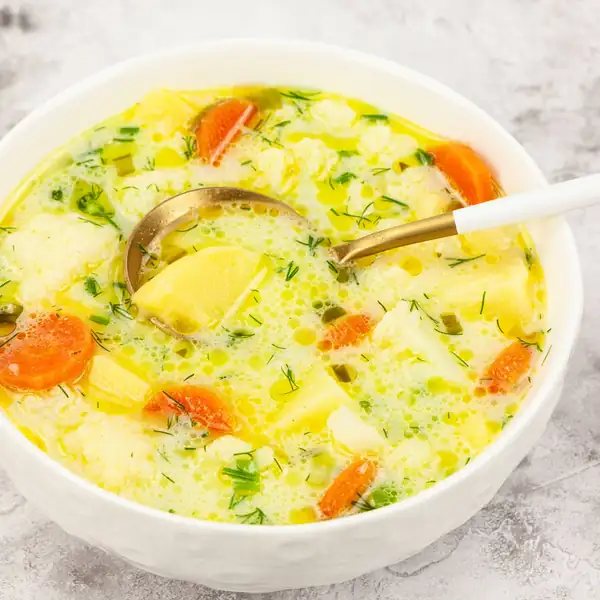
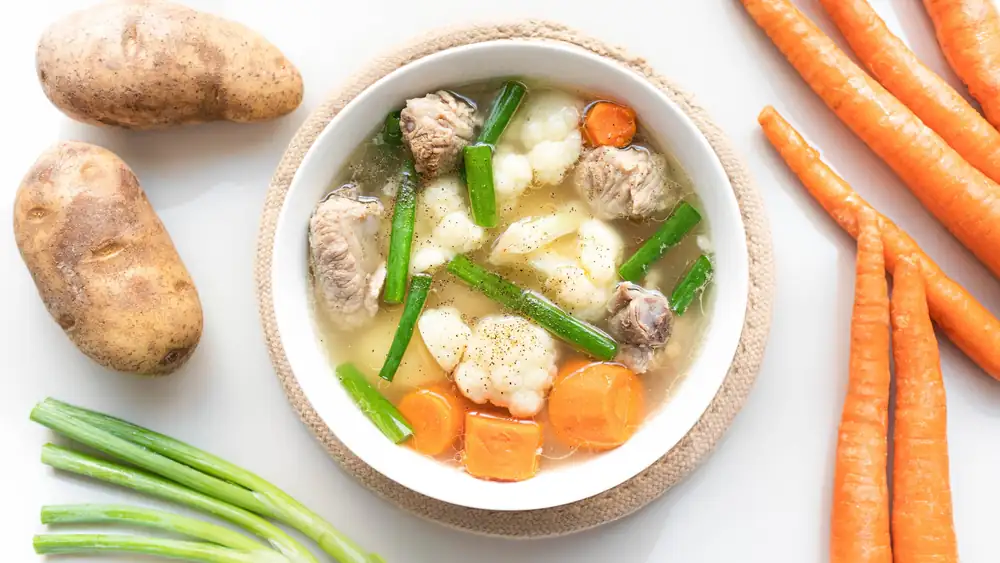
Vietnamese Pork Spare Rib Soup with Potatoes, Carrots and Cauliflower (Canh Suon Khoai Tay Ca Rot Bong Cai Trang)
‘Tis the season for soups! For those who are now experiencing cold weather, this soup is for you.
- 1 lb pork spare ribs (cut in-between bones into individual riblets)
- 1 large carrot (6 oz)
- 1 large potato (8 oz)
- Half a head cauliflower (8 oz)
- 1 tablespoon vegetable oil
- 1 small shallot
- 3 cloves of garlic
- 1½ quarts water
- 1 tablespoon fish sauce
- ½ teaspoon salt
- ½ teaspoon chicken or mushroom bouillon powder
- ¼ teaspoon ground black pepper
- 2 green onions
- ⅛ teaspoon ground black pepper (sprinkle)
- Peel and mince the garlic and shallots. For the green onions, separate the white parts (to be used in the sauté) from the green parts (to be chopped into bite-size segments for garnish). Peel and cut carrot and potato into bite-size pieces. Break cauliflower into small florets.
- Heat vegetable oil in a medium-sized pot over high heat. Add the whites of the green onions, shallots, and garlic. Fry until fragrant, about 20 seconds.
- Add the pork ribs to the pot and toss to coat in the aromatics. Pour in water and bring to a gentle simmer. Cook for 30 minutes.
- skim off impurities that float to the top for a clearer soup, including the garlic and shallots (they have already released their flavors in the soup).
- Add carrots, potatoes, and cauliflower to the pot. Simmer until the vegetables are tender when pierced with a chopstick (about 10-12 minutes).
- Add fish sauce, salt, chicken bouillon powder, and black pepper. Adjust seasoning to taste.
- Garnish with green onion tops and a sprinkle of ground black pepper. Serve hot as a side dish or main course.
Vietnamese pork spare rib soup with potatoes, carrots, and cauliflower is a staple in my house. It’s hearty, comforting, and delicious. Best of all, it is made with easy-to-find and cheap ingredients. It’s the perfect soup for cold winter days, for those who feel under the weather or simply, for those who want a taste of home. Enjoy this soup on its own to warm the belly or as a side dish with steamed rice in a traditional Vietnamese family-style dinner.
Broth
This broth in this soup is made from slowly simmering pork spare ribs. Carrots, potatoes, and cauliflower are then added to the pot and simmered until fork tender. The low simmering brings out all the sweetness of the vegetables into the pot, making it a flavorful and hearty broth.
Some people like to parboil the bones separately to remove the impurities before they even start to make the broth. This is a traditional method to ensure a clean and clear broth. However, with soups, you can easily skim off the impurities at the top as they clump together and float to the top. For that reason, I’m skipping the parboiling step here. This makes the recipe easier and quicker.
I still wash the bones thoroughly before using them in a dish. Sometimes I scrub them down with a bit of coarse salt to remove any surface yuckiness then rinse them with water. This is entirely optional but highly recommended.
Pork Ribs — In American grocery stores, ribs are often sold in large slabs, which are intended for the barbecue grill. You can take the ribs home, cut in between the bones then use a large knife to hack them into bite-size pieces. Be careful of those fingers! If a butcher is available, you can ask the butcher to cut the spare ribs into 1½” pieces for you. They will most likely oblige if asked nicely.
At Asian grocery stores, you will often find pork ribs as strings of ribs, rather than large slabs. The strings of ribs are the large slabs, just cut perpendicularly to the bones and simply connected by the meat. This way, you can separate the ribs easily with a knife at home without the risk of losing a body part.
Carrots, Potatoes, and Cauliflower — Carrots provide the natural sweetness to the broth, and why no added sugar is needed. If you don’t have carrots, use its albino cousins, daikons or parsnips. Caulifower can be replaced with broccoli. However, the green may leak out and darken the broth if overcooked.
Green Onions — You can’t have an Asian dish without green onions. If you don’t have green onions, use cilantro.
Fish Sauce — The main flavoring agent of Southeast Asia.
Salt — A bit of salt because too much of a good thing (fish sauce) can result in a fishy smell.
Chicken or Mushroom Bouillion Powder — The ultimate Vietnamese home cooking cheat and why our mothers’ soups taste so good. Yes, it contains a bit of MSG. Yes, you can omit and replace it with a bit of salt.
Ground Black Pepper — Because it’s awesome.
Shallots, Garlic, and Whites of Green Onions/Scallions — Our main aromatics for that amazing Asian perfume.
Neutral Oil — Just a bit to fry the aromatics. I’m using vegetable oil.