Should you eat the sponge under porcini mushrooms or remove it? Here are the cases in which it's best to discard it
Having fresh porcini mushrooms on hand is an unmissable opportunity to create countless tasty dishes, many of which are seasonal, as the months from September to November are the months when these quintessential kings of the forest take center stage.
When to leave and when to remove the sponge
The term sponge is used primarily in everyday language (and not among mycologists) to convey, even to the less experienced, the mushroom's consistency, which varies with its age, from firm when young to slightly slimy in old age. Furthermore, this part changes color as it matures: in porcini mushrooms, it ranges from pure white in young specimens to yellow, to an olive-green in older specimens (never turning blue, a color characteristic of other boletes). From this, we can see how the state of the hymenophore can be an indicator of the life stage (and therefore maturity) of porcini mushrooms: the sponge of young specimens is lighter and more compact and does not need to be removed, while that of adult and older boletes, however, is recommended to avoid the risk of unpleasant sensations when eating the mushroom. Please note: darkening is not a sign of toxicity, as it is the result of common oxidation, but at the same time, a clear sponge in the Boletus genus is not a sign that it is safe to eat. If you have any doubts during the harvest, leave the mushrooms where they are. If you have any doubts after you've collected them, or if they were given to you as a gift, take them to the local Mycological Inspectorates (ASLs, or ATSs in Lombardy) for analysis free of charge.
How to clean porcini mushrooms properly
Porcini mushroom flesh is one of the most prized culinary delights because it is firm, soft, fragrant, and remains white when cut. However, it is very delicate, and care must be taken not to ruin it.
- A first rough cleaning of the mushroom is done already in the woods, delicately removing the excess soil with a small knife without cutting into the pulp.
- Once home, proceed by removing all other plant residues from the fruiting body (composed of the stem and cap) with a paintbrush or a soft-bristled brush and using the knife cut off the lower part of the stem, which is the toughest.
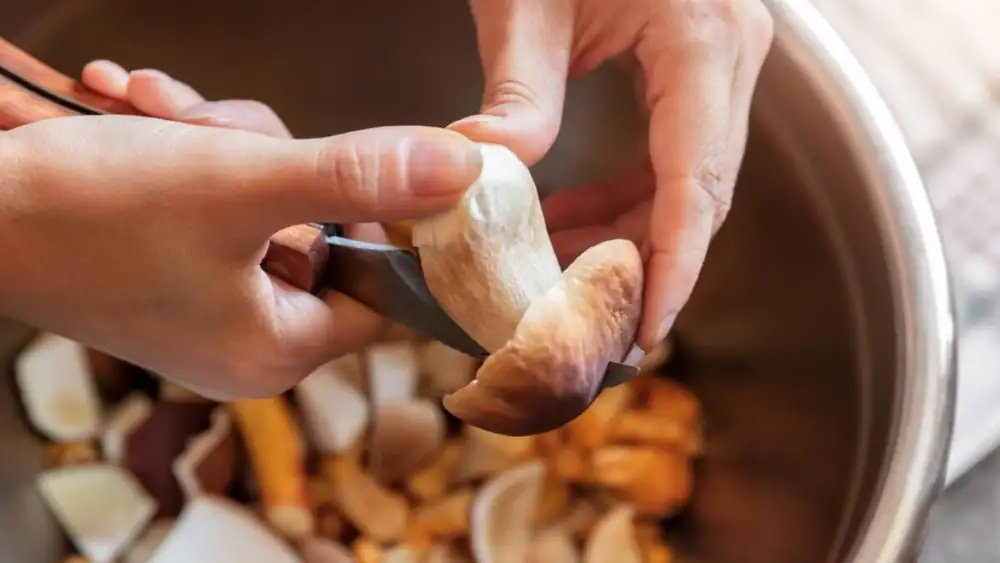
- If the sponge is unfit for consumption, simply discard it by hand, peeling it off with your fingers.
- Porcini mushrooms, like most mushrooms, don't like water, as they tend to absorb it. Therefore, once you've finished, don't wash them under running water or by immersing them in a basin; instead, wipe them with a slightly damp cloth.
How to use discarded sponges to reduce waste
As we've seen, the olive-green sponge isn't poisonous, but if left in fresh porcini mushrooms, it risks making the dish soft, slimy, or bitter. Instead of throwing it in the organic waste, however, if it's not compromised (it can become infested with larvae), it can be recycled as a flavoring for cooked foods, turning it into a powder just like dried porcini mushrooms: the sponge is removed, dried, and then blended into very fine grains. This becomes an ingredient to add a touch of spice to dishes like risotto, meatball and meatloaf mixes, and sauces like béchamel.