Yes, Strawberries Are Closely Related To This Beautiful Flower
Bananas are technically berries, and strawberries are... closely related to flowers? Strawberries and roses share more than a vibrant red color — they are both part of the Rosaceae family.
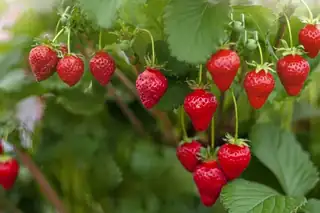
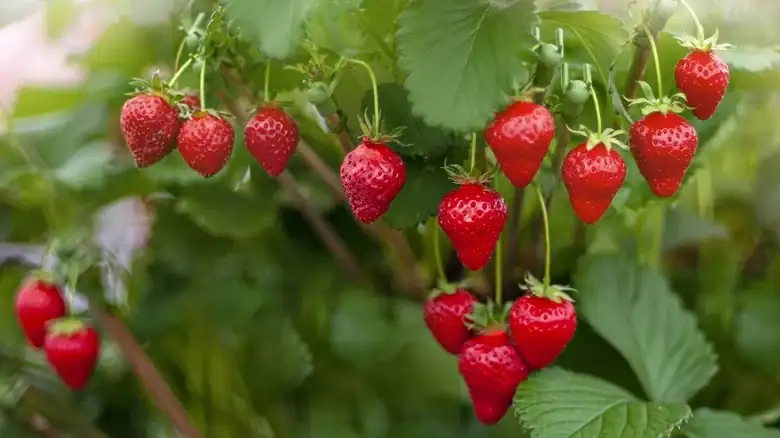
As it turns out, the yellow seeds that dot the outsides of strawberries are achenes. That means a single strawberry is actually composed of hundreds of tiny fruits embedded in its flesh. To make matters more confusing, even though we always refer to it as one, a strawberry isn't technically a true berry because of all these exterior seeds. Roses bear seeded fruits, too: rose hips. Each one of these edible seed pods sits at the base of the flower and turns a vibrant red hue when rose petals die and fall off; they almost look like berries! Unlike strawberries, a rose's achenes develop inside the rose hip, rather than the outside. But despite their contradictory natures, both flowering fruits are rather compatible in the kitchen.
Using the Rosoideae family in the kitchen
Strawberries, raspberries, and blackberries are a culinary delight, while roses are better known for their beauty and scent. These more familiar fruits of the Rosoideae family star in sweet recipes like mixed berry jams and strawberry dessert sauce, and are key for classics like shortcakes and cobblers. While you can't necessarily chomp into a rose like you would a strawberry, roses still have their place in the kitchen. Rose petals can be dried and used for tea, or as a stunning way to infuse and garnish cocktails. In Middle Eastern cuisine, rose water is a popular addition to desserts like puddings, cakes, and ice cream. Don't forget about rose hips, too. While they are not commonly found in kitchens, these vitamin C-packed fruits do have culinary applications. Rose hips are too fibrous and seedy to eat raw, but they make an excellent floral-forward jam, jelly, syrup, or tea.
One strawberry hack you may not know is that this bright fruit pairs incredibly well with the delicate flavor of rose. Together, they can be used to create a sweet floral syrup for cocktails, mocktails, iced tea, coffee, or lemonade. You can also infuse rose into a simple strawberry compound butter or make a strawberry rose jam as a sophisticated spread for croissants, scones, and toast. Similarly, rose water can flavor a traditional strawberry rhubarb tart, while the flower's petals can be added into a frosting for strawberry cupcakes.