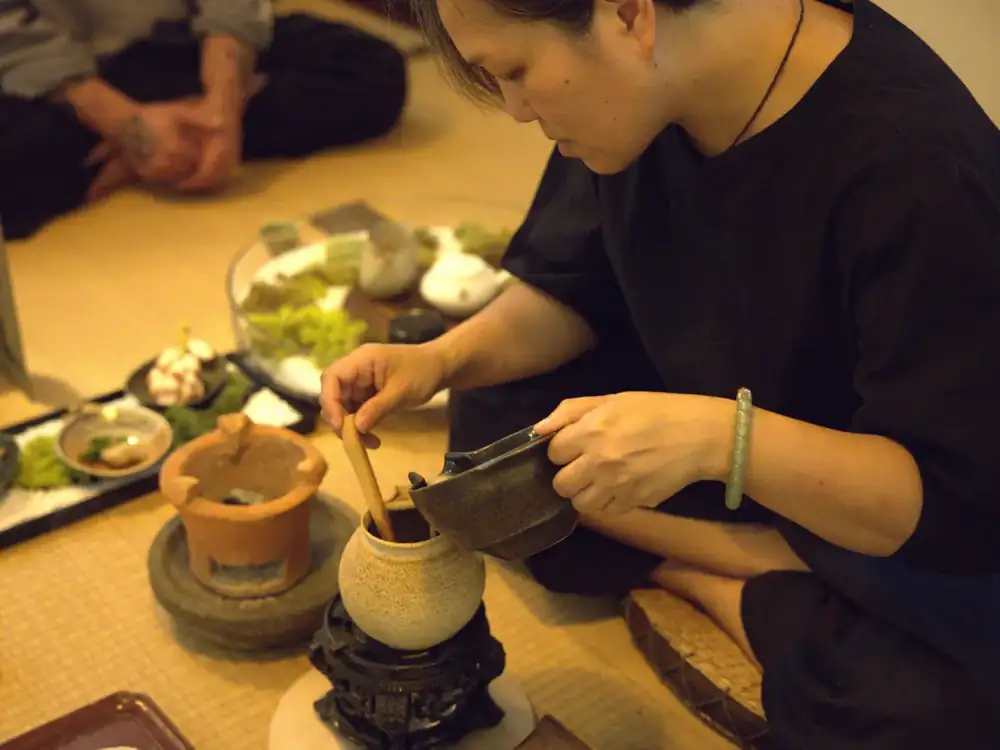
Interview with Tea Sommelier
How can you recognize good quality in a tea?
Taste is king. Whenever possible, always taste tea before buying; the color should be clear, not cloudy or milky. If that's not possible, it's worth considering the origin and harvest time. Teas harvested in spring, between March and April – First Flush – are usually delicate and floral. The Second Flush (May-June) tastes stronger and maltier. This is even preferred for Darjeeling – naturally, depending on which nuances you appreciate. For each type of tea, there can be specific growing regions known for their high quality, such as Rock Oolong tea, which is often associated with the Wuyishan region in China. An organic label can be helpful initially, but many premium teas are grown without pesticides anyway. And as is so often the case: the higher the price, the better the quality.
What is the perfect temperature?
For most green teas, 70 to 80 degrees Celsius is sufficient. With special Japanese varieties like Gyokuro, a prized shade-grown tea, sometimes even 50 degrees is enough – its leaves are so thin and delicate that they must be treated like baby skin: never burn them. Japanese teas are generally steamed, which is why they don't need very high temperatures to develop their full aroma. Chinese teas, on the other hand, are often roasted – heat helps to open the leaves. Black tea can tolerate higher temperatures, but should never be steeped with boiling water – 95 degrees Celsius is the maximum.
Which pitcher is best suited?
Porcelain is the best choice for beginners because it can be used for all types of tea – it's neutral and keeps the tea warm. Glass is beautiful because you can see the leaves unfurling, but it feels a bit colder. Iron always has a distinct flavor.
Tap water or mineral water?
Anyone living in Berlin, like me, shouldn't use tap water for tea. It's far too hard and masks the delicate aromas. Instead, I use various still mineral waters from glass bottles, preferably soft – meaning with low calcium and magnesium content. Japanese green teas can tolerate slightly higher mineral levels, while Chinese teas – whether green, white, or black – develop their best flavor with soft, very neutral water.
And how much tea do you recommend?
Three grams per 100 milliliters – that's a good start. It's always best to weigh it, because the leaves vary in weight.
Can you steep any tea multiple times?
A good tea can be steeped multiple times – not just oolong or green tea, but also black tea. For example, with Lapsang Souchong, the taste changes with each infusion: initially, the smoky note dominates, then caramelized nuances emerge, and with the third infusion, a subtle sweetness appears.
How should tea be stored?
Cool, dark and airtight – ideally in a well-sealed container made of metal, ceramic or porcelain.
Does tea ever go bad?
Depending on the variety, most teas have a shelf life of two years. Green tea should be drunk particularly fresh. Black tea has no expiration date, and Pu-erh tea actually improves with each year of storage.
Kwok Ying von Beuningen
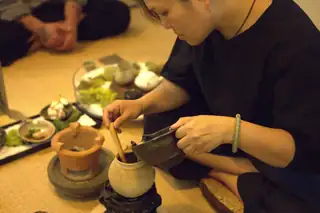
Kwok Ying von Beuningen lives out her passion for tea as a tea sommelier at the vegan restaurant "Oukan" in Berlin. Born in Hong Kong, she regularly travels to the major tea-growing regions to experience teas firsthand. Each day begins with a fixed ritual: she "reads" a tea by observing its color, absorbing its aroma, and attentively tasting it sip by sip. What is a tea sommelier? A tea sommelier is an expert on tea. They know the origin, cultivation, processing, and quality of different tea varieties and how to properly prepare, taste, and store tea. In the restaurant industry, they advise on the selection of suitable teas, develop tea pairings for dishes, and share their knowledge of taste, aromas, and tea culture.