How breakfast is becoming the new aperitif
It's interesting to observe how this movement is also influencing other segments of society, because fortunately, it's not just young people who are following these trends.
Fashions have set a tone for breakfast
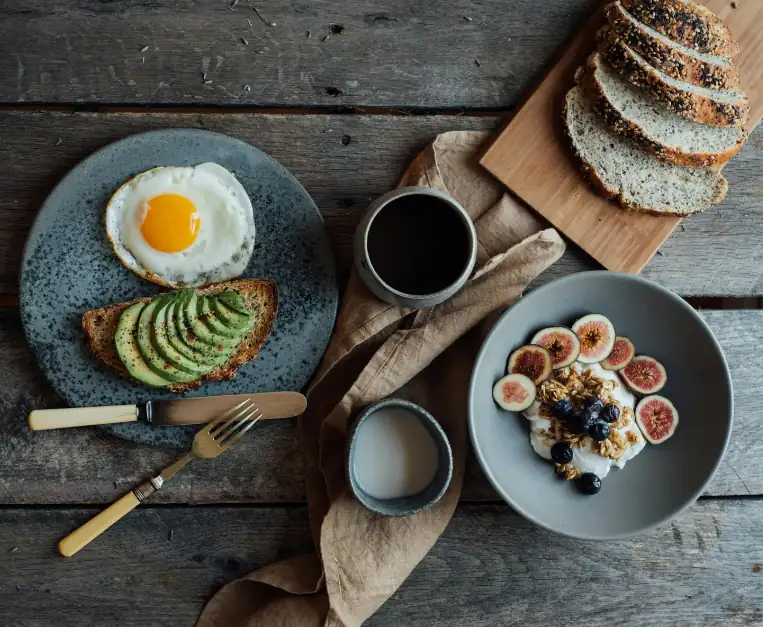
The shift in breakfast habits isn't just gastronomic, but social. To truly understand it, we need to shift our focus from the plate to the context, from food to time, from the café to everyday life. What's happening around breakfast in Italy speaks to a broader transformation in the way people experience the city, work, and relationships.
For decades, Italian social life was organized around the evening. Aperitivo, dinner, and after-dinner drinks were moments when time was free again, when one could finally "be alone." Today, that centrality is eroding. The reasons are structural rather than cultural: fragmented work schedules, chronic fatigue, rising costs, a greater focus on health, but also a changing perception of the value of free time. For many, the evening is no longer a space of openness but of closure.
The morning, on the other hand, is taking on a new function. It's the time when energy is highest, the body is less fatigued, the mind is clearer. From a sociological perspective, breakfast thus becomes an anticipated quality time, a moment in which we invest before the day consumes everything. Meeting for breakfast isn't about "adding" a commitment, but about giving meaning to a time that already exists.
This shift marks a redefinition of the very concept of conviviality. No longer tied to excess, alcohol, or the suspension of rules, but to a more sober, longer, and more dialogic form of socializing. Breakfast allows us to be together without the obligation of social obligation: we shouldn't drink, we shouldn't eat too much, we shouldn't stay out late.
Then there's an important generational factor. Younger generations, raised in a context of economic uncertainty and hyperconnectivity, tend to favor social gatherings that don't involve additional stress. Breakfast, especially when eaten away from home, addresses this need: it costs less than dinner, doesn't compromise the next day, and fits into an existing routine.
New cafes and bakeries become third-party spaces in the sociological sense of the term: places that are neither home nor work, but that allow for the building of light, informal, and recurring relationships. Unlike old-fashioned bars, designed for short stays, these places are designed to linger: comfortable tables, natural light, relative silence, and Wi-Fi. You don't come in to consume and leave, but to temporarily inhabit the space.
In this sense, breakfast out of the home also reflects the changing nature of work. Smart working and hybrid professions have dissolved the rigid boundaries of the working day. Breakfast thus becomes a liminal moment: it's not yet work, but it's no longer just private time. It's a neutral space where you can talk, think, and plan. It's no coincidence that more and more professional meetings are taking place in the morning, over coffee.
Finally, there's a powerful symbolic aspect: breakfast as a ritual of time management. In a society that continually accelerates, choosing to slow down in the morning is an act of autonomy. It means taking time away from pure productivity to give it back to pleasure, conversation, and self-care. It's no coincidence that breakfast is increasingly associated with concepts like well-being, balance, and slowness.
If aperitifs once represented a suspension of rules, breakfast today represents a reconciliation between social life and everyday life. It doesn't require disrupting the rhythm, but rather embracing it more fully. It's a social interaction that doesn't consume, but accompanies.
From this perspective, the transformation of breakfast isn't just a trend, but a cultural marker. It speaks to how our needs, our priorities, and our relationship with time and others are changing. And it suggests that, increasingly, the real revolution doesn't happen at night, but in the morning, around a table, when the city is still awakening.