What Exactly Are Longevity Noodles?
A new year has already begun according to the Gregorian calendar, but many cultures around the world are saving their resolutions for their new year celebrations.
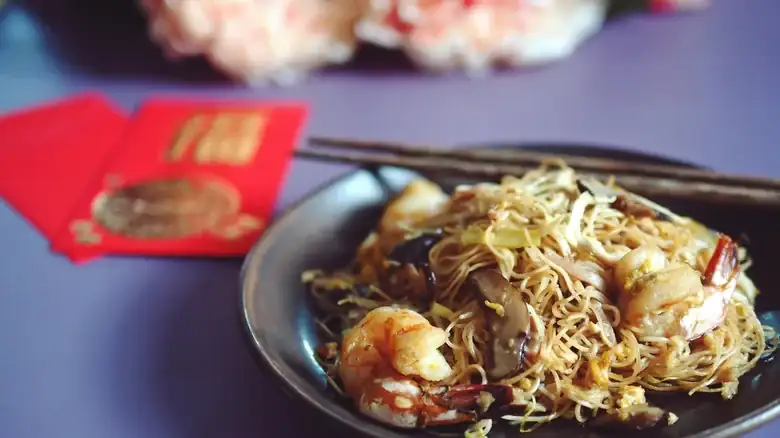
The 12-day celebration runs the gamut of festivities, from traditional dragon dances to temple fairs and flower markets. Food is at the center of it all, and many dishes take on a symbolic quality. One such dish is longevity noodles, also known as long-life noodles, yi mein, or e-fu. While they're eaten for celebratory occasions throughout the year, they're particularly popular during the Lunar New Year.
Live long and prosper
According to the family-run food blog The Woks of Life, longevity noodles represent prosperity, good luck, and long life, which explains why they're slurped in staggering quantities at the start of the new year.
The blog's recipe calls for a popular brand of yi mein sold at most Asian grocery stores, made from sodium bicarbonate (also known as soda water) that yields a "slightly spongey texture." The recipe uses a flavorful yet simple sauce composed of salt, hot water, regular and dark soy sauce, oyster sauce, sesame oil, and white pepper to dress the noodles. It gets tossed in a wok with mushrooms, scallions, and the cooked yi mein.
Tang Pui-sum, director of the family-run Aberdeen Yau Kee Noodles Factory in Hong Kong, told CNN that the business has been ramping up noodle production to prepare for the demand that rises up to 30% around the holiday.
An ancient tradition
Paste contributor Jess Eng grew up hearing her grandmother regale her with the ancient history of longevity noodles as they tucked into heaping piles of the dish toward the end of their eight-course meals. The myth began in the Han Dynasty, whose leader at the time, Emperor Wu, believed that people with long faces were destined to live longer. Because he didn't have a particularly long face himself, he settled for eating the longest noodles he could find.
As Eng's grandmother explained, the pronunciation of the Chinese word for noodles (miàn) sounds similar to the Chinese word for face (liăn). Long noodles came to symbolize a long life, giving rise to the tradition of eating yi mein for special occasions — including the Lunar New Year.
Eng recalls eating a version with juicy pieces of lobster, which is also favored by Johnny Mui of New York City's Hop Lee. The Chinese-American chef told CNN that the dish, which also features ginger and scallion, is one of the most popular choices at his restaurant when the Lunar New Year rolls around.