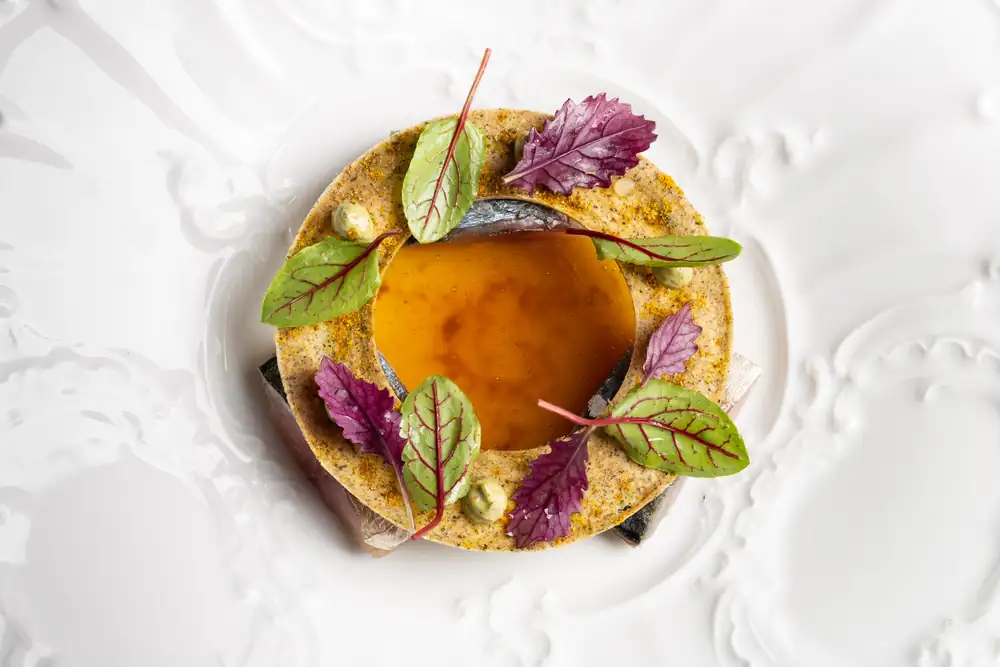
Duomo, a feast of Sicilian baroque
What exactly does it mean to be Baroque? It means not taking the direct route, reveling in the details, hiding only to reveal itself in all its opulence. Baroque is synonymous with theatricality, with artifice, but it is also a celebration of the whims of nature.
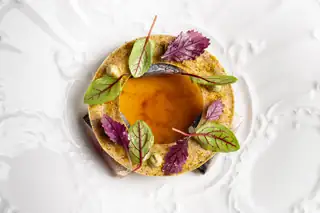
The same is true if we take a closer look at some of the dishes served at his two-Michelin-starred restaurant, Duomo, located in the heart of Ragusa, the cradle of Sicilian Baroque. The sequence of appetizers, served in the restaurant's sumptuous wine cellar, begins with a ricotta cannoli topped with a raw prawn and caviar, connecting the humble tradition of local cheese dairies with the inherent luxury of sturgeon roe.
Once seated, Ciccio kicks things off with sweetbreads, crab, corn, and lemon, all on the same plate—a bold combination of ingredients that perfectly embodies the impetuous Sicilian spirit. Other menu triumphs include the vegetable and mustard leaf lasagna—crispy, in the Anglo-Saxon sense of the word, describing a bold, effective, and self-assured speech—and the memorable ricotta with spinach, caviar, and cured tuna heart, which, through the warmth of the ricotta and its saline nuances, evokes the first meals of life. A kind of reverse memento mori.
Sultano explains that he conceives of the menu as a theatrical performance, with a series of main ingredients—this year it's citrus fruits, which grow in the region with astonishing variety—and a supporting cast, all set against the backdrop of the imposing city of Ragusa. If that isn't baroque cuisine, what is?
Culinary earthquake
Aside from labels that always make more sense to foreign visitors than to those of its own protagonists, the truth is that Ciccio Sultano's gastronomic proposal is deeply connected to this region of southern Sicily where, after a devastating earthquake in 1693, a voluptuous and intricate architectural style flourished, with convex facades, ornate openings and challenging domes.
Away from bustling Palermo or the renewed tourist frenzy of Taormina – driven by the series The White Lotus – it offers an evocative contrast for those who want to delve into rural Sicily and explore places like the almost century-old Crizone family cheese factory, where we had a glorious freshly made ricotta for breakfast, the Aia Gaia happy chicken farm or the Mangrovia hydroponic garden, all of them regular suppliers of Sultano.
Together with his wife and business partner, Gabriela Cicero, Sultano has built a small empire in the town, comprising the bakery and bistro I Banchi, the cocktail and wine bar Cantieri Sultano, a line of gourmet products, and a private wine cellar in Ragusa's historic center, where he hosts special gatherings with friends. He has also brought his distinctly Sicilian culinary vision to the heart of Rome, where he consults for the Giano restaurant at the W Hotel.
But Sultano refuses to read his work only in a domestic key, after all, the most coveted island in the Mediterranean has been visited throughout history by Greeks, Romans, Normans, Arabs or Spaniards, all leaving their mark on a gastronomy that, due to the accumulation of references, has no other option than to be baroque.
“My dishes aren’t full of flowers or overly ornate,” Sultano protests again. Yes, but it is a complex cuisine, with textures, that allows for many layers of interpretation. “And rigorous,” he adds. Of course, one needs a very good understanding of classical culinary principles to afford the luxury of playing with them in a baroque style.