The Foods People Carved For Halloween Long Before Pumpkins
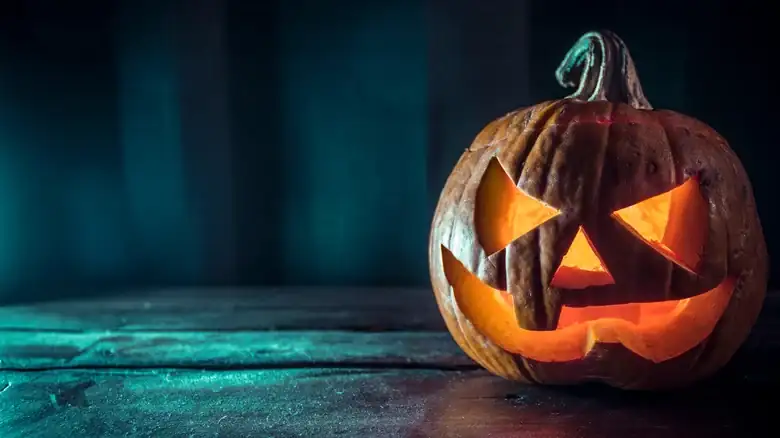
It's difficult to imagine a jack-o-lantern's face carved into anything but a pumpkin, but people were carving faces on potatoes, turnips, even beets and radishes, long before pumpkins became the vessel of choice.
“Metal lanterns were quite expensive, so people would hollow out root vegetables. Over time people started to carve faces and designs to allow light to shine through the holes without extinguishing the ember.”
The connection to Halloween is rooted in the Celtic celebration of Samhain, the end of harvest season, which is also a time when tradition says the dead are free to walk among the living (via Smithsonian Magazine). In late October and early November, people placed produce carved with foreboding images near the entrance to their homes to ward off nefarious spirits making their annual trek through the mortal world (via Historic Mysteries).
But then there's the legend of Stingy Jack.
Legends, lore, and turnips
According to National Geographic, jack-o-lanterns were created to ward off the spirit of a drunken swindler named Jack, who got the devil to join him for a drink then tricked the devil into turning himself into a coin to pay the bar tab (via Historic Mysteries). Stingy Jack set the devil free after extracting a promise of no retribution. Then he did it again, trapping the devil in a tree by carving crosses on the trunk. But after making another deal that he would never go to hell, Jack released the devil for a third time.
Because the devil wouldn't take him and heaven didn't want him, the conniving spirit was left to wander aimlessly in eternal darkness until the devil took pity on him and gave him a glowing ember to light his way. Stingy Jack put the ember in a carved turnip and turned it into a lantern.
The jack-o-lanterns so inextricably linked to Halloween as we know it today in the United States, are connected to those long-ago Celtic traditions and folktales, making their way across the Atlantic with Irish immigrants. According to History.com, turnips and potatoes remained the preferred vessels for jack-o-lantern carving until immigrants discovered pumpkins, which are native to the United States. And the rest, as they say, is history.